Can APA replace RPA?
No. APA extends RPA by adding reasoning, decision-making, and adaptive execution capabilities.
Intelligent software agents that perceive their environment, make context-aware decisions, and execute complex multi-step workflows across your systems, without constant human instruction.
Trusted By
750+ happy clients, including top Fortune 500 companies













Overview
Agentic Process Automation (APA) is an advanced AI-driven automation approach where intelligent software agents autonomously perceive their environment, make context-aware decisions, and execute complex multi-step workflows without constant human instruction.
Unlike traditional automation or RPA, APA systems use large language models (LLMs) and agentic AI to reason through problems, adapt to changing conditions, and coordinate across multiple systems in real time. The result is a self-governing digital workforce that handles end-to-end business processes with speed, precision, and minimal intervention.
No. APA extends RPA by adding reasoning, decision-making, and adaptive execution capabilities.
Businesses should consider APA when workflows involve multiple systems, exceptions, contextual decisions, and unstructured data.
Healthcare, finance, logistics, manufacturing, retail, and customer service organisations benefit significantly from APA.
Yes. Enterprise APA solutions include governance frameworks, audit logs, access controls, and human-in-the-loop oversight.
Why Sphinx
Sphinx Solutions is a recognised Agentic Process Automation company with 16+ years of enterprise software development experience. We combine deep AI engineering expertise with real-world automation delivery knowledge to build APA solutions that work.
We have delivered 1500+ projects across industries, including healthcare, finance, logistics, retail, and manufacturing. Our teams understand the complexity of enterprise environments, legacy systems, compliance requirements, and scale challenges.
Our APA engineers and AI specialists represent the top tier of automation and AI development talent. We bring expert-level skills in LLM integration, multi-agent architecture, workflow orchestration, and enterprise system integration.
We do not offer one-size-fits-all automation templates. Every APA solution we build is designed around your specific processes, systems, industry context, and business goals.
Our APA implementations include governance frameworks, role-based access controls, audit logs, and data protection standards meeting enterprise security requirements from day one.
We follow an agile development methodology with transparent timelines, regular progress reviews, and clear deliverables at every phase, so you always know where your project stands.
With clients across the US, UK, Middle East, Southeast Asia, and India, we bring a global delivery model with local market understanding, ensuring your APA solution fits your operational reality.
We provide dedicated support for the first three months post-deployment and ongoing maintenance thereafter, ensuring your agentic automation continues to perform and evolve with your business needs.
Our commitment to quality, on-time delivery, and long-term partnership has resulted in a 97% client satisfaction rate and an average client relationship of over 5 years.
Why It Matters
At Sphinx Solutions, we design and build full-spectrum APA solutions, from individual AI agents to enterprise-wide autonomous workflow systems. Every solution is built around your specific business goals, processes, and technology environment.
Manual and semi-automated processes drain resources. Organisations spend up to 30% of productive hours on repetitive, low-value tasks that APA can fully automate.
Finance approvals, customer onboarding, compliance checks, supply chain updates, these cross-functional processes stall when one system or team falls behind. APA orchestrates them continuously.
Traditional automation scales linearly; more volume means more bots or more people. Agentic automation scales intelligently, handling increased complexity without proportional cost growth.
Multi-step, multi-system processes are vulnerable to human error. AI-driven autonomous agents apply consistent logic, validate data in real time, and flag anomalies instantly.
When decisions depend on data from multiple systems, delays are inevitable. Agentic AI aggregates and interprets real-time data to enable autonomous, rule-aware decision-making in milliseconds.
Companies using intelligent workflow automation are outpacing competitors in cycle time, customer satisfaction, and operational agility. APA is no longer optional; it is a competitive differentiator.
What We Built
At Sphinx Solutions, we design and build full-spectrum APA solutions, from individual AI agents to enterprise-wide autonomous workflow systems. Every solution is built around your specific business goals, processes, and technology environment.
01
We build custom AI agents capable of reasoning, tool use, memory, and multi-step task execution. Whether you need a single domain agent or a fleet of specialised agents, we architect them to perform reliably at enterprise scale.
Talk to our service experts02
We map your existing business processes, identify automation opportunities, and design goal-driven workflows that operate without human intervention at each step. Every workflow is built with exception handling and human-in-the-loop controls.
Talk to our service experts03
We design and build multi-agent systems where specialised AI agents collaborate (one handles data retrieval, another validates, and another executes), delivering outcomes no single agent could achieve alone.
Talk to our service experts04
Before building, we analyse. Using AI-powered process mining and discovery tools, we identify your highest-impact automation opportunities, measure process inefficiencies, and build a prioritised roadmap for APA implementation.
Talk to our service experts05
Our APA solutions connect with your existing CRM, ERP, HRMS, cloud platforms, and databases. We ensure seamless data flow between agentic systems and enterprise infrastructure without disrupting current operations.
Talk to our service experts06
From finance and HR to supply chain and customer service, we deliver department-level and enterprise-wide agentic automation programmes. Our solutions are built with security, compliance, and governance at their core.
Talk to our service experts07
Every business is different. We build custom Agentic Process Automation solutions tailored to your industry, processes, scale, and existing tech stack, not off-the-shelf templates that need workarounds.
Talk to our service experts08
APA is not a set-and-forget deployment. We provide continuous performance monitoring, agent retraining, workflow refinement, and optimisation services, ensuring your automation delivers increasing value over time.
Talk to our service expertsWhat We Solve
Our APA systems are engineered for reliability, adaptability, and business impact. Here are the core capabilities that make them enterprise-ready.
Our agents analyse data from multiple sources, apply business logic and contextual reasoning, and make real-time decisions: routing tasks, triggering actions, and resolving exceptions without waiting for human input.
APA agents learn from every execution cycle. Using feedback loops and outcome data, they refine their decision-making over time, reducing errors and improving process performance with each iteration.
Our multi-agent orchestration layer coordinates tasks across systems, departments, and data sources. Agents manage dependencies, handle failures, and ensure end-to-end process continuity.
Get full visibility into every automated process. Our dashboards provide real-time metrics on agent activity, task completion, exceptions, and performance, so you’re always in control.
Not every decision should be fully autonomous. We build configurable escalation paths, approval gates, and human review checkpoints, giving your teams oversight where it matters most.
Process performance data feeds back into agent behaviour. We use this loop to proactively identify inefficiencies, tune agent logic, and scale automation across new use cases without rebuilding from scratch.
Use Cases
Agentic Process Automation opportunities exist across every department. Sphinx Solutions helps organisations deploy intelligent AI agents that automate complex workflows, streamline decision-making, improve operational efficiency, and enable teams to focus on higher-value business initiatives.
Business Impact
Organisations that deploy APA solutions with Sphinx Solutions consistently see measurable gains across key business metrics.
APA agents take over high-effort, repetitive and complex tasks, freeing your teams to focus on strategic, high-value work.
Autonomous orchestration eliminates handoff delays, reduces process cycle times, and ensures tasks move forward 24/7 without human bottlenecks.
AI agents analyse data and trigger actions in real time, reducing decision cycles from hours or days to seconds. This speed advantage compounds across every department.
By automating complex, multi-system processes, businesses reduce the need for manual processing resources while simultaneously increasing throughput and accuracy.
Automated, intelligent responses to customer inquiries, faster service resolution, and proactive issue handling translate directly into improved customer satisfaction scores.
APA systems handle increased workload by deploying additional agents or expanding orchestration, not by adding people or rewriting automation rules.
Agentic workflows adapt when business conditions change. Agents reconfigure task priorities, adjust decision parameters, and reroute processes dynamically, keeping your operations resilient.
Autonomous agents apply consistent logic, validate data at every step, and flag anomalies before they become problems, dramatically lowering the cost of errors and compliance breaches.
How We Work
We follow a proven, phased approach to APA implementation: minimising risk, maximising ROI, and ensuring every deployment is production-ready.
Step 1
What we do: We analyse your existing workflows, identify automation opportunities, evaluate process bottlenecks, and assess your organisation’s AI readiness. Our team maps critical business processes and determines where Agentic Process Automation can deliver the greatest impact.
What you get
Step 2
What we do: We define agent responsibilities, decision-making boundaries, orchestration workflows, and integration requirements. Our experts align automation strategies with your business goals, operational needs, and governance policies.
What you get
Step 3
What we do: We select the most suitable AI models, automation frameworks, cloud infrastructure, and integration technologies for your use case. We design a secure and scalable architecture capable of supporting future growth and evolving business requirements.
What you get
Step 4
What we do: Our engineers build, configure, and test intelligent agents while developing integration layers that connect with your existing enterprise systems. Each agent is validated to ensure reliable execution across workflows.
What you get
Step 5
What we do: We conduct rigorous functional, performance, security, and compliance testing. Governance controls such as audit trails, access management, escalation workflows, and human-in-the-loop mechanisms are implemented to ensure operational reliability.
What you get
Step 6
What we do: We deploy your APA solution in a phased manner, beginning with pilot implementations before full-scale rollout. This minimises risk, validates performance in real-world environments, and ensures a smooth transition to production.
What you get
Step 7
What we do: After deployment, we continuously monitor agent performance, analyse workflow outcomes, and optimise automation logic. As your business evolves, we enhance and scale the solution to support additional processes and use cases.
What you get
Proof Of Work
Sphinx Solutions show you outcomes, not just portfolios. Every project below is measured against the business problem it was built to solve.

ETISALAT
Automated telecom operations for one of the Middle East’s leading telecom providers
Etisalat managed large volumes of customer, billing, and operational data across multiple systems. Manual processing was time-consuming, resource-intensive, and prone to inconsistencies that impacted efficiency and service delivery.
The organisation needed an automation framework capable of handling repetitive telecom workflows, reducing manual intervention, improving data accuracy, and accelerating operational processes without disrupting existing systems.
An intelligent RPA-driven automation solution that streamlined telecom operations, automated data processing workflows, reduced manual effort, improved reporting accuracy, and enhanced overall operational efficiency across critical business functions.
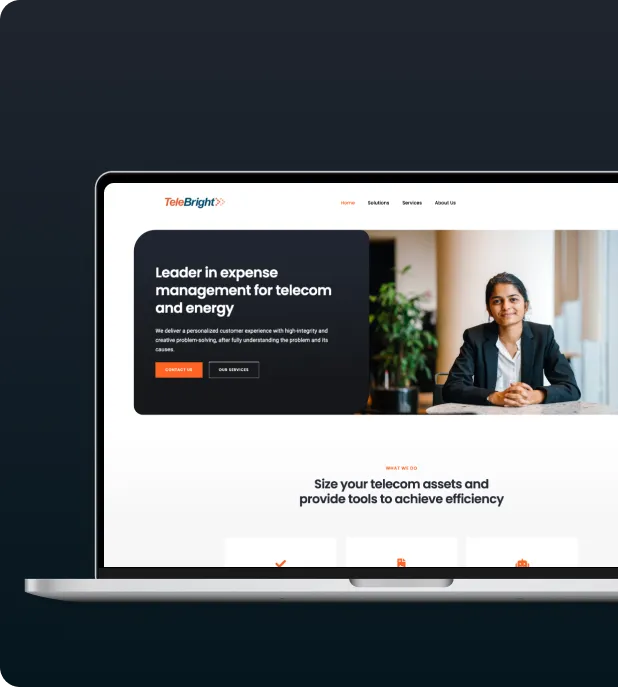
TELEBRIGHT
Simplified telecom revenue assurance through intelligent automation
Telebright required a scalable platform to help telecom operators monitor network performance, analyse usage data, and identify revenue leakage opportunities across large datasets.
Managing billions of telecom records manually creates delays in reporting, operational inefficiencies, and challenges in identifying revenue-impacting discrepancies in real time.
Every solution we build is AI-ready by architecture, so your business grows smarter. We engineer software around the way your business works (its processes, integrations, and growth targets), bringing years of delivery precision to every project.
Industries
How We Build It
Every model, framework, and platform in our APA stack is chosen for performance, scalability, and enterprise-grade reliability, matched to your specific use case.
Comparison
Three generations of automation, compared on the things that decide which one a process actually needs.
| Feature | Traditional automation | RPA | APA |
|---|---|---|---|
| Core approach | Hard-coded rule execution. | UI-based bot mimicking human clicks. | Autonomous AI agents with goal-directed reasoning. |
| Process types | Structured, repetitive, predictable. | Structured, rule-based, UI-dependent. | Complex, dynamic, multi-step, cross-system. |
| Decision making | None; follows fixed scripts. | Minimal; follows defined rules. | High contextual reasoning and adaptive decisions. |
| Exception handling | Breaks or requires a manual fix. | Requires human intervention. | Handles autonomously or escalates intelligently. |
| Learning | Static; no learning capability. | Limited; requires rule updates. | Continuous; learns from outcomes. |
| System integration | Single system, scripted. | UI layer integration. | Deep API, LLM, and multi-system integration. |
| Scalability | Low; requires code changes. | Medium; more bots needed. | High; scales with complexity, not just volume. |
| Best for | Simple, predictable tasks. | High-volume, structured repetitive tasks. | Complex, unstructured, enterprise-wide processes. |
| Human oversight | Constant. | Required for exceptions. | Configurable human-in-the-loop controls. |
| Technology | Scripts, macros. | UiPath, Automation Anywhere, Power Automate. | LLMs, AI frameworks, multi-agent orchestration. |
Executes fixed, repetitive tasks based on hard-coded rules. It works well for structured, predictable processes, but breaks when inputs change.
Uses software bots to mimic human actions across digital interfaces: clicking, copying, and entering data. It automates rule-based tasks efficiently but cannot reason, learn, or handle exceptions.
Combines agentic AI with enterprise workflow automation. APA agents can handle dynamic, unstructured, and complex business processes that RPA and traditional automation cannot. They learn from outcomes, coordinate with other agents, and continuously optimise performance.
How We Engage
Every organisation is at a different stage of its automation journey. Whether you’re exploring a pilot, automating a specific business function, or building enterprise-wide autonomous workflows, we offer flexible engagement models designed to align with your goals, budget, and operational requirements.
01
A clearly defined scope, timeline, and budget designed for businesses with well-documented automation requirements. This model is ideal for APA proofs-of-concept, pilot projects, process-specific automation initiatives, and organisations seeking predictable delivery outcomes.
02
An iterative delivery model that allows your automation strategy to evolve as business needs change. We prioritise, develop, and optimise autonomous workflows in sprints, enabling continuous improvement based on user feedback, operational insights, and performance data.
03
A fully managed team of APA architects, AI engineers, automation specialists, and integration experts working as an extension of your organisation. This model provides maximum flexibility, faster innovation, and long-term support for enterprise-wide automation programmes.
Book a 30-minute APA strategy consultation.
Expert Insights
The biggest misconception about Agentic Process Automation is that it’s simply a smarter version of RPA. In practice, APA enables AI agents to understand context, coordinate across systems, and make decisions that traditionally required human involvement. The organisations seeing the greatest ROI are using APA to automate entire workflows, not just individual tasks.
Why Choose Us
Sphinx has completed 16 successful years in the industry, helping businesses with technology and digital transformation, including AI-powered solutions across major industry verticals.
We have a dedicated and reliable team of AI engineers, ML scientists, data engineers, and MLOps specialists covering every role in the AI development lifecycle.
We have delivered more than 1,500 solutions through a results-driven approach, many to recurring clients who keep expanding their AI capabilities with us.
We have a dedicated in-house team, experienced and skilled across AI development, software engineering, QA, DevOps, and cloud infrastructure.
We are trusted by 750+ clients for best-in-class AI solutions at competitive rates, with the delivery accountability enterprise clients demand.
Our client-centric approach and high-calibre AI engineering, built on current models and frameworks, have made us a trusted partner for businesses building AI.
Connect with us
Everything you need to know about deploying autonomous AI agents with us. Can’t find your answer? Talk to us.
RPA runs structured, rule-based tasks by copying human actions. It follows a fixed script and can’t step outside it. APA does more. Its agents can work through unclear situations, decide what to tackle first, handle exceptions on their own, and improve as they go based on what the results show. RPA automates the task; APA automates the decision behind the task too.
IPA adds AI features like OCR and machine learning to RPA so it can read unstructured data. APA goes a step further. Its agents don’t just read data well, they plan, decide, work across several systems, and improve their own performance over time. APA is built around goals and adapts as conditions change, while IPA mostly reacts to whatever input it gets.
Each APA agent is set up with clear goals, decision-making boundaries, and the ability to read context. It looks at live data, checks it against your business rules and objectives, and picks an action. When a decision falls outside what it’s authorised to handle, it escalates to a person. The agent runs on its own, but someone is always accountable for what it does.
Every APA solution we build comes with a governance framework: audit logs, role-based access controls, clear escalation rules, and dashboards that show what the agents are doing. Every action an agent takes is logged and can be traced back. You keep full visibility and control while still getting the benefit of agents that act on their own. For regulated sectors like banking and healthcare, this level of oversight is essential.
We run APA projects in phases. Discovery, strategy, and architecture planning take about 3 to 6 weeks. Building and integrating the first agents for a defined scope takes 8 to 16 weeks. A full rollout across the enterprise, with several agent types working across systems, can run 4 to 6 months. We work iteratively, so you see real value in the early phases before anything scales up.
Cost depends on a few things: how many agent workflows you need and how complex they are, how much they have to connect into your existing systems, how much data the agents process, what your compliance and governance requirements look like, and whether you want us to manage the solution after launch. We give you a clear, scoped quote based on what your business actually needs. Most engagements start with a discovery and strategy phase so we can size the project accurately.
That depends on how complex your workflows are, how many decisions your processes involve, and how comfortable you are letting software act on its own. Our discovery phase includes an automation maturity assessment that shows you whether to begin with RPA, IPA, or go straight to APA, and how to sequence the steps for the best return. If you already run RPA bots, APA is usually the next logical step. It picks up the exceptions and edge cases your bots currently kick back to a person.