Everyone Has an AI Idea and Nobody Has a Number
A backlog of suggestions from across the business, no agreed way to compare them, and a board asking which one goes first. Scoring them against the same criteria usually settles it within a few weeks.
The engagement that comes before the build. We work out where AI pays off in your operation, whether your data is ready to support it, and what the first system should cost. You leave with a costed roadmap and a shortlist of use cases in the order we would build them.
Trusted By
750+ happy clients, including top Fortune 500 companies













What It Is
The expensive part of enterprise AI is rarely the model. It is the months spent deciding which of a dozen plausible ideas to back, and then finding out halfway through a build that the data could never have supported the one you picked.
An AI strategy and readiness engagement moves those decisions to the front. Over a few weeks we go through your processes, your data and your regulatory obligations, score every candidate use case against the same four criteria, and design the first system on paper. What comes out is a document your board can fund and your engineers can build from.
The engagement is short by design, and it is independent of the build. You own what we produce, and there is no obligation to build it with us.
Four Questions It Answers
Who It Is For
Four situations we see most often. If more than one of them describes where you are, the next spend probably belongs on the decision.
A backlog of suggestions from across the business, no agreed way to compare them, and a board asking which one goes first. Scoring them against the same criteria usually settles it within a few weeks.
A demo impressed people and then stalled. Usually the cause is data that could not support the use case at full volume, or an owner nobody ever named. Both are findable before the build starts.
A figure went into the plan because one had to. A costed roadmap replaces it with phases you can defend line by line, including the run cost most estimates leave out.
The build is ready and the approval is not, because nobody wrote down where the data goes or who reviews an output. That document is one of the things this engagement produces.
What We Deliver
Each workstream produces a document you can act on. Between them they answer whether to build, what to build first, and what it costs to run.
01
We work through your operation function by function and write down where AI could move a number you already track: cost per case, cycle time, error rate, revenue per customer. Each opportunity gets a size and a difficulty score, and the shortlist comes out ranked by likely return.
Talk to our service experts02
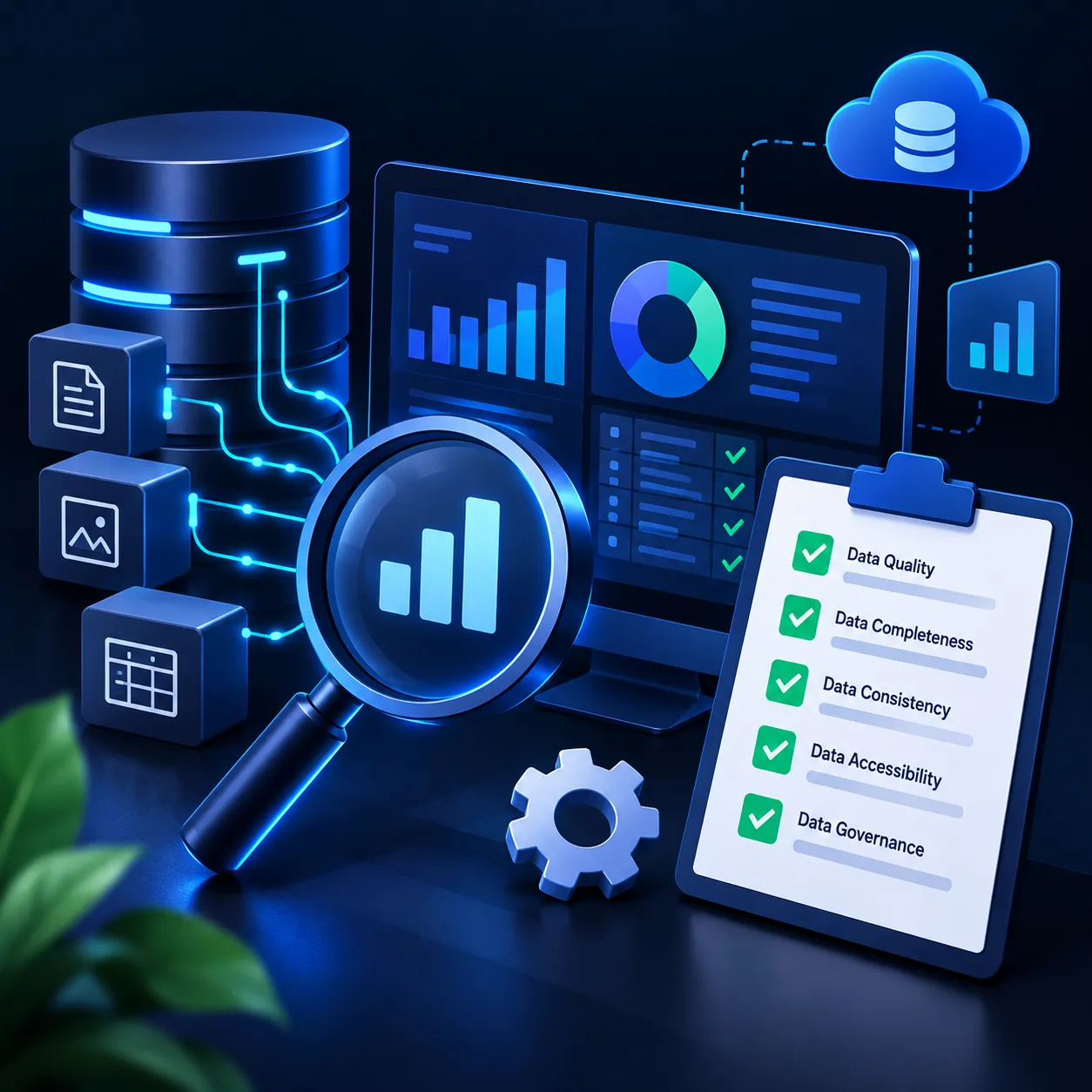
Data is where most AI projects come unstuck. We audit what you hold, where it lives, how clean it is, who is allowed to see it, and whether there is enough history for a model to learn from. You get a plain answer on which use cases your data supports today, which need work first, and roughly how much work.
Talk to our service experts03
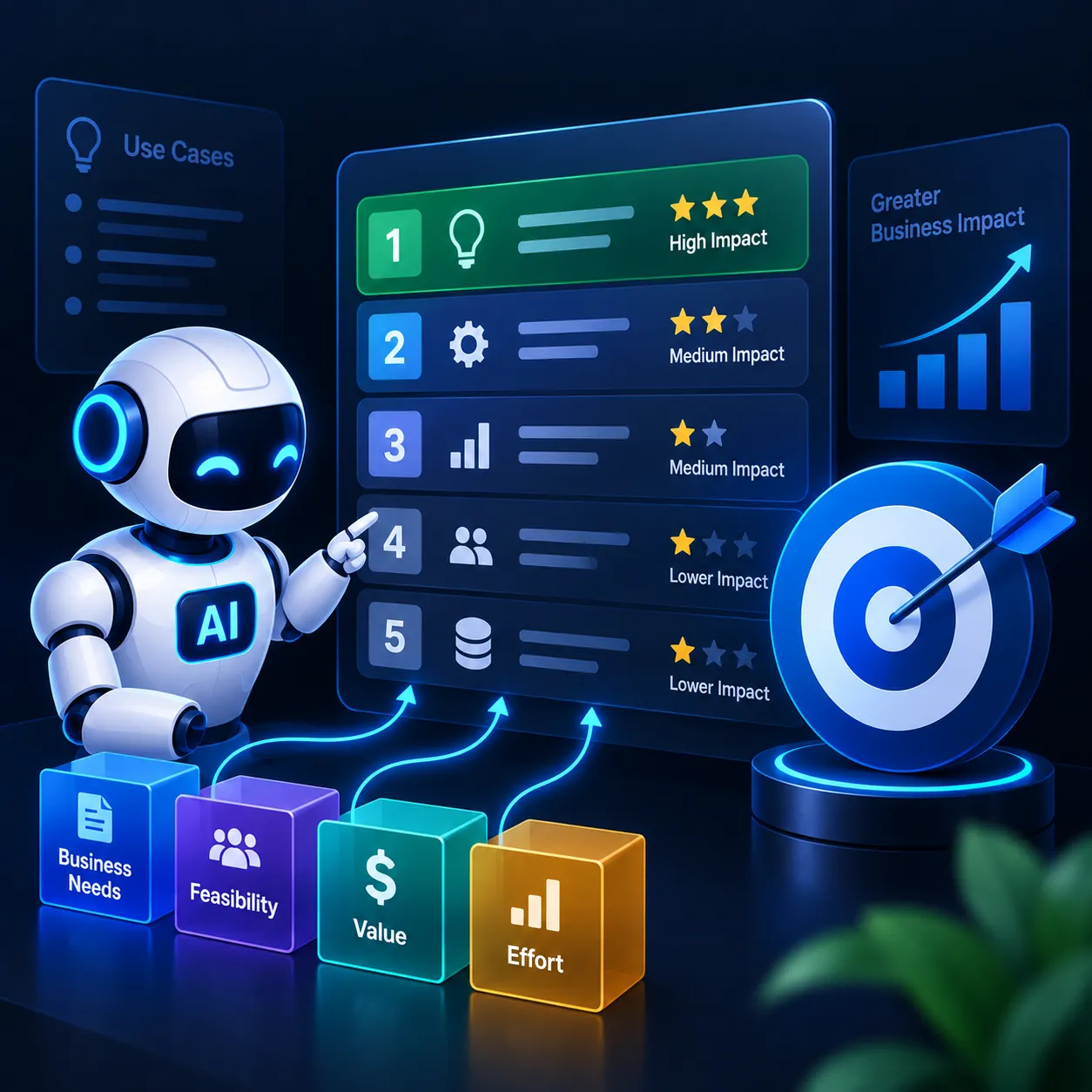
Every candidate is scored on business value, data availability, delivery risk and time to first result, then plotted so the sequence is obvious. Most teams already suspect which one should go first. The scoring is what lets you argue it internally without it coming down to whose idea it was.
Talk to our service experts04
A target architecture for the shortlisted use cases: which models, hosted or open weight, running where, and what retrieval, memory, evaluation and fallbacks sit around them. Cost, latency, accuracy and control pull against each other. We show you where the trade-off lands and let you make the call.
Talk to our service experts05
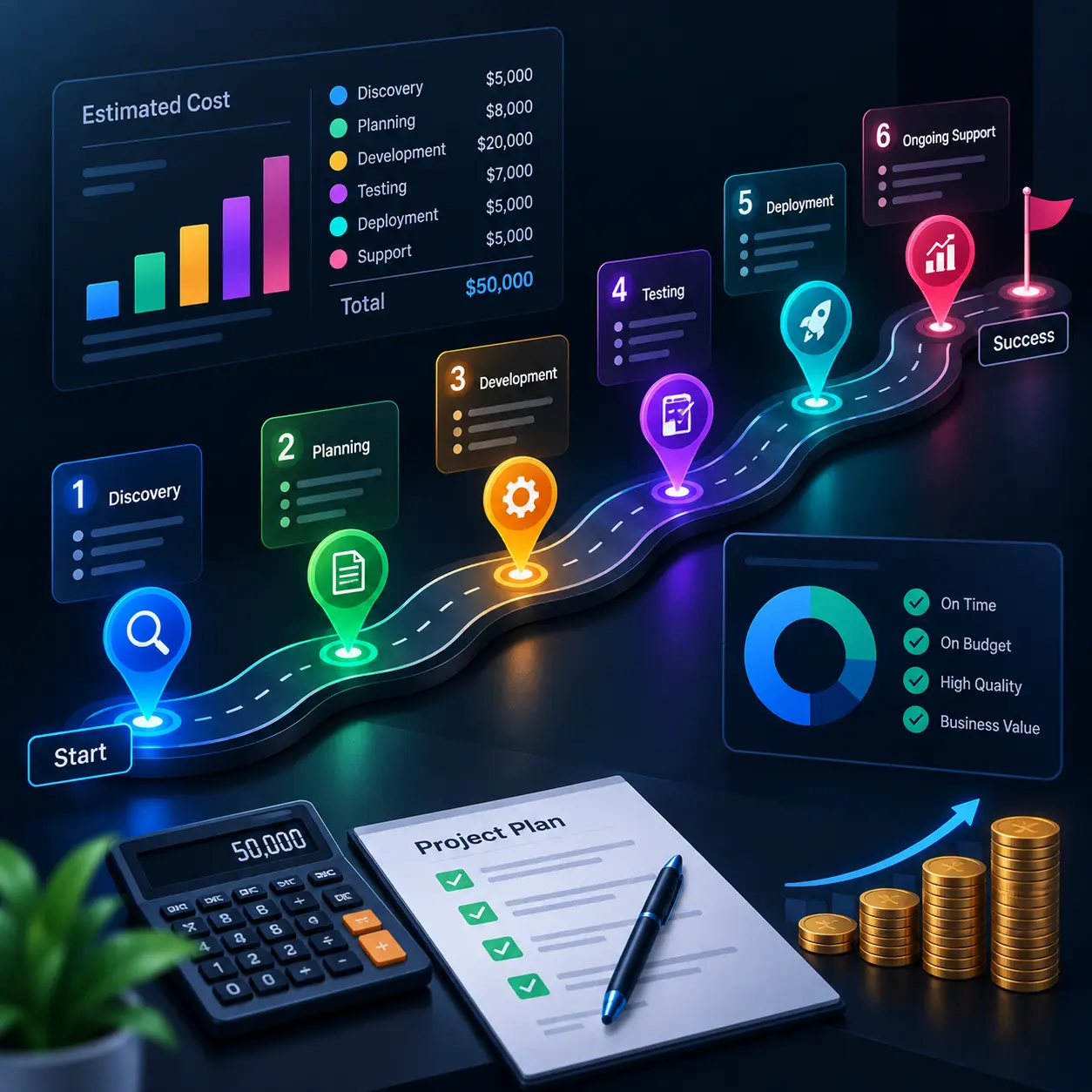
The first build broken into phases, with a cost, a duration and an owner against each. The run cost is in there too: inference, infrastructure, and the engineering time to keep a model healthy. That second figure is the one most AI budgets leave out.
Talk to our service experts06
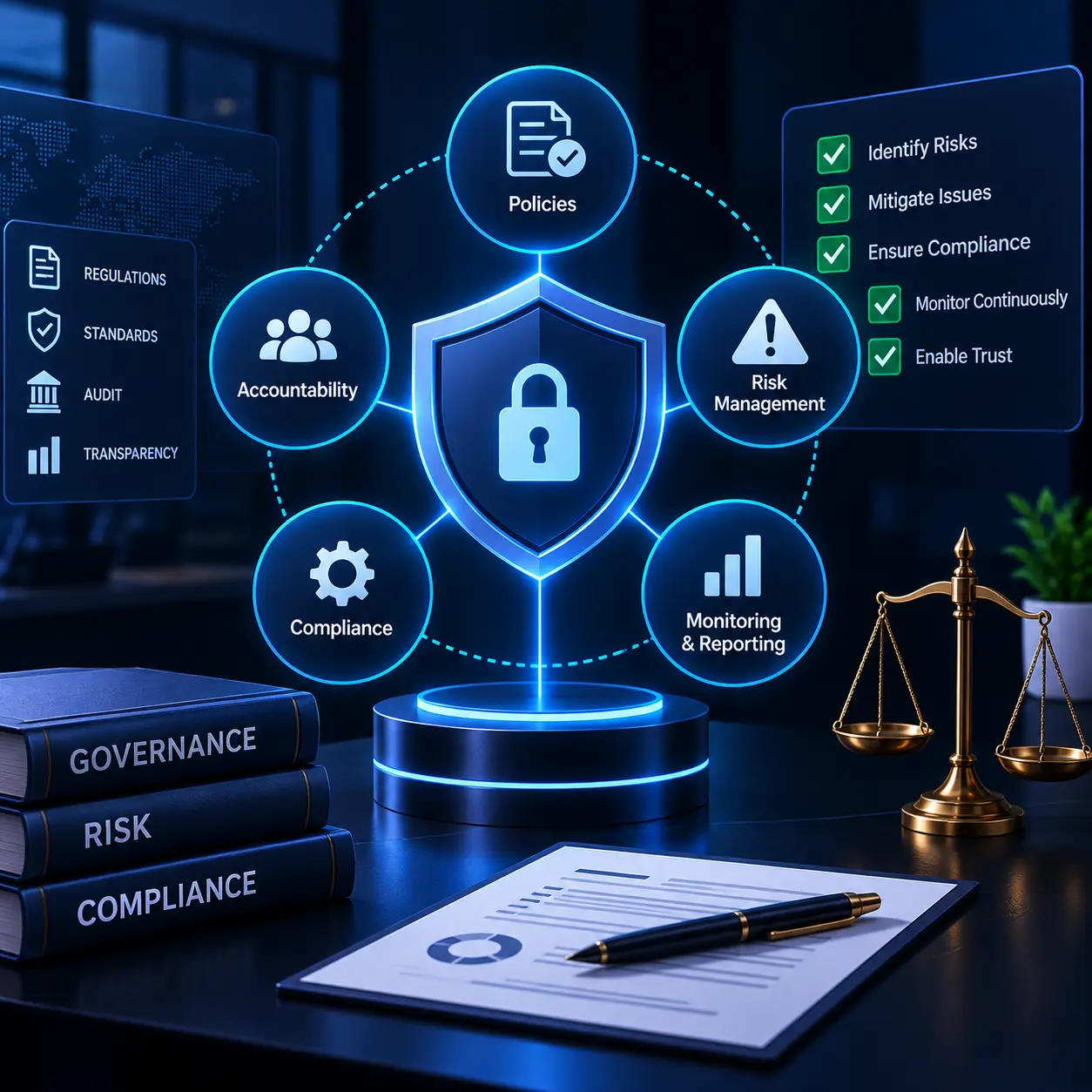
Where the system needs a person in the loop, what gets logged, how outputs are evaluated before release, and which of your obligations under GDPR, HIPAA or SOC 2 the design has to satisfy. It arrives as a checklist your risk and security teams can work through.
Talk to our service expertsThe Assessment
We look at six things separately rather than producing a single score. Projects are often fine on five of them and held up by the sixth.
Coverage, quality, labelling, lineage and access. How much history exists, how much of it is usable as it stands, and what has to be fixed first.
Where your workloads run, what compute you can reach, and how mature your deployment and monitoring practice is. Models need looking after once they are live, and that takes a pipeline.
Which workflows are repeatable enough to automate, and which only look that way. The ones that turn out to carry undocumented human judgement are the expensive surprises, so we go looking for them early.
Who will own the system after launch, who signs off a model change, and what the gap is between that and your current team. Systems without a named owner tend to degrade quietly.
Where your data may travel, what has to stay inside your own boundary, and which decisions carry enough consequence that a person has to remain accountable for them.
The baseline for the metric you want moved, the target, and what the payback period looks like at that target. We agree all three before the build starts.
How We Work
Five stages over a few weeks. Most of the time goes on workshops and getting at data. Your engineering team can carry on with what they are already doing.
Step 1
What we do: Two to three sessions with the people who own the processes, and not only with the sponsor. We map how the work runs today, where the time goes, and what a good outcome would look like as a number.
Step 2
What we do: A read of your data sources, warehouses, applications and integration points, with a sample pulled wherever access allows. We come back with what is usable now, what needs remediation, and what turns out not to exist.
Step 3
What we do: Every candidate use case is scored against the same four criteria and reviewed with you. Anything that does not clear the bar is written down as rejected along with the reason, which saves the idea resurfacing next quarter.
Step 4
What we do: We design the target architecture for the shortlist and cost the first build against it, run cost included. Sometimes an off-the-shelf product is the better answer. Where that happens the model prices both and says so.
Step 5
What we do: A working session to walk your team through the findings, then the documents themselves. You own everything produced, and you can take the roadmap to another delivery partner if you want to.
Deliverables
Six documents, all of them yours. One version of each, written so a board, a finance reviewer and an engineer can work from the same file.
01
Every candidate we found, sized and rated, including the ones we recommend against and why.
02
Source by source: what exists, what condition it is in, and what has to happen before it can support a model.
03
Three to five candidates scored on value, data, risk and time to first result, in the order we would build them.
04
The reference design for the shortlist, with model choices, retrieval, evaluation and deployment boundary drawn.
05
Phases, durations, costs and owners for the first build, plus the annual run cost once it is in production.
06
The controls, logging and human review points your risk and security teams will ask for, mapped to your obligations.
Expert Insights
Clients almost always open with which AI they should build. I would rather start somewhere duller. Is the process you want to automate stable enough to be worth automating, and would the data behind it survive being looked at closely? Those two questions take a fortnight, and they change what gets built.
How We Engage
All three end in documents you own. Which one fits depends on how wide your question is, and we will tell you before you commit.
01
A focused look at one process and the data behind it, over two to three weeks, for a fixed fee. Start here if you already know what you want to automate and need to know whether it is possible.
02
A function or a business unit, over four to six weeks: workshops, data audit, scoring, architecture and a costed roadmap for the first build. Start here if the shortlist itself is the question.
03
A retained arrangement where our architects sit alongside your team through the first builds, reviewing decisions and keeping the roadmap current as the models and your data change.
Industries
Why Choose Us
Sphinx has completed 16 successful years in the industry, helping businesses with technology and digital transformation, including AI-powered solutions across major industry verticals.
We have a dedicated and reliable team of AI engineers, ML scientists, data engineers, and MLOps specialists covering every role in the AI development lifecycle.
We have delivered more than 1,500 solutions through a results-driven approach, many to recurring clients who keep expanding their AI capabilities with us.
We have a dedicated in-house team, experienced and skilled across AI development, software engineering, QA, DevOps, and cloud infrastructure.
We are trusted by 750+ clients for best-in-class AI solutions at competitive rates, with the delivery accountability enterprise clients demand.
Our client-centric approach and high-calibre AI engineering, built on current models and frameworks, have made us a trusted partner for businesses building AI.
Connect with us
What the engagement covers, how long it takes, and what happens if the answer is that AI is not the right tool. Get in touch.
A ranked shortlist of use cases with an estimated return on each, an honest assessment of whether your data can support them, a target architecture, and a costed roadmap for the first build. If the finding is that AI is the wrong tool for the problem you brought us, that is what the document will say.
A focused readiness assessment on a single process runs two to three weeks. A full strategy engagement across a function or a business unit is usually four to six weeks, and most of that goes on workshops and getting at data. Writing the documents is the quick part. We will tell you which one your question needs before you commit.
No. You own every document produced, and you can take the roadmap to another partner or to your own team. We would rather be judged on whether the roadmap turned out to be right.
That is still a useful answer. The report says which use cases your data supports today, which ones need remediation first, and roughly what that remediation involves. It is common for the data work to come first and the AI build to follow a quarter later.
Yes. A proof of concept tests whether one idea works. This decides which idea is worth testing in the first place, and whether the conditions for it to work exist at all. Skipping it is how organisations end up with a demo that cannot scale and no agreed reason to carry on.
The people who own the processes under review, someone who can speak for the data, and a sponsor who can make a decision at the end. Typically four to six people, a few hours each across the whole engagement.