Delivery Has Slowed and Nobody Can Say Where
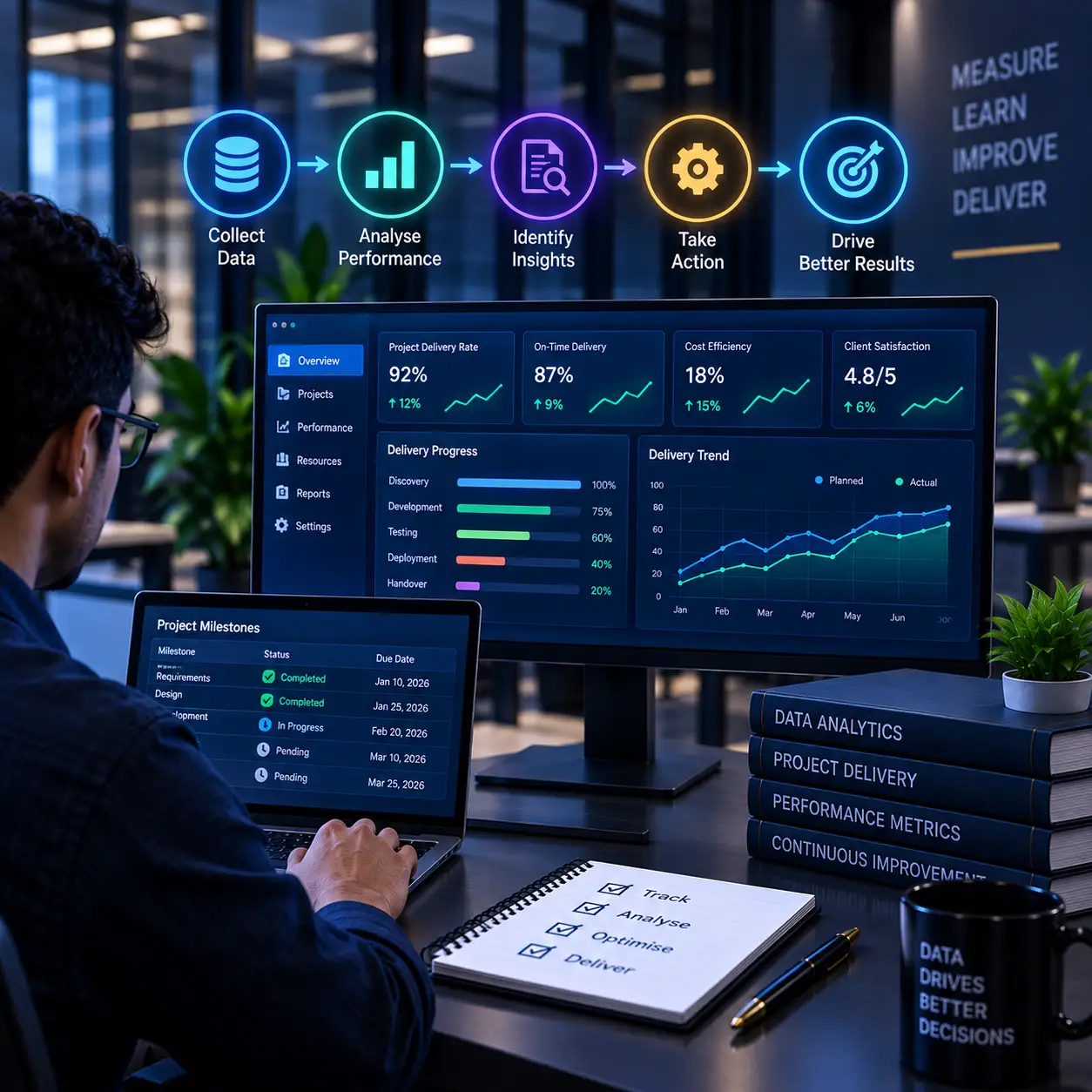
Velocity dropped, everyone is busy, and the retrospective produces a lot of feelings and no figures. Measuring cycle time and review latency usually finds the queue inside a week.
AI inside our own delivery, on your project. It drafts, it exercises code paths and it reads a codebase faster than a team can by hand. Senior engineers review every output and stay accountable for whatever reaches production, which is the part most vendors leave vague.
Trusted By
750+ happy clients, including top Fortune 500 companies













What It Is
There is no product here and no licence we resell. This is how our delivery teams work, applied to your project: models drafting the parts of software engineering that are repetitive and cheap to verify, and experienced engineers handling the parts that are neither.
The gain is real, and it is uneven. Scaffolding, test enumeration and reading an undocumented codebase compress dramatically. Architecture, integration and review barely move. Anybody quoting you one multiplier for a whole project has taken the first figure and is hoping you will not ask about the second.
So we measure your delivery before we change anything and report against that baseline. If the practice is not moving your numbers, you will see it in the same report we do.
What Changes for You
Who It Is For
Three of the four turn out to be about visibility more than speed, which catches most people off guard. Installing the tooling takes an afternoon. Agreeing the rules around it takes rather longer.
Velocity dropped, everyone is busy, and the retrospective produces a lot of feelings and no figures. Measuring cycle time and review latency usually finds the queue inside a week.
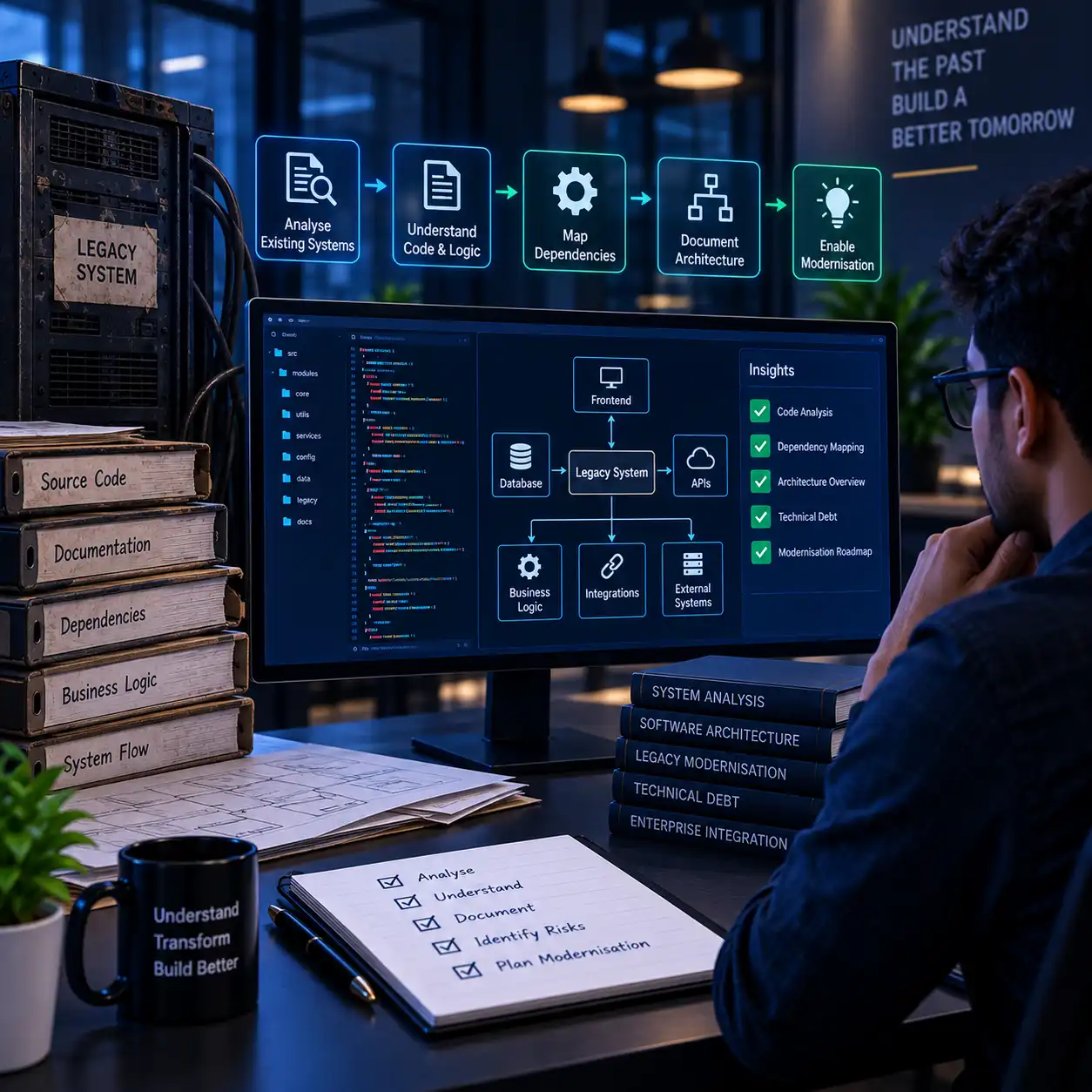
The person who understood it has gone. Rewriting gets quoted in quarters, and reading it gets quoted in weeks that keep extending. Indexing the codebase puts a bound on the second number.
Which means there is no boundary, no review standard, and no record of what was generated. The tooling is rarely the problem. The absence of agreed rules is.
Hiring is slow and onboarding is slower. The realistic gain here sits in the repetitive band of the work, and we will tell you how wide that band looks on your codebase before you commit to anything.
What We Deliver
Six places AI pulls its weight on a real project, each with a person still accountable for what comes out.
01
Scaffolding, boilerplate, data mappers, adapters and the fifth near-identical CRUD screen get drafted with model assistance, then reviewed line by line. The saving is real, and it lands on exactly the work nobody enjoyed doing by hand.
Talk to our service experts02
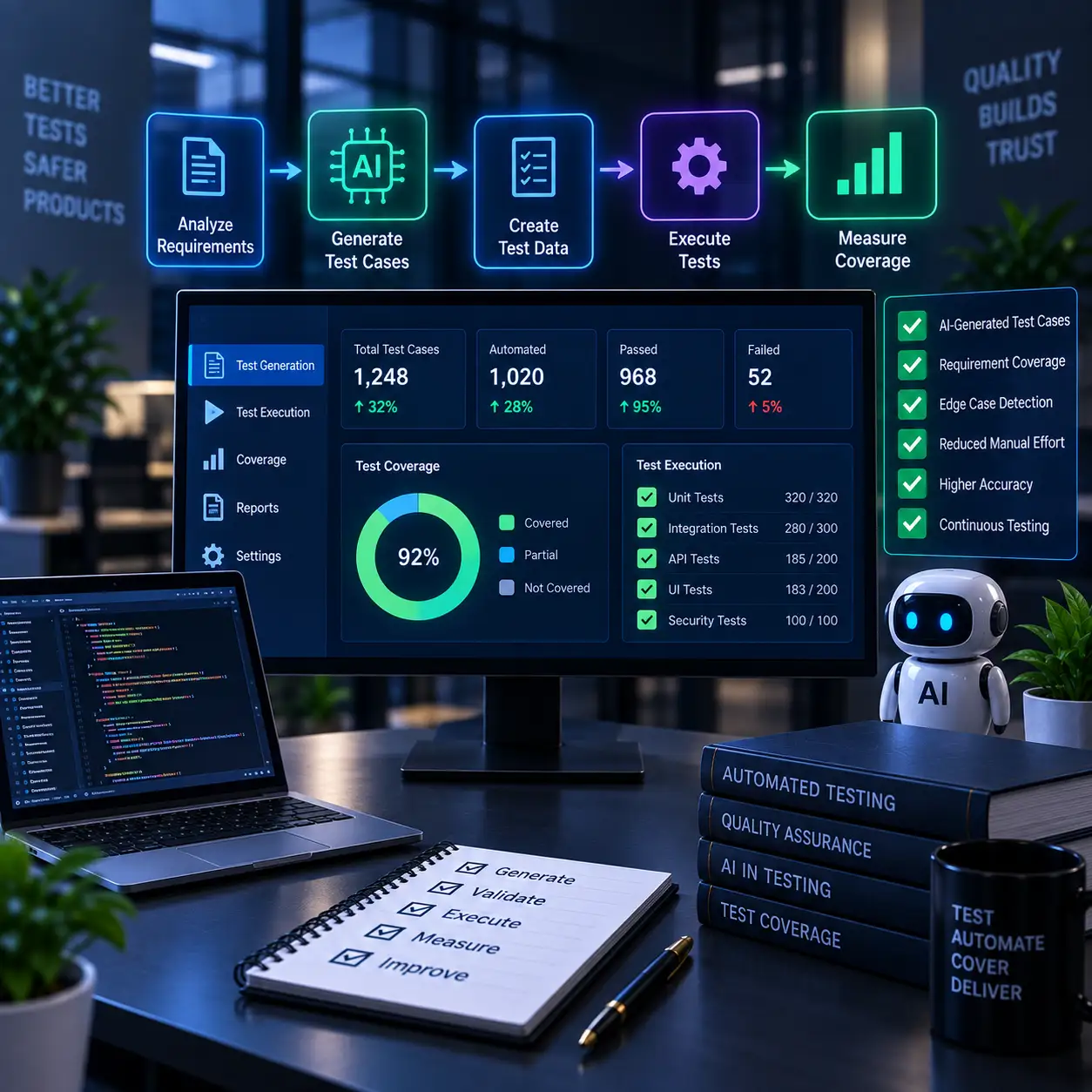
Models are good at enumerating the cases a tired human skips: empty inputs, boundary values, unusual orderings, the error path nobody exercises. We generate candidates, keep the ones that assert something real, and report coverage as a number in your pipeline.
Talk to our service experts03
Inheriting a system nobody documented is where this pays best. We index the codebase and engineers question it in plain language: what calls what, which paths are dead, where the business rules actually live. The archaeology usually takes days instead of weeks.
Talk to our service experts04
Every change passes static analysis and a model-assisted review before a human sees it. By the time it reaches a person, the naming quibbles, the null handling and the obvious concurrency bug are already dealt with, and they can spend their attention on design and correctness.
Talk to our service experts05
Architecture notes, API references and runbooks drafted from the code that actually shipped, then corrected by the engineer who wrote it. Documentation is normally the task that slips at the end of a project. Here it gets written while the detail is still fresh.
Talk to our service experts06
Cycle time, review latency, defect escape rate and rework, measured before we start and tracked afterwards. If the practice is not moving those numbers on your project, you will see it in the same report we do.
Talk to our service expertsThe Boundary
Written down before a project starts and signed off by your security team. It is worth asking any vendor for their version of this list.
Generated freely. Repetitive, well specified and cheap to verify, which is the shape of work where a model is reliable.
Generated freely, then pruned. A test that passes without asserting anything is worse than having no test at all, so every generated case is read before it is kept.
Used throughout. Asking a question about a codebase carries no real risk, because you check the answer against the code in front of you.
Human. These decisions are cheap to make and expensive to unmake, and a model has no stake in the five years that follow.
Human, and reviewed by a second engineer: authentication, authorisation, cryptography, payment paths, and anything touching personal data.
Human. What the business rule should be, what the edge case means, which trade-off your regulator will accept. A model can draft the code once somebody has decided all that.
How We Work
Five stages. The first one is measurement and the second is a written boundary, which between them account for most of why this goes well or badly.
Step 1
What we do: Before anything changes we measure what you have: cycle time, review latency, defect escape rate, coverage. Skip this and every later claim about speed becomes impossible to check, which is a large part of why this whole category gets side-eye.
Step 2
What we do: We write down which parts of your codebase are open to model assistance and which are closed, whether anything may leave your boundary, and what the review requirement is for each category. Your security team signs it off before we start.
Step 3
What we do: Tooling goes into CI, not onto individual laptops, so the same checks run for everybody and there is one audit trail to look at. Generated changes are labelled as such in the history.
Step 4
What we do: A named senior engineer reviews and approves every change, however it was drafted, and stays accountable for it afterwards. Nothing reaches production without a person who will answer for it.
Step 5
What we do: The same metrics, taken again, reported against the baseline. Where your own team wants to carry on working this way, the configuration, the guardrails and the runbook come with them.
What You Get
On a page about how a team works, these are the things worth evaluating. Each one goes in the contract.
01
Every change carries the name of the senior engineer who approved it. A person, not a rota or a queue.
02
The agreed boundary between what may be model-assisted and what may not, signed off by your security team before any work starts.
03
Model-assisted changes are labelled in the commit history, so an auditor can see which is which for themselves.
04
Generated code is scanned for licence conflicts, and the output is yours on the same terms as everything else we write for you.
05
Test coverage reported as a number against the same baseline every sprint, straight out of the pipeline.
06
The configuration, prompts, checks and boundaries all written down, so your team can run the practice without us.
Expert Insights
My honest read is that AI compresses the boring third of software engineering and leaves the other two thirds roughly where they were. That is still worth having. Where teams get into trouble is applying the multiplier to the whole project. The client works it out by month two, and after that they stop believing any number you give them.
How We Engage
The practice applied to a project of ours, brought into a team of yours, or just assessed before you commit to either.
01
The default. Any build we deliver works this way, with the guardrails agreed up front and the delivery metrics reported to you each sprint. There is no separate line item for it.
02
Our engineers work inside your team and your repositories, setting up the tooling, the review standard and the guardrails, then handing the practice over. Billed per sprint.
03
A short review of how your team already uses AI, what boundary exists, and where the review and provenance gaps are. Fixed fee, and it ends in a document. There is no obligation to take it further.
Industries
Why Choose Us
Sphinx has completed 16 successful years in the industry, helping businesses with technology and digital transformation, including AI-powered solutions across major industry verticals.
We have a dedicated and reliable team of AI engineers, ML scientists, data engineers, and MLOps specialists covering every role in the AI development lifecycle.
We have delivered more than 1,500 solutions through a results-driven approach, many to recurring clients who keep expanding their AI capabilities with us.
We have a dedicated in-house team, experienced and skilled across AI development, software engineering, QA, DevOps, and cloud infrastructure.
We are trusted by 750+ clients for best-in-class AI solutions at competitive rates, with the delivery accountability enterprise clients demand.
Our client-centric approach and high-calibre AI engineering, built on current models and frameworks, have made us a trusted partner for businesses building AI.
Connect with us
Ownership, accountability, where your code ends up, and what the speed claim is really worth. Get in touch.
It drafts some of it. Boilerplate, adapters, test cases and documentation are frequently model-assisted. Architecture, data modelling, security-sensitive paths and anything carrying domain judgement are written by people. Every change, however it was drafted, is reviewed and approved by a named senior engineer before it reaches your repository.
We are, exactly as we would be for code typed by hand. Accountability sits with the engineer who approved the change and with Sphinx under the same contract terms. How a line got drafted has no bearing on who answers for it.
Only where you have agreed it can, and the default is that it does not. We work inside your boundary where that is the requirement, and use enterprise tiers with training disabled where it is not. Either way the arrangement is written down before the first commit.
You own it, on the same terms as everything else we build for you. Generated output is scanned for licence conflicts and for close matches to known sources as part of the pipeline. Nobody wants to find out in court whether "the model produced it" counts as a defence.
On the repetitive band of the work, substantially. Across a whole project, a good deal less, because architecture, review and integration do not compress. We measure your delivery before we start and report against that baseline, so the figure you get is yours and not somebody else’s case study.
Yes, and most clients do. The guardrails, the pipeline configuration and the runbook are all deliverables, so the practice leaves with your team rather than with ours.