Procure-to-Pay Automation

Procure-to-Pay (P2P) Solutions That Cut Costs and Tighten Spend Control

End-to-end automation across requisition, purchase order, goods receipt, invoice matching and payment, wired into the ERP you already run.

  • ERP-native integration
  • 16+ years enterprise automation
  • 200+ in-house engineers

Trusted By

750+ happy clients, including top Fortune 500 companies

Overview

What is Procure-to-Pay (P2P) Automation?

Procure-to-Pay (P2P) automation is the end-to-end integration of a company’s purchasing and accounts payable processes. By leveraging technologies like AI, Robotic Process Automation (RPA) and machine learning, a P2P solution digitises everything from initial requisition and vendor selection to invoice matching and final payment.

A complete procure-to-pay cycle covers six stages, each one a handoff that manual processes lose time and accuracy on.

  1. 01 Purchase requisition and approval
  2. 02 Vendor selection and purchase order creation
  3. 03 Goods or services receipt and verification
  4. 04 Invoice capture and three-way matching
  5. 05 Payment processing and reconciliation
  6. 06 Spend analytics and reporting

Why It Matters

Why Does P2P Automation Matter?

Procure-to-Pay is the complete procurement-to-payment cycle, spanning purchase requisitions, purchase orders, goods receipt, invoice matching and vendor payment. P2P automation uses RPA, AI and workflow software to remove manual steps, cut cycle times, prevent errors and improve financial visibility across the entire process.

Without automation, each of these steps relies on manual handoffs, email threads and disconnected systems, creating delays, duplicate payments, compliance gaps and limited visibility into company spend. Procure-to-pay automation replaces manual work with intelligent workflows, RPA bots and AI-powered validation, so your procurement and finance teams can focus on strategic decisions rather than administrative tasks.

At Sphinx Solutions we build custom P2P ecosystems that connect seamlessly with your ERP, reducing manual touchpoints by up to 80% and ensuring total compliance across your supply chain.

80%
Faster procurement cycle times
70%
Reduction in invoice processing costs
97%
Client satisfaction rate
16+
Years of enterprise automation experience

Sources: 80% faster cycle times and 70% lower invoice processing costs are the average across Sphinx Solutions Procure-to-Pay engagements (2025 client data), consistent with the industry benchmarks in the Amazon Business Procure-to-Pay Automation Guide. 97% client satisfaction is from Sphinx Solutions 2025 client survey data.

What can Sphinx Solutions build for you?

The Cost Of Doing Nothing

The Real Cost of Manual Procurement

Most enterprises underestimate how much broken procurement actually costs them. Here is what organisations without procure-to-pay automation face daily.

Manual data entry across disconnected systems

High error rates, duplicate payments, wasted staff hours.

Slow, email-based approval chains

Delayed purchase orders, missed supplier discounts.

No real-time spend visibility

Budget overruns, compliance risks and poor forecasting.

Paper invoices and manual matching

8 to 12 day average invoice cycle, with up to a 3.5% error rate.

Fragmented supplier data

Onboarding bottlenecks and contract non-compliance.

Lack of audit trail

Regulatory exposure and failed internal audits.

Poor ERP integration

Data silos, rekeying errors and a delayed month-end close.

If any of these challenges sound familiar, your organisation is ready for procure-to-pay automation.

What We Built

Our Procure-To-Pay Solutions and Automation Services

Sphinx Solutions designs and builds end-to-end procure-to-pay solutions tailored to your systems, approval hierarchies and compliance requirements. Every service is built for enterprise scale, ERP compatibility and measurable ROI.

01

Procurement Process Automation

We automate the full procurement lifecycle from purchase requisition to vendor payment using intelligent workflow engines and RPA bots. Approval routing, policy validation and escalation triggers run automatically, reducing cycle times and ensuring every purchase follows your rules without exception.

Talk to our service experts

02

Purchase Requisition Automation

Manual requisition forms create delays and errors before a single order is placed. Our purchase requisition automation digitises the request-to-approval process, enforces budget controls at the point of request, and routes each requisition to the right approver based on value, category and cost centre, all without manual intervention.

Talk to our service experts

03

Purchase Order Automation

We automate PO generation directly from approved requisitions, eliminating rekeying errors and ensuring every order is traceable. Our PO automation integrates with your supplier portals and ERP systems to transmit orders instantly and capture confirmations without manual follow-up.

Talk to our service experts

04

Invoice Processing Automation

Invoices are one of the highest-volume, highest-risk tasks in any finance team. Our intelligent invoice automation captures invoices from multiple channels (email, EDI, portal uploads, scanned documents), extracts key data using AI-powered OCR, and performs automated three-way matching against the corresponding purchase order and goods receipt note.

Talk to our service experts

05

Supplier Management Automation

Vendor onboarding, data validation, contract management and performance tracking are fully automated in our supplier management module. New vendors are onboarded through a self-service portal with automated compliance and tax validation. Existing supplier data is enriched, deduplicated and kept current across your ERP and procurement systems.

Talk to our service experts

06

Approval Workflow Automation

Complex approval hierarchies involving multiple stakeholders, delegations and escalation rules are configured once and enforced automatically. Every approval step is timestamped, documented and auditable. Out-of-office reassignments, threshold-based escalations and parallel approval paths are all supported.

Talk to our service experts

07

ERP Integration

Our P2P automation solutions integrate natively with SAP, Oracle, Microsoft Dynamics 365, NetSuite and other leading ERP platforms. We build bidirectional data flows that eliminate silos, ensure real-time financial visibility, and allow procurement and finance data to move seamlessly between systems without manual intervention.

Talk to our service experts

08

Analytics, Reporting and Spend Visibility

Our procurement analytics module gives finance and procurement leaders real-time dashboards covering spend by category, supplier, cost centre and business unit. Exception reports, SLA tracking and supplier performance scorecards are generated automatically, giving leaders the insight they need to drive continuous improvement.

Talk to our service experts

09

AI Chatbot for Procurement Support

We deploy AI-powered procurement chatbots that handle employee and supplier queries around the clock, covering PO status, invoice tracking, payment updates and policy questions. This reduces the load on your procurement and AP teams while improving the experience for both internal users and external vendors.

Talk to our service experts

What We Solve

Key Features of Our Procure-To-Pay Solutions

Twelve capabilities that turn a procurement process into a controlled, auditable system rather than a chain of email approvals.

Automated extraction from PDFs, emails, EDI and scanned documents.

Automated PO, invoice and GRN matching with exception flagging.

Rule-based routing with escalation, delegation and parallel approvals.

Native connectors for SAP, Oracle, Dynamics 365, NetSuite and more.

Vendor onboarding, invoice submission and status tracking in one place.

Category spend, SLA compliance and KPI tracking in live dashboards.

Software robots for data entry, reconciliation and status updates.

24/7 conversational support for employees and suppliers.

Timestamped records for every transaction, approval and exception.

Flexible infrastructure to match your security and IT requirements.

Configurable permissions for procurement, finance and management.

Designed for global operations with complex entity structures.

Business Impact

Benefits of Procure-To-Pay Automation

Organisations that implement P2P automation consistently report measurable improvements across procurement, finance and operations. Here is what our clients achieve.

Reduce costs

Automated procurement eliminates manual effort, reduces duplicate payments, captures early payment discounts, and decreases the cost per invoice processed by up to 70%.

Accelerate cycle times

Purchase orders are issued in minutes instead of days. Invoice approvals are completed in hours rather than weeks. Procurement cycle times improve by 60% to 80% on average.

Improve accuracy and compliance

Automated three-way matching and policy enforcement reduce invoice errors to near zero and ensure every purchase follows your approved process with a complete audit trail.

Gain real-time financial visibility

Real-time spend dashboards give procurement and finance leaders visibility into committed spend, open orders and payment obligations, enabling better cash flow management and budget control.

Strengthen supplier relationships

Faster onboarding, accurate payments and transparent communication build stronger supplier relationships and unlock better commercial terms.

Scale without adding headcount

Automation handles growing transaction volumes without requiring additional procurement or AP staff, giving your team capacity to focus on strategic supplier management and sourcing.

How It Works

How the Procure-To-Pay Process Works

A fully automated procure-to-pay workflow follows a clear, connected sequence. Here is how Sphinx Solutions maps and automates each stage.

  1. Step 1

    Purchase requisition

    An employee submits a purchase request through the self-service portal or ERP interface. Budget checks and policy validation run automatically. The requisition is routed to the appropriate approver based on value and category rules.

  2. Step 2

    Requisition approval

    The designated approver receives a notification and reviews the request. Approvals, rejections and comments are captured digitally. Escalation rules handle delays or out-of-office scenarios automatically.

  3. Step 3

    Purchase order creation

    Upon approval, a purchase order is generated automatically and transmitted to the supplier via EDI, email or supplier portal. PO data is synchronised back to the ERP in real time.

  4. Step 4

    Goods or services receipt

    Upon delivery, the receiving team confirms receipt digitally. The goods receipt note (GRN) is matched against the original PO and recorded in the system.

  5. Step 5

    Invoice capture and matching

    Supplier invoices arrive through multiple channels and are captured automatically. AI-powered extraction pulls key fields. The system performs three-way matching (PO → GRN → invoice). Matched invoices move to approval; exceptions are flagged for review.

  6. Step 6

    Invoice approval and payment

    Approved invoices are queued for payment according to payment terms. Payment runs are automated with full reconciliation. Suppliers receive payment confirmation and remittance advice automatically.

  7. Step 7

    Reconciliation and reporting

    All transactions are reconciled in the ERP. Spend data flows into real-time dashboards. Exception and SLA reports are generated automatically for finance and procurement leadership.

Proof Of Work

Procurement Automation Projects That Delivered Measurable Results

See how we help enterprises automate complex workflows, reduce operational costs and improve business efficiency with intelligent automation solutions.

The Etisalat telecom automation dashboards

ETISALAT

Automated telecom operations for one of the Middle East’s leading telecom providers

Problem

Etisalat managed large volumes of customer, billing and operational data across multiple systems. Manual processing was time-consuming, resource-intensive, and prone to inconsistencies that impacted efficiency and service delivery.

Challenge

The organisation needed an automation framework capable of handling repetitive telecom workflows, reducing manual intervention, improving data accuracy, and accelerating operational processes without disrupting existing systems.

What we built

An intelligent RPA-driven automation solution that streamlined telecom operations, automated data processing workflows, reduced manual effort, improved reporting accuracy, and enhanced overall operational efficiency across critical business functions.

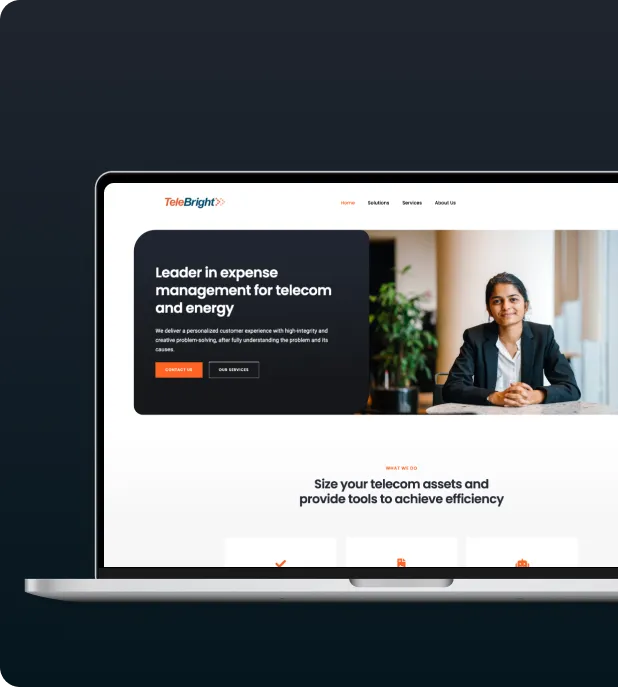
The Telebright telecom analytics platform

TELEBRIGHT

Simplified telecom revenue assurance through intelligent automation

Problem

Telebright required a scalable platform to help telecom operators monitor network performance, analyse usage data, and identify revenue leakage opportunities across large datasets.

Challenge

Managing billions of telecom records manually creates delays in reporting, operational inefficiencies, and challenges in identifying revenue-impacting discrepancies in real time.

What we built

Every solution we build is AI-ready by architecture, so your business grows smarter. We engineer software around the way your business works: its processes, integrations and growth targets, bringing years of delivery precision to every project.

Explore our work

Industries

Procure-To-Pay Automation
Across Industries

Procure-to-pay challenges are universal, but their shape differs by industry. Sphinx Solutions has built and deployed P2P automation for organisations across the following sectors.

How We Build It

Technology Stack for P2P Automation

Sphinx Solutions leverages a proven, enterprise-grade technology stack for procure-to-pay automation.

  • UiPath
  • Automation Anywhere
  • Power Automate
  • Blue Prism

How We Work

Our Procure-To-Pay Implementation Approach

We follow a proven six-phase implementation methodology to help organisations automate procurement processes, streamline supplier management, improve compliance and maximise ROI. Each phase is designed to minimise disruption while ensuring a smooth transition to a fully automated Procure-to-Pay ecosystem.

  1. Step 1

    Process assessment & opportunity discovery

    What we do: Our procurement automation consultants conduct a comprehensive assessment of your existing procurement workflows, approval hierarchies, supplier management processes, invoice handling procedures and ERP ecosystem. We identify inefficiencies, bottlenecks, compliance risks and automation opportunities while defining measurable business outcomes.

    What you get

    • Current-state procurement process analysis.
    • Procurement maturity assessment.
    • Automation opportunity identification.
    • Spend visibility and compliance review.
    • ROI projections and business case.
    • Prioritised implementation roadmap.
  2. Step 2

    Solution design & workflow architecture

    What we do: Our solution architects design the future-state Procure-to-Pay framework, including workflow automation logic, approval matrices, supplier onboarding processes, invoice matching rules, exception handling mechanisms and integration architecture. Every workflow is optimised for efficiency, scalability and compliance.

    What you get

    • Detailed P2P solution architecture.
    • Workflow and approval process design.
    • Integration architecture documentation.
    • Supplier management framework.
    • Compliance and governance controls.
    • User roles and access management strategy.
  3. Step 3

    Development, automation & system integration

    What we do: Our automation specialists configure procurement workflows, develop automation scripts, implement approval engines, build supplier portals and integrate the solution with your ERP, accounting and enterprise applications. Development is executed using agile methodologies with continuous stakeholder feedback.

    What you get

    • Fully configured P2P automation platform.
    • ERP and third-party system integrations.
    • Automated approval workflows.
    • Invoice processing automation.
    • Supplier management capabilities.
    • Technical and functional documentation.
  4. Step 4

    Testing, validation & quality assurance

    What we do: Before deployment, we conduct extensive testing across procurement workflows, approval scenarios, invoice processing, integrations and compliance controls. We validate performance, security and business process accuracy to ensure the solution performs reliably in real-world environments.

    What you get

    • End-to-end process validation.
    • System integration testing results.
    • User acceptance testing (UAT).
    • Security and compliance verification.
    • Defect resolution and optimisation reports.
    • Production readiness assessment.
  5. Step 5

    Deployment, training & go-live support

    What we do: Once approved, we deploy the solution into your production environment and manage the go-live process. Our team provides user training, stakeholder onboarding and hypercare support to ensure seamless adoption and business continuity.

    What you get

    • Production-ready P2P solution.
    • Successful system deployment.
    • User and administrator training.
    • Go-live support and monitoring.
    • Cutover and transition management.
    • Adoption and change management guidance.
  6. Step 6

    Continuous optimisation & managed support

    What we do: Procurement needs evolve as your business grows. We continuously monitor system performance, workflow efficiency, supplier interactions and automation effectiveness. Our team delivers ongoing enhancements, support and optimisation initiatives to maximise long-term value.

    What you get

    • Ongoing system monitoring.
    • Performance and KPI reporting.
    • Workflow optimisation recommendations.
    • Enhancement and feature updates.
    • Dedicated support services.
    • Long-term procurement automation roadmap.

Security & Compliance

Security and Compliance for P2P Implementation

Enterprise procurement data is sensitive. Every Sphinx Solutions P2P implementation is built with security and regulatory compliance as non-negotiable requirements.

Data security

  • End-to-end encryption for data in transit and at rest.
  • Role-based access control with the principle of least privilege.
  • Secure API integrations with OAuth 2.0 and token-based authentication.
  • Data masking for sensitive financial and supplier information.

Compliance standards

  • SOX (Sarbanes-Oxley) compliance controls built into approval workflows.
  • GDPR-compliant data handling for supplier and employee data.
  • ISO 27001-aligned security practices.
  • Full audit trail with immutable transaction logs for internal and external audit.

Infrastructure security

  • Cloud deployments on SOC 2-compliant infrastructure (Azure, AWS, GCP).
  • On-premise deployment options for highly regulated environments.
  • Penetration testing and vulnerability assessment before go-live.
  • Disaster recovery and business continuity planning.

Governance

  • Separation of duties is enforced at the system level.
  • Automated alerts for policy exceptions and anomalous spend patterns.
  • Vendor risk scoring is integrated into the supplier onboarding workflow.

Comparison

Procure-To-Pay Automation vs the Traditional Procurement Process

Fourteen areas where the two approaches diverge, compared on what actually changes for the procurement and finance teams doing the work.

Procurement area Traditional procurement process Automated procure-to-pay solution
Purchase requests Manual forms and emails. Digital requisition workflows.
Approval process Multiple follow-ups and delays. Automated approval routing.
Purchase orders Created manually. Automatically generated.
Invoice processing Manual data entry. Automated invoice capture and matching.
Spend visibility Limited visibility into spending. Real-time spend analytics and reporting.
Supplier management Disconnected vendor records. Centralised supplier management.
Compliance Difficult to enforce policies. Automated compliance checks.
Audit readiness Time-consuming audits. Complete audit trail for every transaction.
Error rate High risk of human errors. Reduced errors through automation.
Processing time Days or weeks. Hours or minutes.
Fraud detection Reactive and manual. AI-powered monitoring and alerts.
Cost efficiency High administrative costs. Lower operational expenses.
Scalability Difficult to manage growth. Easily scales with business needs.
Decision making Limited procurement insights. Data-driven procurement decisions.

Source: Amazon Business, “Procure-to-Pay Automation Guide” Last updated: 22 July 2026

Quick Recommendations

Traditional procurement

Best suited to small organisations with limited purchasing activity, simple approval structures and low compliance requirements.

Procure-to-Pay automation

The preferred choice for growing and enterprise businesses that need greater spend control, faster approvals, improved compliance, supplier visibility and operational efficiency across the entire procurement lifecycle.

How We Engage

Engagement Models for P2P Automation Services

We offer flexible engagement options to match your budget, timeline and internal capability.

01

Fixed-price project

Best for organisations with clearly defined requirements and scope. We agree on scope, deliverables, timeline and cost upfront, with no surprises.

02

Dedicated team

Best for enterprises that want a long-term automation partner with committed capacity. You get a dedicated team of P2P specialists embedded in your project, managed by Sphinx and accountable to you.

03

Managed automation service

Best for organisations that want the outcome, not the responsibility. We build, run and continuously optimise your P2P automation under a monthly service agreement, with defined SLAs and performance guarantees.

Not sure which model fits your project stage?

Book a 30-minute engagement consultation.

Expert Insights

Procurement teams today are expected to do far more than process purchase orders. They need visibility, compliance, supplier control and actionable insights. The organisations seeing the greatest value from Procure-to-Pay automation are those that treat procurement as a strategic business function rather than an administrative process.
Anand Mahajan Founder & CEO, Sphinx Solutions

Why Choose Us

Client-Oriented. On-Time Delivery.

16+

Years of experience

Sphinx has completed 16 successful years in the industry, helping businesses with technology and digital transformation, including AI-powered solutions across major industry verticals.

16+

Industry experts

We have a dedicated and reliable team of AI engineers, ML scientists, data engineers, and MLOps specialists covering every role in the AI development lifecycle.

1500+

Solutions delivered

We have delivered more than 1,500 solutions through a results-driven approach, many to recurring clients who keep expanding their AI capabilities with us.

200+

In-house resources

We have a dedicated in-house team, experienced and skilled across AI development, software engineering, QA, DevOps, and cloud infrastructure.

750+

Happy clients

We are trusted by 750+ clients for best-in-class AI solutions at competitive rates, with the delivery accountability enterprise clients demand.

50M+

Users love our work

Our client-centric approach and high-calibre AI engineering, built on current models and frameworks, have made us a trusted partner for businesses building AI.

Highly Rated Across Top Platforms

Connect with us

Drive Procurement Excellence Across Your Organisation

Don’t let manual processes slow your growth. Join the ranks of high-performing enterprises using Sphinx Solutions to drive procurement efficiency.
  • USA
  • UK
  • UAE
  • India

Enter your contact details

We’ll get back to you in 1 to 2 business days.

Frequently Asked
Questions

Everything you need to know about automating procurement and accounts payable with us. Can’t find your answer? Talk to us.

It depends on how complex your procurement processes are, how many systems you need to connect, and what you want out of it. Most companies start with a process assessment, then roll out in phases. Working phase by phase keeps disruption down, gives people time to adjust, and gets you results sooner.

Three-way matching automatically checks the invoice, the purchase order and the goods receipt against each other. It confirms you ordered, received and were billed for the same thing before anyone approves payment. That removes a lot of manual checking and catches duplicate payments, billing mistakes and fraud before money goes out the door.

AI takes over the repetitive work and reads through far more data than a person could. It processes invoices quickly, flags spending that looks off, points out risks, and routes approvals to the right people. Your procurement team spends less time on manual work and makes better decisions.

IDP pulls data out of procurement documents like invoices, purchase orders, receipts and contracts, then validates it, so nobody has to key it in by hand. You get cleaner data, faster turnaround and fewer mistakes, and your team gets time back for work that needs real judgement.

RPA handles the routine jobs that eat up a team’s time: creating purchase orders, validating invoices, onboarding vendors, entering data, reconciling records, routing approvals and pulling reports. Hand those off and the work moves faster with fewer errors.

Yes. Our procure-to-pay solutions connect with the ERP and supplier management platforms you already run, including SAP, Oracle, Microsoft Dynamics and NetSuite. You keep your current setup; we sync the data and automate the workflows around it.

That varies with how mature your processes already are, how many transactions you run, and where you’re losing money today. Most companies cut their admin costs and make fewer manual errors. Clearer visibility into spend also shows you where budget is being wasted, so you can redirect it.

We cover the whole process: assessment, workflow design, document processing, RPA, ERP integration, analytics, deployment and support after go-live. We build it around how your procurement actually runs, so you tighten up operations, stay compliant, and get more out of the team you already have.