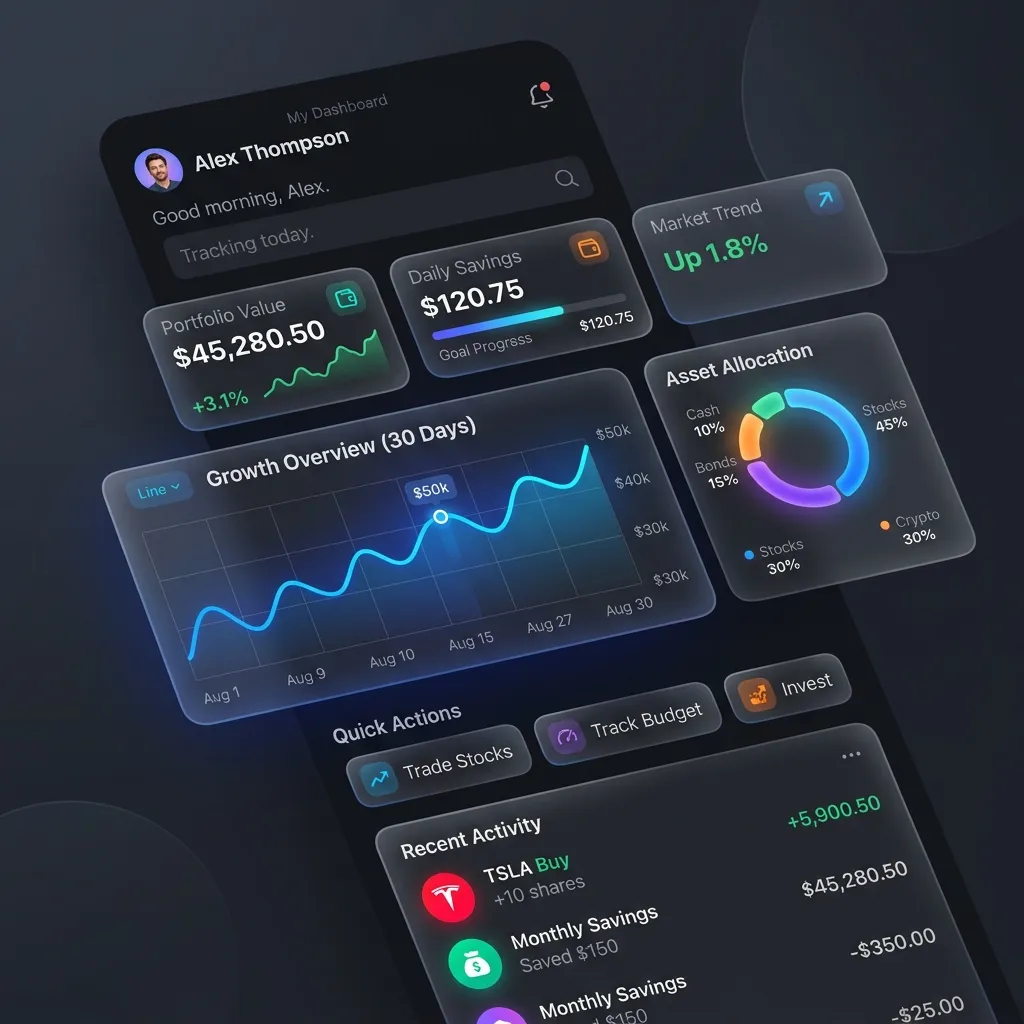
Faster page load speeds
PWAs use service workers and intelligent caching to load content almost instantly, reducing bounce rates.
We build web applications that behave like native mobile apps: installable from the browser, working offline, sending push notifications and loading instantly even on slow networks, all from a single codebase.
Trusted By
750+ happy clients, including top Fortune 500 companies













Overview
Progressive Web App (PWA) development is the process of building web applications that behave like native mobile apps. A PWA runs in a browser but can be installed on a user’s device, works offline, sends push notifications and loads instantly even on slow networks.
Key characteristics of a PWA
Why It Matters
Businesses are turning to PWAs because they solve three compounding problems at once: high development costs, poor mobile web performance and low user retention on browsers. A native app costs significantly more to build and maintain across two platforms, and a standard mobile website performs well on desktop but poorly on mobile. A PWA sits precisely in between the two.
A native app costs significantly more to build and maintain across two platforms. A standard mobile website performs well on desktop but poorly on mobile in terms of engagement. PWAs sit precisely in between, delivering app-grade performance through the web.
PWAs use service workers and intelligent caching to load content almost instantly, reducing bounce rates.
Users can continue using the app with cached data even without an internet connection.
One codebase works across all platforms, cutting build and update costs by up to 60% versus dual native apps.
Push notifications bring users back without requiring a separate app download.
No app store friction: users discover and install PWAs directly from search or a URL.
PWAs are indexable by search engines, unlike native apps, giving your product organic discoverability.
Faster load times directly improve conversion rates. A 1-second delay in page load time reduces conversions by 7%.
Full-screen mode, a home screen icon and smooth animations create a native feel.
Who It Suits
What We Build
At Sphinx Solutions we offer end-to-end progressive web app development services, from strategy and design through to deployment and ongoing support. Our PWA developers bring expertise across frontend frameworks, service worker architecture and performance optimisation. That covers custom builds, consulting, UI/UX, enterprise deployments, migration from native or legacy web apps, testing and long-term maintenance.
01
We build PWAs from the ground up, tailored to your business model, audience and technical requirements. Every application is performance-tested, security-hardened and built to scale.
Talk to our service experts02
Not sure if a PWA is the right fit for your product? Our consultants assess your existing technology, user journey and business goals to recommend the optimal architecture: PWA, native or hybrid.
Talk to our service experts03
Our UI/UX design team creates intuitive, mobile-first interfaces that perform consistently across devices. We design for speed, accessibility and conversion.
Talk to our service experts04
For large-scale organisations, we build secure, scalable PWAs with role-based access, enterprise authentication through SSO and OAuth, API integrations and compliance-ready architecture.
Talk to our service experts05
We migrate existing native apps or legacy web applications to PWA architecture, retaining your features while gaining offline support, push notifications and faster load performance.
Talk to our service experts06
Our QA engineers conduct Lighthouse audits, cross-browser testing, network condition simulations and performance benchmarking to ensure your PWA meets production-grade standards.
Talk to our service experts07
We provide ongoing support, feature updates, performance monitoring and security patches post-launch, with SLA-backed response times.
Talk to our service expertsWhat We Solve
At Sphinx Solutions we deliver custom PWA development solutions that help businesses create fast, engaging and reliable digital experiences across devices. Our progressive web app solutions combine the accessibility of websites with the functionality of mobile applications, letting businesses reach users on any platform without maintaining separate applications.
We build tailor-made progressive web applications designed around your business objectives, user expectations and industry requirements. Our team develops scalable PWAs that deliver smooth performance, intuitive interfaces and seamless user experiences.
Our enterprise-grade PWA solutions help organisations improve operational efficiency, enhance customer engagement and support large-scale digital ecosystems. We build secure, scalable and high-performing applications that integrate with existing enterprise systems.
We create ecommerce PWAs that offer faster loading speeds, simplified navigation and app-like shopping experiences. Offline browsing, push notifications and quick checkout processes help businesses improve customer retention and conversion rates.
Modernise your existing website or legacy application by migrating it to a progressive web app. Our migration services help businesses improve performance, accessibility and user engagement while preserving existing data and functionality.
Our PWAs work seamlessly across smartphones, tablets, desktops and multiple operating systems. Businesses can reach a broader audience through a single application while reducing development and maintenance costs.
We develop offline-capable progressive web apps that continue functioning even when internet connectivity is limited. By leveraging service workers and local data storage, users can access important content and features anytime.
Our design team creates intuitive, responsive and user-friendly interfaces that deliver consistent experiences across all devices. We focus on usability, accessibility and customer engagement to maximise user satisfaction.
Our dedicated support team provides continuous monitoring, performance optimisation, feature enhancements, security updates and technical assistance to ensure your PWA remains reliable and future-ready.
Industries
Sphinx Solutions has delivered progressive web applications across regulated, high-traffic and user-sensitive industries. Our domain knowledge lets us build for the compliance requirements, performance thresholds and audience behaviours specific to each sector, from patient portals that must keep working offline to storefronts judged on how fast the first screen paints.
How We Build It
Our PWA developers are proficient across the modern web stack. We select tools based on performance benchmarks, community support and long-term maintainability, rather than on habit. That spans the frontend framework, the service worker and manifest layer that makes a PWA installable, the backend and APIs behind it, and the infrastructure it ships on.
How We Work
We follow a structured and agile development methodology that ensures transparency, faster delivery and measurable outcomes at every stage of your progressive web app development journey. Seven phases take a PWA from discovery and architecture through design, build, Lighthouse-audited testing and deployment, to the support that keeps it current after launch.
Step 1
What we do: We begin by understanding your business goals, target audience, existing systems and technical requirements. Our team conducts stakeholder workshops, analyses user journeys and identifies key performance objectives to create a clear project roadmap.
What you get
Step 2
What we do: Our solution architects define the PWA architecture, including frontend frameworks, API integrations, caching strategies, service worker implementation and offline capabilities. We establish a scalable foundation that supports future growth.
What you get
Step 3
What we do: Our designers create responsive wireframes, interactive prototypes and user-centric interfaces optimised for multiple devices. We focus on intuitive navigation, accessibility and app-like experiences to maximise user engagement.
What you get
Step 4
What we do: Our developers build the application using modern technologies such as React, Angular, Vue.js or Next.js. We implement service workers, web app manifests, push notifications and offline capabilities to deliver a fast and reliable user experience.
What you get
Step 5
What we do: We conduct comprehensive quality assurance, including cross-browser testing, device compatibility checks, accessibility audits, security testing and performance optimisation. Lighthouse audits and real-world testing ensure a seamless user experience.
What you get
Step 6
What we do: We deploy your progressive web app to your preferred cloud or hosting environment while configuring HTTPS, CDN services, caching mechanisms and monitoring tools to ensure optimal performance.
What you get
Step 7
What we do: After launch, our support team monitors application performance, resolves issues, releases updates and implements enhancements to keep your PWA secure, scalable and aligned with evolving business needs.
What you get
Comparison
The three approaches trade reach, capability and cost against each other differently. A PWA installs without an app store and works offline; a native app gets full hardware access at the price of two builds; a responsive site is cheapest but gives up installability and push. These are the eleven dimensions that usually decide it.
| Feature | PWA | Native app | Responsive website |
|---|---|---|---|
| Platform | All browsers and OS | iOS or Android only | All browsers |
| App store required | No | Yes | No |
| Offline support | Yes, via service workers | Yes | No |
| Push notifications | Yes | Yes | No |
| Install on home screen | Yes | Yes | No |
| Discoverability via SEO | Yes | Limited | Yes |
| Development cost | Lower, single codebase | Higher, dual builds | Lowest |
| Performance | Near-native | Native | Lower on mobile |
| Update mechanism | Automatic, no store approval | Manual, store approval | Automatic |
| Access to device hardware | Partial and growing | Full | Minimal |
| Time to market | Fast | Slower | Fastest |
Proof Of Work
Sphinx Solutions shows you outcomes, not just portfolios. Every application below is measured against the business problem it was built to solve, and each one is set out the same way: the problem the client arrived with, the constraint that made it hard, and what we actually shipped against it.

YARN BAZAAR
India’s first B2B yarn trading platform
India’s ₹200 billion textile industry ran entirely on offline transactions, dominated by middlemen, opaque pricing, unreliable logistics and zero payment guarantees. Yarn buyers and sellers had no digital infrastructure to trade at scale.
The Yarn Bazaar needed a platform that could digitise the entire textile trading lifecycle: discovery, negotiation, payment, logistics and financing, in a market with no existing digital precedent.
Full-stack B2B marketplace (web, iOS, Android) with real-time pricing, smart matching, bidding, sample management, logistics tracking, financing, and role-based dashboards for buyers, sellers and admins.

POP MEALS
South-East Asia’s first food delivery app
Pop Meals entered Malaysia aiming to become South-East Asia’s first dedicated food delivery platform, driven by a bold vision to transform how people discover, order and enjoy meals.
To build a delivery ecosystem from scratch with no existing local benchmark, while maintaining real-time order tracking, multi-location delivery logic and payment integration.
Three-app ecosystem: customer ordering, delivery agent (GPS routing, order acceptance) and admin panel. Features include multi-location delivery, push notifications, payments, scheduling and a restaurant CMS, built cross-platform for iOS and Android.
RAINMAN
Monitoring and control for portable water desalination systems
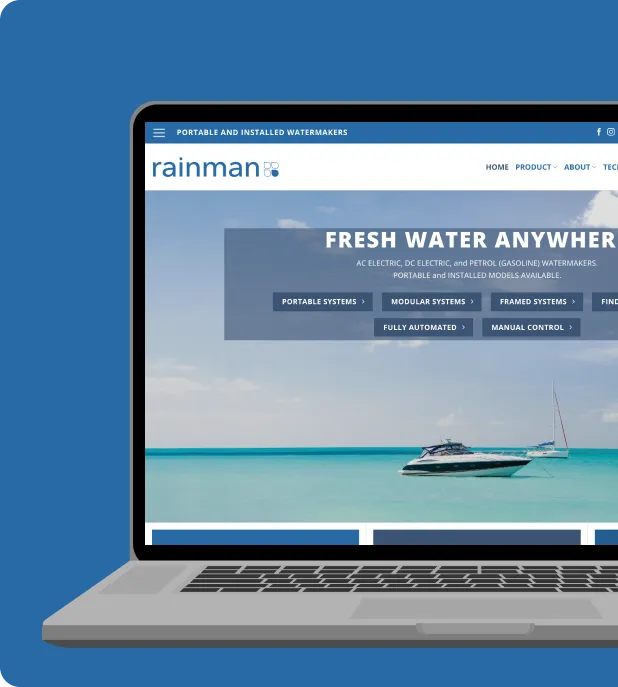
Rainman developed innovative portable desalination systems designed for marine and off-grid environments. While the hardware offered reliable water purification, users needed a smarter digital platform to monitor system performance, manage operations remotely and access real-time insights.
The client required a modern web application capable of handling real-time monitoring, remote accessibility, device management and a seamless user experience across different environments and devices.
A scalable web-based platform with real-time monitoring dashboards, remote system control, performance analytics, smart alerts and secure cloud connectivity to simplify desalination system management for users worldwide.
Every solution we build is AI-ready by architecture, so your business grows smarter. We engineer software around the way your business, processes, integrations, and growth targets. We bring years of delivery precision to every project across the world.
How much does it cost?
Wondering how much it costs to build a Progressive Web App?
The cost depends on several factors, including application complexity, design requirements, feature set, third-party integrations, offline capabilities, push notifications and backend infrastructure. Whether you are building a customer-facing ecommerce platform, an enterprise portal or a SaaS application, every project has unique requirements that influence the final cost.
Our app cost calculator turns those into a realistic estimate. Answer a few questions about your application requirements, target audience, preferred technologies and functionality to get a figure without the uncertainty.
Try our app cost calculatorHow We Engage
We offer three hiring and engagement models to fit your project structure, budget cycle and team requirements: a dedicated team for long-term product work, a fixed price where the scope is already defined, and time and material where requirements are still moving. Each one leaves the code and the roadmap with you.
01
For long-term product development, ongoing feature releases, or when you need to extend your in-house team. You get a fully dedicated team working exclusively on your PWA. Team size and composition can scale as your product evolves.
02
For projects with clearly defined scope, timeline and deliverables. We agree on requirements upfront, provide a fixed quote and deliver to a confirmed schedule. Suitable for MVPs and defined-scope PWA builds.
03
For projects with evolving requirements, exploratory development or iterative product discovery. You pay for time spent. This model offers maximum flexibility to pivot scope, reprioritise features or accelerate delivery as needed.
Why Choose Us
Sphinx has completed 16 successful years in the industry, helping businesses with technology and digital transformation, including AI-powered solutions across major industry verticals.
We have a dedicated and reliable team of AI engineers, ML scientists, data engineers, and MLOps specialists covering every role in the AI development lifecycle.
We have delivered more than 1,500 solutions through a results-driven approach, many to recurring clients who keep expanding their AI capabilities with us.
We have a dedicated in-house team, experienced and skilled across AI development, software engineering, QA, DevOps, and cloud infrastructure.
We are trusted by 750+ clients for best-in-class AI solutions at competitive rates, with the delivery accountability enterprise clients demand.
Our client-centric approach and high-calibre AI engineering, built on current models and frameworks, have made us a trusted partner for businesses building AI.
Book a 30-minute engagement consultation.
Connect with us
Tell us what the app has to do offline and who it has to reach, and we’ll come back with an architecture, a caching strategy and a delivery timeline.
Everything you need to know about building a Progressive Web App with us. Can’t find your answer? Talk to us.
Progressive Web Apps are a great choice for businesses that want to improve user engagement, increase page speed and offer a smooth experience across all devices. They load quickly, work even with slow or no internet, and help improve user retention and conversions without the expense of developing separate native apps.
Yes. Progressive Web Apps can work offline by using cached data stored on the user’s device after the first visit. This allows users to continue browsing and using key features even without an internet connection or in areas with poor network coverage, ensuring a better overall user experience.
The cost of developing a Progressive Web App depends on its features, functionality and overall complexity. In most cases, development costs range from $1,000 to $50,000 or more. At Sphinx Solutions we provide cost-effective PWA development services tailored to your business goals, requirements and budget.
The time required depends on the project’s complexity and feature set. On average, development takes between 2 and 6 months or longer. Simple PWAs can be completed faster, while advanced, feature-rich applications typically require additional development and testing time.
Progressive Web Apps combine the advantages of websites and native mobile apps. They offer features such as offline access, push notifications, fast loading and home screen installation without requiring app store downloads. Since a single codebase works across multiple platforms, PWAs are also more affordable to develop and maintain than separate native apps.
Yes. Progressive Web Apps are built to run smoothly on Android, iOS, desktops and tablets through a single application. They provide a consistent user experience across different devices and platforms, eliminating the need to build separate apps for each operating system.