Key Takeaways
- Robotic automation companies help businesses improve productivity, reduce manual work, and increase operational accuracy through AI-driven automation solutions.
- Leading robotic automation companies use AI, machine learning, and intelligent workflows to automate repetitive business processes and improve efficiency.
- Robotic automation solutions deliver cost savings, better quality control, enhanced workplace safety, and scalable operations across industries.
- Businesses investing in robotic process automation gain faster workflows, reduced errors, and stronger decision-making through real-time data and analytics.
- Future trends in robotic automation include AI integration, collaborative robots, Robotics as a Service (RaaS), and customized automation systems.
Robot automation companies are at the forefront of innovation in technology and driving changes within each industry. Using robotics, artificial intelligence, and machine learning helps reduce costs, makes processes easier, and boosts productivity. Our latest blog covers the leading robotic automation companies changing industries with their technologies, applications, and investments.
Understanding Robotic Automation
With the growing demands for high efficiency and precision in the production process, the new wave of robotic automation has picked up momentum considerably. Introducing such automation has become a necessary step for any business to stand the test of cutthroat competition.
Using robots for operations that require constant repetition and allow humankind to concentrate on important work that calls for much thought is an optimal way by which companies can enhance their operation. This is not a matter of replacing human labor with automation; it is an augmentation of it.
Struggling to measure the ROI of automation initiatives?
Use our RPA ROI calculator to estimate your savings instantly
Top 10 Robotic Automation Companies
Here is the list of the top 10 automation companies that are making a difference in the market is mentioned below:
1. Sphinx Solutions

Best for Tailored Automation Solutions
- Founded: 2010
- Number of Employees: 200+
- Annual Revenue: $10 million+
Overview: Sphinx Solutions specializes in developing customized robotic automation solutions designed for business requirements. The company focuses on integrating robotics with highly advanced technologies for improved efficiencies in operations.
Transformative Effect: Applying robotic automation across numerous industries, including logistics, manufacturing, and healthcare, Sphinx Solutions has succeeded in ensuring improvement in efficiency and reduction of cost in operations. Its customization focus ensures businesses come up with one-of-its-kind solutions to unique challenges.
Technology: Sphinx Solutions utilizes AI and machine learning to design smart automation systems with the changing needs of the business, hence increasing sustainability and success.
Features:
- Tailor-made automation systems
- Integration into existing workflows
- AI-based solutions
Benefits:
- Client-Centric Approach: Solutions are close approximations of the client’s requirements.
- Heavy interaction with clients: Engagements often occur with clients for the entire lifecycle of the project
- Flexible solution: Work has been done for nearly every industry, even healthcare and manufacturing.
Read More Related Blogs
2. Yaskawa Electric
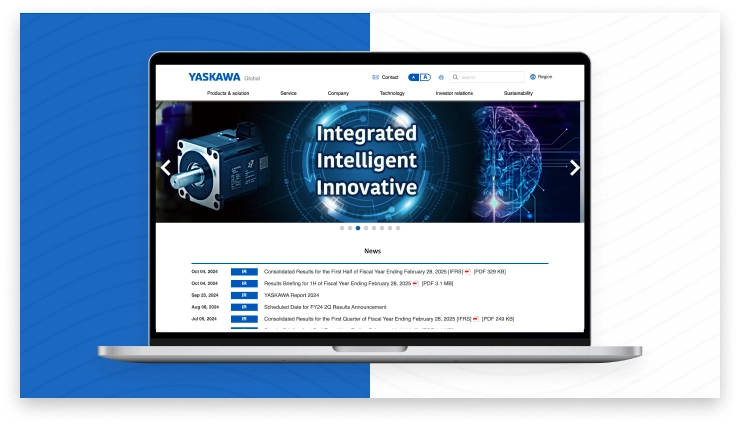
Best for Automating Production Processes
- Founded: 1915 (Yaskawa), 1989 (Motoman Robotics)
- Number of Employees: 15,000
- Annual Revenue: $4.06 billion
Overview: Yaskawa Electric is a pioneer in industrial automation, known for its advanced robotics solutions, particularly in the manufacturing sector.
Transformative Impact: Their robots are widely used in production lines for welding, assembly, and material handling, significantly improving efficiency and precision.
Technology: Yaskawa integrates cutting-edge robotics with sophisticated motion control technologies, enabling seamless operation and high performance in demanding environments.
Features:
- Human-collaborative robots
- Advanced vision systems
- Material handling capabilities
Benefits:
- In-person and Online Training: Full-range user training.
- Lower Unit Cost Than the Competition: Most models are available at competitive pricing.
- Emergency Support Available 24/7: Reliable customer support service.
Read More Related Blogs
3. UiPath
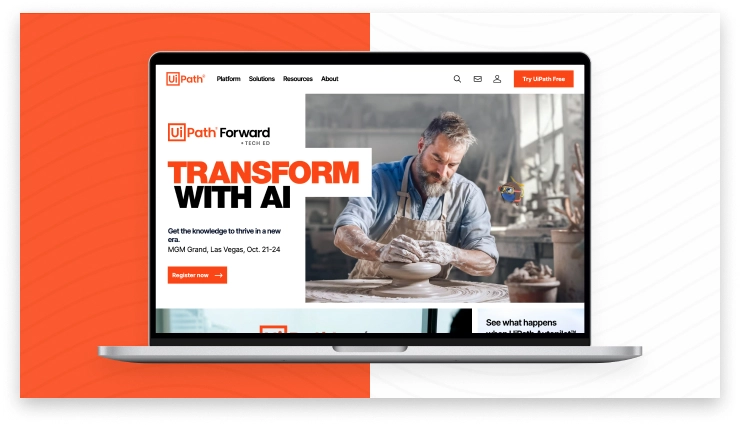
Best for Robotic Process Automation (RPA)
- Founded: 2005
- Number of Employees: 4000+
- Annual Revenue: $1.1 billion
Overview: UiPath is the company that leads the way in terms of software robots, which is also known as the automation of digital tasks through a repetitive process.
Transformative Impact: By streamlining processes in finance, HR, and customer service, UiPath helps organizations reduce errors and enhance operational efficiency.
Technology: Their platform utilizes AI and machine learning to create adaptive bots capable of learning from user interactions, making them a top choice for businesses looking to automate workflows.
Features:
- User-friendly automation platform
- AI and machine learning capabilities
- Extensive library of pre-built automation tasks
Benefits:
- Quick deployment with minimal disruption easily fits into existing systems.
- Scalable solutions which grow with the changing business need, to adjust easily as demand changes
- A healthy community and resource support, it has an active user community and copious documentation
Read More Related Blogs
4. Automation Anywhere
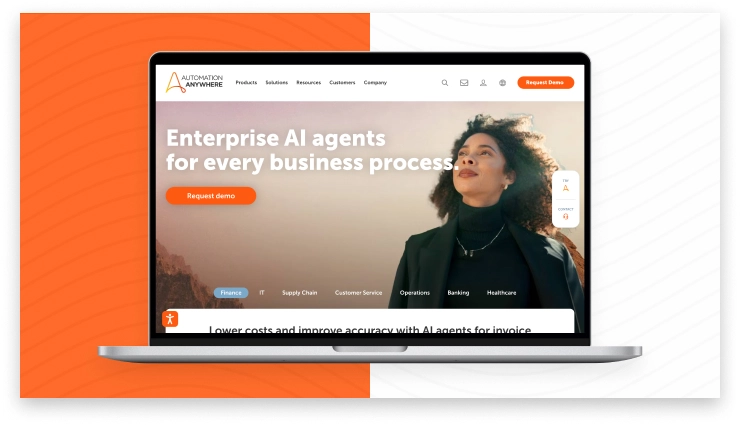
Best for Intelligent Automation Solutions
- Founded: 2003
- Number of Employees: 2400
- Annual Revenue: Estimated at $1 billion
Overview: Automation Anywhere is a market leader in RPA through its business automation solutions that combine automation and artificial intelligence, thereby helping businesses work smarter.
Transformative Impact: Their platform allows companies to automate repetitive tasks, leading to higher productivity and efficiency across various sectors.
Technology: They use AI and machine learning to make processes smarter and improve decision-making.
Features:
- A marketplace for pre-built bots (Bot Store)
- Cloud-based architecture for easy access
- Analytics tools to track performance
Benefits:
- Easy to use, making it accessible for all teams
- Scalable solutions to fit different business needs
- Comprehensive training and support options are available
Struggling with repetitive tasks slowing down your business operations?
Streamline processes with expert robotic automation tailored to your needs.
5. Blue Prism
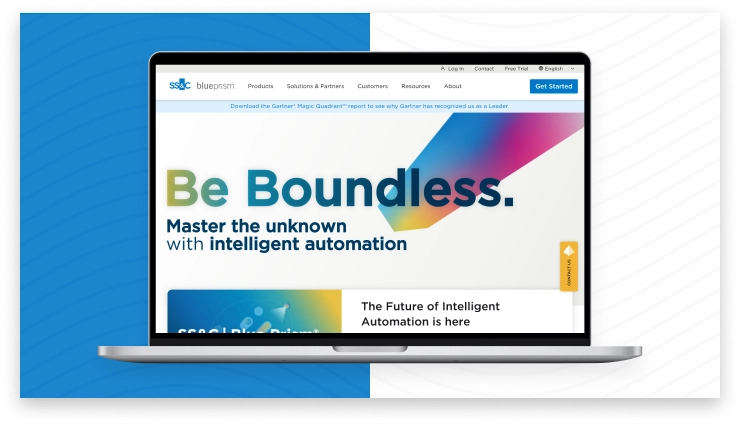
Best for Enterprise RPA Solutions
- Founded: 2001
- Number of Employees: 1000
- Annual Revenue: Approximately $200 million
Overview: Blue Prism is known for its robust RPA platform designed for large businesses. They help organizations automate complex tasks securely and efficiently.
Transformative Impact: Their technology enables companies to improve productivity and cut costs while ensuring compliance with regulations.
Technology: Blue Prism provides a digital workforce that works well with existing systems, allowing for easy automation.
Features:
- Strong security and governance measures
- Scalable automation framework
- User-friendly process design tools
Benefits:
- Supportive community with helpful resources
- Effective for automating high-volume processes
- Customizable to meet specific business needs
Read More Related Blogs
6. Fortra

Best for Comprehensive IT Automation
- Founded: 2021 (after rebranding from HelpSystems)
- Number of Employees: 700
- Annual Revenue: Estimated at $200 million
Overview: Fortra focuses on IT automation solutions that enhance security and streamline operations for businesses of all sizes.
Transformative Impact: Their tools help companies automate IT tasks, improve response times to incidents, and minimize errors, boosting overall productivity.
Technology: Fortra combines automation with security features to protect sensitive data while simplifying operations.
Features:
- Automation for IT processes
- Cybersecurity solutions
- Tools for workflow automation
Benefits:
- Tailored solutions for IT environments
- Strong emphasis on security and compliance
- Extensive support and training are available.
Read More Related Blogs
7. Kofax

Best for Intelligent Automation and Document Processing
- Founded: 1985
- Number of Employees: 1000+
- Annual Revenue: Approximately $300 million
Overview: Kofax specializes in intelligent automation and document processing, helping organizations improve efficiency and customer experiences.
Transformative Impact: Their solutions automate document-driven processes, reducing costs and increasing accuracy in handling data.
Technology: Kofax uses RPA, machine learning, and AI to create smart workflows that adapt to changing business needs.
Features:
- Intelligent document capture tools
- Automation capabilities for various processes
- Analytics and reporting features
Benefits:
- Quick to implement and easy to integrate with existing systems
- Comprehensive support and training resources
- Focused on improving data accuracy and speed
Read More Related Blogs
8. Pega
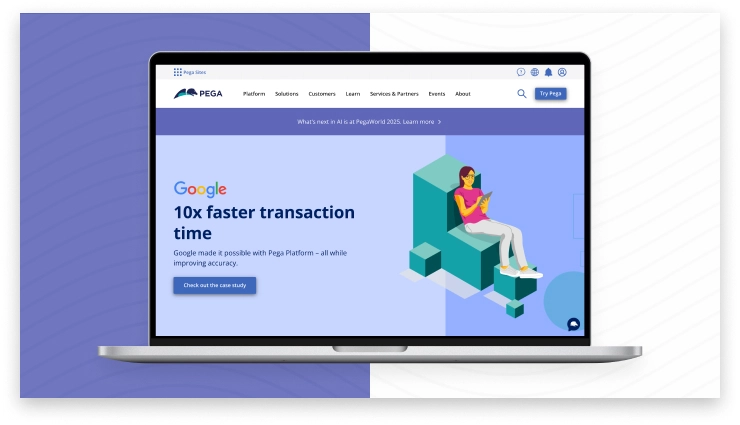
Best for Customer Engagement and Business Process Management
- Founded: 1983
- Number of Employees: 5000
- Annual Revenue: Approximately $1 billion
Overview: Pega offers a strong foundation for BPM and CRM with the emphasis on automating a path to enhance customer interaction.
Transformative Impact: Pega helps businesses streamline operations and enhance customer experiences by automating complex workflows.
Technology: Their platform features low-code development, allowing users to quickly build and adapt applications to fit their needs.
Features:
- Real-time decision-making tools
- Low-code application development for speed
- End-to-end process automation
Benefits:
- Flexible and scalable solutions for diverse business needs
- Strong analytics capabilities for better decision-making
- Comprehensive training and support options
Struggling to measure the ROI of automation initiatives?
Use our RPA ROI calculator to estimate your savings instantly
9. ABB
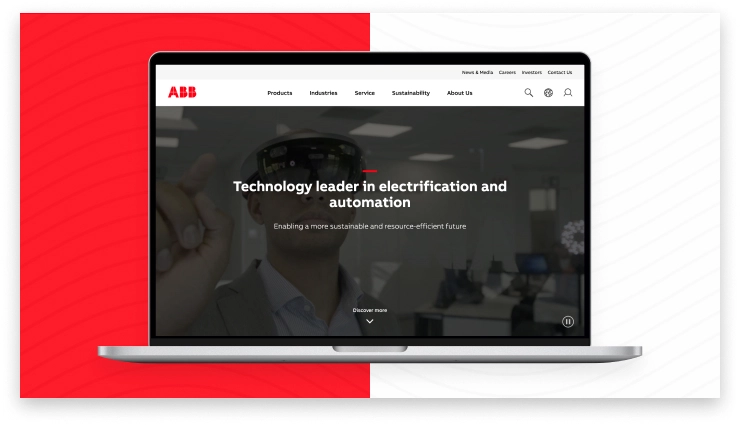
Best for Industrial Robotics
- Founded: 1988
- Number of Employees: 147000
- Annual Revenue: $28 billion
Overview: ABB is a global leader in industrial automation and robotics, providing comprehensive solutions to enhance productivity across various industries.
Transformative Impact: Their robotics systems are widely used in sectors such as automotive, food processing, and electronics, enabling flexible and efficient manufacturing processes.
Technology: ABB integrates robotics with IoT and AI, facilitating real-time monitoring and data analysis to optimize performance and reduce downtime.
Features:
- High-speed robots for manufacturing
- IoT-enabled systems for real-time monitoring
- Collaborative robots for human-robot interaction
Benefits:
- Comprehensive Product Line: Solutions exist in multiple market areas, such as automotive and pharmaceuticals.
- Thorough Global Reach and Support: Service support is on hand everywhere in the world.
- Proven Technology with a Good Reputation: It is an ancient brand, revered for quality and innovation.
Struggling to streamline repetitive tasks and boost efficiency?
Our advanced robotic automation solutions optimize workflows for maximum productivity.
10. KUKA

Best for Collaborative Robotics
- Founded: 1898
- Number of Employees: 14000
- Annual Revenue: $3.1 billion
Overview: KUKA is renowned for its innovative industrial robots and automation solutions tailored to diverse applications.
Transformative Impact: KUKA robots are widely used in automotive manufacturing and assembly, enhancing efficiency and adaptability in production environments.
Technology: Their robots are designed for collaborative environments, allowing seamless interaction with human workers and improving overall workplace safety.
Features:
- Collaborative robots designed for safe human interaction
- Flexible automation systems adaptable to various tasks
- Advanced programming tools for easy operation
Benefits:
- Strong Focus on Collaborative Solutions: Pioneering in safe human-robot collaboration.
- Versatile Applications Across Multiple Industries: Solutions applicable in diverse sectors, enhancing market reach.
- Robust Training and Support Programs: Extensive training resources to ensure effective use.
Read More Related Blogs
How Modern RPA Tools Can Help You with Enterprise Data Management
Advantages of Robotic Automation
There are certain advantages to integrating robotic automation in your business or organization, the benefits are as follows;
- Increased Efficiency: Automating the processes, robots run continuously without rest hours and increase productivity levels substantially. This round-the-clock operation allows businesses to better fulfill the several demands placed upon them, usually leading to quicker output and faster delivery times.
- Cost Savings: Automation can greatly save on labor costs and prevent costly errors. In the long term, savings over an initial investment can be substantial enough to free up additional funds for more inventions and innovation.
- Improved Quality: With persistent performance and high accuracy, robots can greatly reduce defects to continue improving product quality. The reliability of customers improves and relates to brand loyalty, which makes the companies more competitive in the marketplace.
- Improvement in Safety: Automation can take over hazardous work, which means that the probability of employees suffering injury in the workplace becomes reduced. Robots executing hazardous material handling or operations in severe conditions serve to create a safer working environment, which simultaneously improves the morale of workers and lowers insurance costs.
- Scalability: The robotic systems can be scaled to any level as business needs change. This means that a company is well-positioned to adjust the rate of production to changing conditions in the market without doing much to interfere with its activities during peak periods.
- Data Collection and Analysis: A majority of the robotic systems are fitted with sensors and IoT technology that facilitate the harvesting of real-time data. Such data is easy to analyze to optimize operations and make strategic business decisions with the help of it, giving a company an edge in the competition.
Read More Related Blogs
Challenges of Robotic Automation Companies
While robotic automation companies enjoy numerous advantages, they also encounter significant challenges throughout the entire process:
- High Initial Investment: The acquisition and implementation of robotic systems are expensive. Most companies face budget constraints that limit their capacity to invest in the necessary automation technology. Therefore, the maximum time a company will take to compete efficaciously is at its procurement date.
- Challenges in integration: Integration of robots into already existing workflows may present significant challenges. Organizations might need to change processes and train the teams that could redirect day-to-day functioning and require careful planning and coordination.
- Skill Area: Specialized skills are necessary to perform and maintain automation. Clients will find it difficult to recruit or train staff with the required expertise, where this is true, partnerships with educational institutions come into play.
- Limited Flexibility: Good for repetitive jobs, robots fail for jobs involving situations that change and call for flexibility. In such cases, their utility may be limited, and specific other devices may need to be installed.
- Dependence on technology: The risks of business ventures in high automation are exposed when things fail such as systems and cybersecurity. Companies have thus to invest in firm security measures and backup systems for uninterrupted operations.
- Change Management: Employees resist change brought about by automation. They fear loss of their jobs or changes in tasks and, hence, reluctance to learn new skills. So, a suitable change management plan should be in place to ease the transition process with minimum resistance and to embrace the change.
Struggling to measure the ROI of automation initiatives?
Use our RPA ROI calculator to estimate your savings instantly
Future Trends in Robotic Automation
Robotic automation companies are including future trends in their projects to gain a comparative edge among their competitors in the market. Here is a list of future trends that are integrated by companies in their organizations:
AI and Machine Learning Integration
The merging of AI and robotics is likely to result in a drastically altered landscape of automation. Intelligent robots that can learn from their surroundings would lead to efficiency and adaptability through new solutions that apply to all industries.
Collaborative Robots (Cobots)
Cobots are designed to work in collaboration with human staff and improve the safety and productivity aspects. This makes it possible to have a more cohesive workforce, by making workers flexible and having less training burdens on them.
Edge Computing:
This will prove to be critical with the increase in the requirement for real-time processing of data. It allows robots to have proximity data analysis and, therefore, improves both the decision-making capability and system responsiveness.
Robotics as a Service (RaaS)
This model in RaaS enables a firm to pay for renting robotic solutions rather than buying them outright. That makes automation accessible to small businesses, and adjustments will be easy over time as business needs evolve.
Increased Customisation
With the advancement of robotic technology, customization will increase. Businesses will have an opportunity to customize their systems of robots according to their unique needs for operation, hence increasing effectiveness.
Sustainability practices:
One of the drivers for the development of green robotic solutions will be a rising emphasis on sustainability. The growing need for waste reduction and energy minimization will prompt companies to actively pursue automation, which in turn meets their environmental goals as well as boosts their public image.
Expansion to New Industries:
When the technology in robotics improves, its applications from traditional manufacturing streams will expand to agriculture, healthcare, and logistics among other sectors. The expertise level gained in this field will diversify the development of new spheres where innovative ideas and operational improvement can emerge.
Read More Related Blogs
Why choose Sphinx Solution for a Robotic Automation
Choosing Sphinx Solutions for robotic automation development comes with several key advantages:
- Leading Technology: Sphinx Solutions is one that always uses cutting-edge innovations in robotics and automation. They are hence always advanced pioneers in a constantly evolving sector, using innovative tools and methodologies better.
- Extensive Support: From consulting to post-implementation support, Sphinx provides complete support throughout the entire project lifecycle to enable smooth integration and optimum performance of automation systems.
- Track Record: Their portfolio is open for viewing, with successful projects across diverse industries, whereby they reflect capability and reliability. This experience builds up trust and confidence in their solutions.
- Collaboration: Sphinx Underlines the Importance of Open Communication and Collaboration with Clients. This approach strikes a balance with the goals you want to achieve while supporting a smoother development process.
- Cost-Efficiency Solutions: They ensure the quality of automation solutions with productivity enhancements and cost savings in operations. This cost-effectiveness maximizes your return on investment.
Struggling with repetitive tasks slowing down your business operations?
Streamline processes with expert robotic automation tailored to your needs.
Conclusion
The major industries are shifting, redefining productivity with the shift in the future of work, and the businesses leading the way in all this are robotic automation companies. Sphinx Solution alone has chipped off-cuts using its high-end tech, while UiPath is doing it through streamlined processes. As efficiency keeps gaining momentum, then robotic automation will only keep growing, paving its way to a much automated and productive future.
FAQ’s
1. What is the Future of Custom Software Development?
The future of custom software development is set for significant expansion as businesses increasingly seek personalized solutions tailored to their specific needs. With the growing integration of AI and machine learning, software will become more intelligent, offering valuable insights and automating complex tasks.
2. Why Hire a Custom Software Development Company?
Choosing to work with a custom software development company provides organizations with solutions specifically designed to meet their unique operational requirements. These companies offer specialized knowledge and a wealth of experience, ensuring that industry best practices are followed throughout the project.
3. How Can Custom Software Improve Business Efficiency?
Custom software plays a crucial role in boosting business efficiency by automating mundane tasks and minimizing errors, which allows staff to concentrate on more strategic responsibilities. It enhances data management, enabling better decision-making, while tailored communication tools improve collaboration and streamline processes.


 Ajay Wadne