Umoment
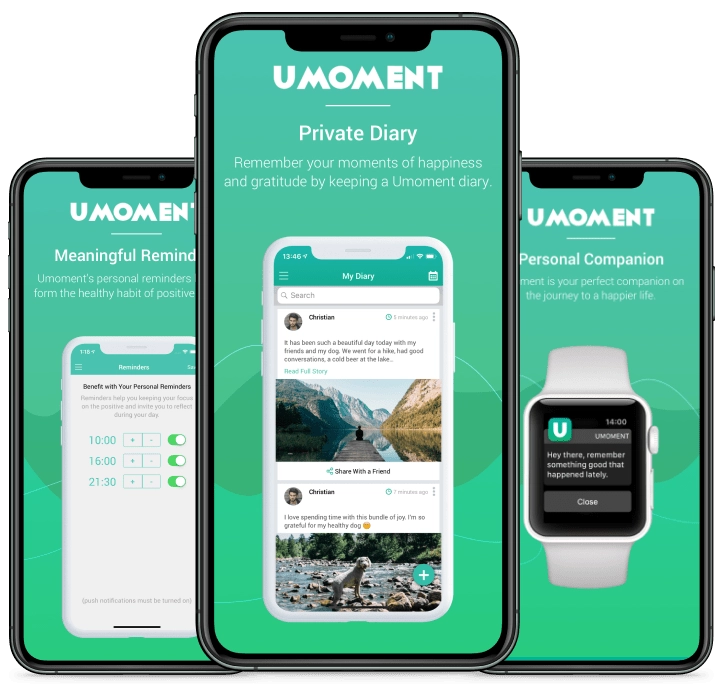
A private gratitude diary that taps you on the wrist. Note the good things as they happen, get reminded three times a day to look for them, and share a moment with someone when it is worth sharing.
Overview
Umoment is not a commercial brand in the ordinary sense. They came to Sphinx Solutions wanting an application that would build a community of positive thinkers, and they were clear that spreading positivity was the whole point of the business rather than a line in the marketing.
They wanted a community that cheers people on and helps when times are tough, on an application robust enough to carry it.
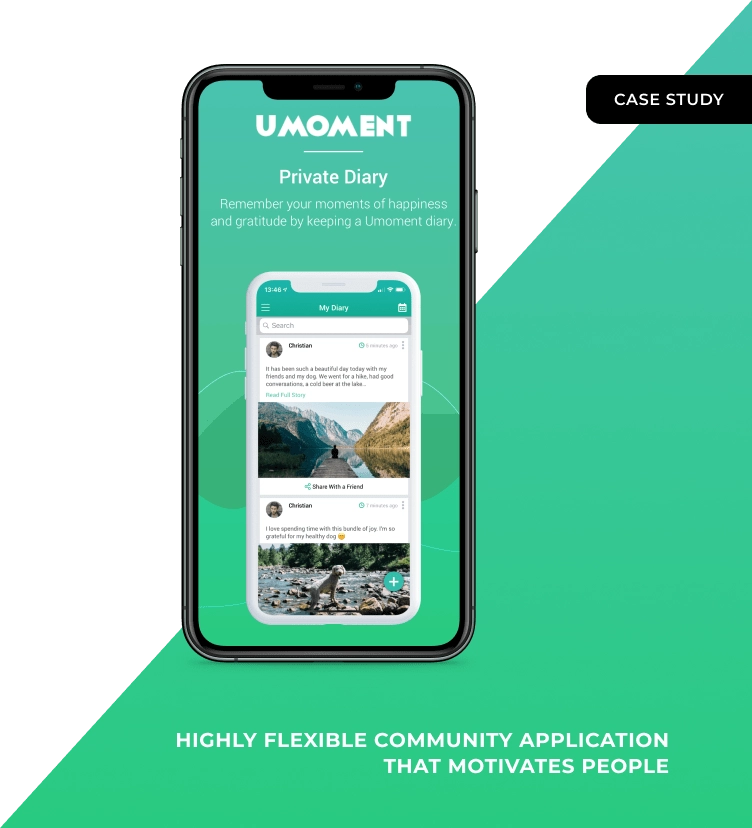
What we built binds that community together and gives each person somewhere private to note the things and the opportunities around them, so they can work out what actually brings them happiness.
The idea is old and the mechanism is simple: write down the good things and you notice more of them. The job of the software is to keep asking.
A mobile-optimised experience was decisive here rather than desirable. We had built several community applications before and knew that in this category the experience is the product.
The application had to expand its own capacity as the community grew, without anyone having to think about it.
iPhone users were their primary audience, so we recommended an iOS application with a web application behind it rather than spreading the build thin across platforms.
Push notifications and smart wearable integration were what would actually make the habit stick, because a diary you have to remember to open is a diary you stop opening.
We delivered a genuinely simple application that sends reminders to spread smiles, and a set of features built around keeping the habit rather than around filling a feature list.
Sphinx Solutions believes applications like this are what make the technology worth having. Getting people into the healthy habit of positive thinking is a good use of a phone.
“Umoment was just a concept and Sphinx Solutions brought it to life. We are so happy with the entire team. Their dedication and their ability to deliver a project are commendable.”
Tech stack
What people usually ask about Umoment and about building something like it.
Define the project goals, research the market and the audience, work through the legal and regulatory position early because health data attracts it, settle the features, design the layouts, build the infrastructure, test it properly, then launch.
Somewhere between $20,000 and $100,000, and the spread is that wide for a reason. A diary with reminders sits near the bottom of it; anything handling regulated health data, clinical integrations or a care team sits near the top. Features, platforms and where the team is account for the rest.
Being asked. The writing is easy and remembering to write is not, which is why the reminders and the wearable matter more here than any feature on the screen. Everything else is in service of the user opening it tomorrow as well as today.
Connect with us


