01
A custom website
A site delivering a genuinely smooth experience and built to what Jobegis needed, rather than assembled from a template.
Overview
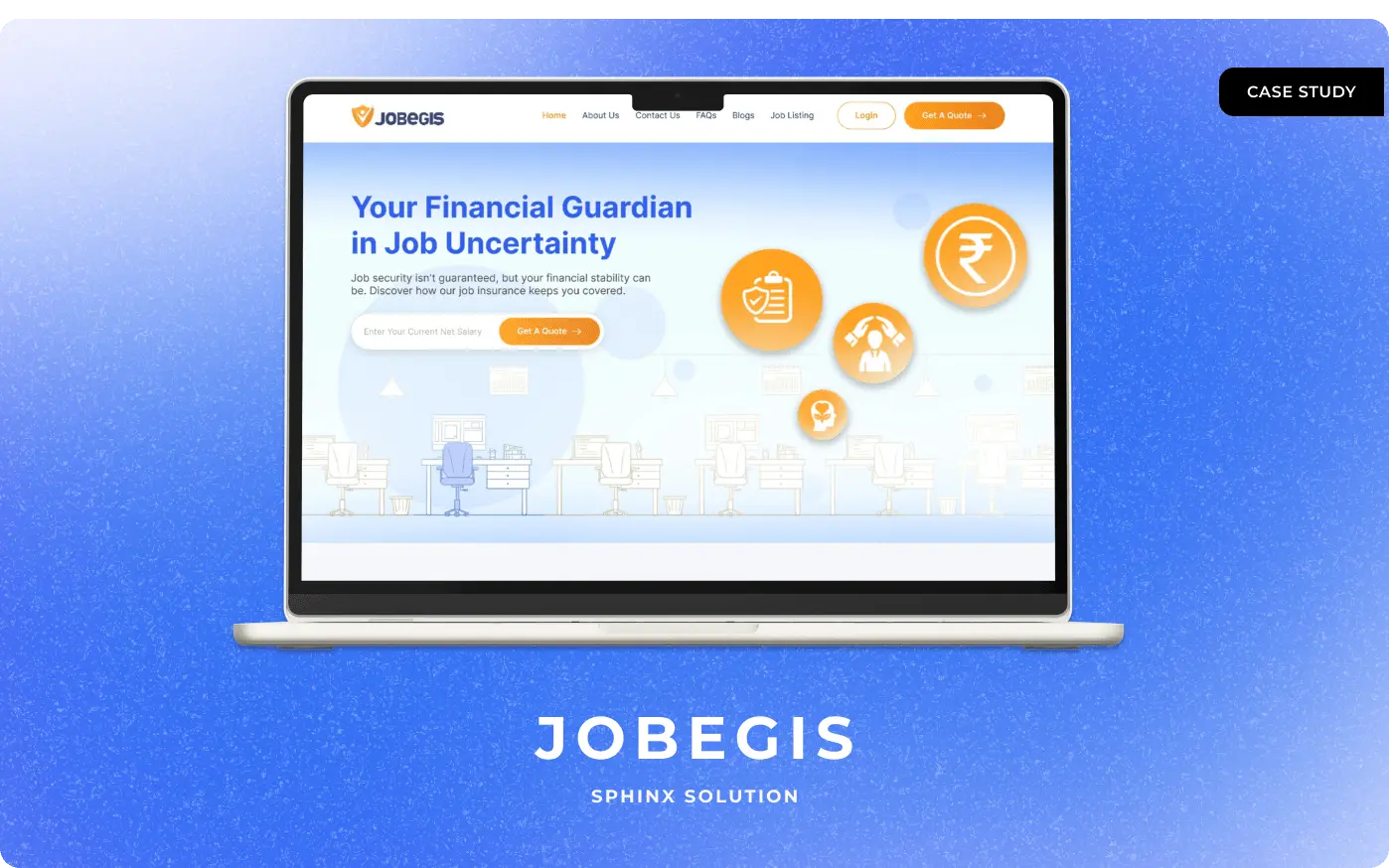
Jobegis sells insurance against losing your job. Their pitch is blunt and it is a good one: job security is not guaranteed, but financial stability can be. Someone enters what they earn, gets a quote, and their salary is covered up to 8 lakh if the work stops.
Your financial guardian in job uncertainty. Salary protection, a job portal and a placement network, sold and administered from one platform.
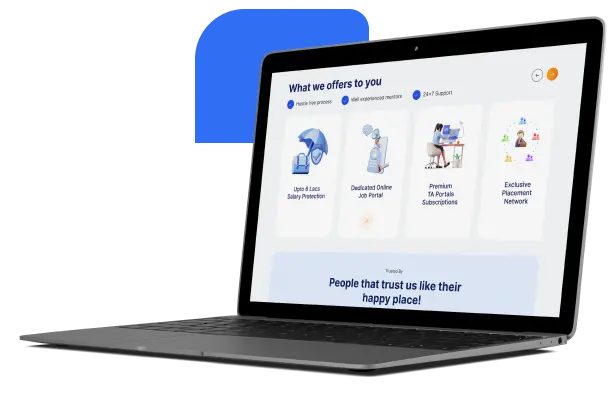
Insurance is only half of it. Alongside the cover sit a dedicated online job portal, premium talent-acquisition portal subscriptions and an exclusive placement network, because a policy that pays out is worth more when it also helps you back into work.
Sphinx Solutions built the platform: the public site and quote flow, a secure login for the insurance process, and a comprehensive admin panel behind it for managing policies, users and reporting.
It runs on React JS at the front, Laravel and PHP behind it, MySQL for data and cloud hosting underneath, chosen so the platform could carry Jobegis’s growth rather than just its launch.
Client Requirement
01
A site delivering a genuinely smooth experience and built to what Jobegis needed, rather than assembled from a template.
02
One place to manage the system, so running the business does not mean going through a developer every time.
03
A login that is safe and straightforward at the same time, because the data behind it is sensitive and the people using it are not specialists.
04
A solution that scales and adapts, so new products and rising volume do not mean rebuilding.
Jobegis needed a platform that was not just functional but shaped around how they actually operate: selling policies, administering them, and running a job portal beside them.
A powerful admin panel to manage the system and carry the insurance process through, with the flexibility to keep growing afterwards.
Integrating a custom platform with existing systems and third-party services was the hard part. Different data formats and different APIs do not meet in the middle by themselves.
It also had to hold up under traffic. An insurance product that goes quiet at the moment a campaign lands is worse than no campaign.
And the admin panel had to do real work: administrative tasks, reporting, and roles that reflect who in the business is allowed to see what.
We built the platform end to end, from the quote flow the public sees through to the panel the Jobegis team runs it from.
The result is a platform Jobegis can sell from, administer from and build on, without coming back for a rebuild each time the business moves.
Sphinx Solutions delivered the Jobegis platform: a public site and quote flow for job-loss cover, a secure login for the insurance process, and a customisable admin panel with roles and reporting, on a scalable cloud architecture.
“Working with Sphinx Solutions has been a game-changer for us. They took on our difficult API integration and development challenges with real skill, and delivered more than we had hoped for. Their project management and the personal attention they gave us have made them our first choice for any digital project.”
How We Work
Step 1
We worked with Jobegis to identify and settle what the platform actually had to do before any of it was designed.
Step 2
Interface and flows for both sides of the product: the quote journey a customer takes, and the panel the team administers it from.
Step 3
The front end in React JS, the back end in Laravel and PHP, MySQL set up and integrated for data, and the servers configured for performance.
Step 4
Thorough testing that every function worked as intended and met the performance standards set for it.
Step 5
Launch, then monitoring how the platform performed once real traffic arrived.
Step 6
Training for the Jobegis staff who run the platform, and ongoing support for whatever came up afterwards.
Implementation
Connecting the platform to existing systems and third-party services meant reconciling different data formats and APIs. We put middleware in to standardise the formats and built custom APIs for the rest, then tested the data flow end to end.
The platform had to take high traffic and keep going. We designed a scalable architecture on cloud services with load balancing, and optimised for it: efficient database queries and caching.
An admin panel that handles real administrative work and reporting takes planning rather than scaffolding. Using Laravel we built a highly customisable one, with user roles and permissions matched to how Jobegis is actually run.
The login protects sensitive information, so it got advanced encryption and multi-factor authentication, with regular security audits and updates to keep that standard up.
Impact
An interactive site built to Jobegis’s needs rather than around a template, which is what makes a quote flow something people finish.
A powerful admin panel took the day-to-day management and monitoring off the development queue and put it in the team’s hands.
A reliable, secure login for the insurance process, which matters when the data behind it is someone’s salary and employment history.
The platform is designed to expand and adapt as the business does, rather than being rebuilt each time it moves.
Tech stack
In closing
Jobegis is an unusual product built on a simple observation: job security is not guaranteed, but financial stability can be. Insuring a salary is only useful if buying the cover is easy, administering it is easy, and there is a route back into work on the other side, which is why the job portal and placement network sit beside the policy rather than apart from it.
We built the platform that carries all of it, with a custom front end, a secure insurance login and an admin panel the team runs the business from, on an architecture with the headroom to keep growing.
What people usually ask about Jobegis and about building something like it.
Yes. Its component-based architecture encourages reuse and keeps a growing codebase manageable, and the virtual DOM keeps dynamic interfaces quick.
Because it lets a business build exactly what it needs rather than working around what a template allows. You get better functionality, a better experience and more room to scale.
We build to the customer’s requirements rather than to a house pattern, with an emphasis on quality and on delivering on time and on budget.
On the front end, HTML, CSS and JavaScript, usually with a framework such as React, Angular or Vue.js. On the back end, Node.js, PHP, Python and Ruby on Rails are all widely used.
Connect with us


