

2026 is a significant advancement rather than merely a pause on the tech roadmap. With AI becoming more sophisticated and digital experiences more appealing, businesses are about to enter a new age where technology is actively driving the operations rather than just assisting them.
Companies today are actually more interested in how swiftly they can deploy a specific technology on a wide scale than they are in pondering whether they should go after it. Changing the way businesses interact with their consumers, protect their data, simplify their operations, and remain competitive in a digital, first-world setting are the newest technological developments in 2026.
Customers want safe platforms, tailored experiences, and quicker services. Automation, efficiency, and improved decision-making aids are what companies seek. Emerging technologies like AI-powered platforms, edge computing, cybersecurity intelligence, and immersive technologies come in here. Tools such as Hyper3D image to 3D further support these innovations by enabling faster creation of interactive 3D assets from visual inputs
These tendencies are becoming required corporate instruments rather than mere buzzwords. Every business, retail, healthcare, finance, or even trend in food science and technology, is being transformed by more intelligent digital solutions.
Technology is now more readily available than it has ever been. Using cloud platforms, artificial intelligence development tools, and data analytics solutions, even modest firms can therefore rival international brands.
From predictive analytics to real-time consumer insights, businesses are using the main technological advancements to speed up their operations, become more intelligent, and become more robust. The current focus is on going intelligent instead of going digital.
Staying ahead means knowing what comes next, which Sphinx Solutions thinks. Not just to enlighten you, but also to get you ready, we have compiled this guide on the most recent technology developments for 2026.
Here, we will cover the twelve major developments changing current companies, define their operation, and highlight their significance. Whether you’re a startup founder, tech enthusiast, or future innovator, this is your roadmap to what’s shaping the digital world next.
Trend 1: AI Supercomputing Platforms
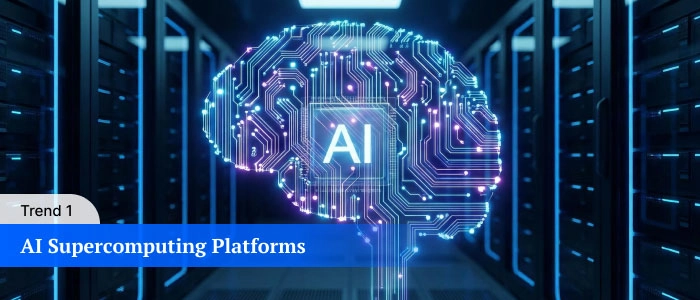
Built to handle complex artificial intelligence activities and massive amounts of data, AI supercomputing systems are powerful computers. Hardware like GPUs, TPUs, and high-performance processors is used by these platforms to train huge AI models more quickly and effectively than typical cloud servers.
They essentially give the company the capacity and speed to run more sophisticated artificial intelligence applications, including real-time automation and predictive analytics. As part of the latest technical developments in 2026, AI supercomputing is becoming the heart of modern digital creativity.
How They Empower Complex Workloads in Business
AI supercomputing systems let one handle all this data without causing delays. They support scaled deep learning, computer vision, and natural language processing. For sectors including finance, healthcare, manufacturing, and even developments in food science and technology, these solutions enable pattern analysis, forecast results, and operational efficiency improvement.
Real-World Use Cases
AI supercomputing systems let one handle all this data without causing delays. They support scaled deep learning, computer vision, and natural language processing. For sectors including finance, healthcare, manufacturing, and even developments in food science and technology, these solutions enable pattern analysis, forecast results, and operational efficiency improvement.
Why It Matters for the Future
As more businesses adopt more complex digital systems, artificial intelligence supercomputing platforms will get even more significant. They provide inexpensive, scalable, and dependable sophisticated artificial intelligence for companies of all sizes. These technologies are changing digital transformation from helping to run future generation applications to improving data security.
Trend 2: Multi-agent AI Systems?
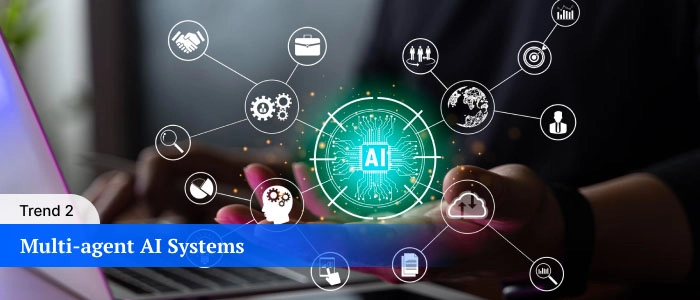
Many intelligent agents working together solve problems, rather than by one AI model, creating multi-agent AI systems. Every agent has a role; others gather information, others interpret it, and still others act. These agents can more quickly and effectively manage challenging jobs when they communicate and work together.
Particularly for companies needing intelligent automation, real-time decisions, and flexible activities, this collaborative approach converts multi-agent systems into one of the most current technical trends for 2026.
How They Are Transforming Automation
With the help of multi-agent AI systems, agents are not only rule and plan, bound, but they can also adapt to change externally and internally and change their behaviour without getting instructions from humans. In a logistics context, one of the agents would be responsible for monitoring inventory, another for Demand forecasting, and a third one for route planning.
In customer service, one agent answers questions while the other evaluates user behaviour to provide better responses. This intelligent collaboration is why multi-agent AI is one of the top ten technology trends driving current corporate automation.
Real-World Use Cases
Multi-agent AI is already being used in a variety of industries, including healthcare, banking, retail, and even food technology and science. Food companies deploy AI agents to maintain the quality of ingredients, minimise waste, and fine-tune production scheduling. Financial institutions operate them live for fraud detection, transaction tracking, and financial risk management.
A bunch of AI agents help retailers in personalising the shopping experience, keeping the right level of stock, and forecasting consumer demand. These pictures illustrate how technological trends are moving from basic automation to smart, coordinated decision-making systems.
Why It Matters for the Future
Businesses have to have systems able to simultaneously manage several chores as they become more digital and more data-driven. Faster, smarter, always active operation as a digital team makes multi-agent AI solutions offer that flexibility. They let businesses remain competitive, improve efficiency, and swiftly adjust to changes in the market.
Trend 3: Domain-Specific Language Models (DSLM’s)
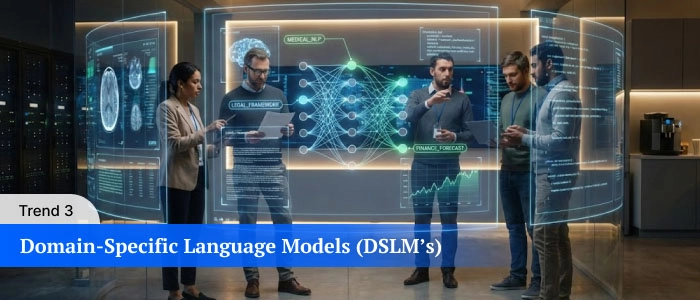
AI models trained for a particular business or field, rather than “knowing a little about everything”, are known as Domain-Specific Language Models, or DSLMs. DSLMs concentrate on a single domain, such as healthcare, finance, law, manufacturing, or even trends in food science and technology, whereas general AI models can address wide questions.
They have a far better understanding of professional terminology, industry procedures, and technical phrases because they were trained on extremely relevant data. DSLMs are becoming one of the newest technological developments in 2026 since this improves the accuracy, dependability, and utility of their responses for actual commercial tasks.
Benefits for Business Efficiency
DSLMs help businesses work smarter and faster. Employees don’t have to spend time providing basic context because these models already comprehend terminology particular to the sector. A finance-focused model can examine market data or compliance paperwork, whereas a healthcare DSLM can rapidly assess medical records. Time is saved, mistakes are decreased, and decision-making is enhanced. Many companies now see DSLMs as part of the top 10 technology trends because they improve productivity without replacing human expertise.
Real-World Use Cases
Across different industries, DSLMs are solving real business problems. food technology, they help analyse ingredient data, nutrition reports, and safety standards. In legal services, they assist with contract reviews and regulatory checks. Manufacturing, they support quality control and technical documentation. In order to deliver more precise, industry-relevant responses, these models are also employed in customer support systems.
Why It Matters for the Future
As industries become more specialised, generic AI technologies are no longer adequate. Businesses need AI systems that truly understand their language, issues, and goals. DSLMs offer that deep understanding while still being easy to use. They help companies stay competitive, reduce operational risks, and deliver better services. In the world of latest technology trends, domain-specific AI is not just a feature; it’s a strategic advantage for businesses preparing for 2026 and beyond.
Trend 4: AI Security Platforms
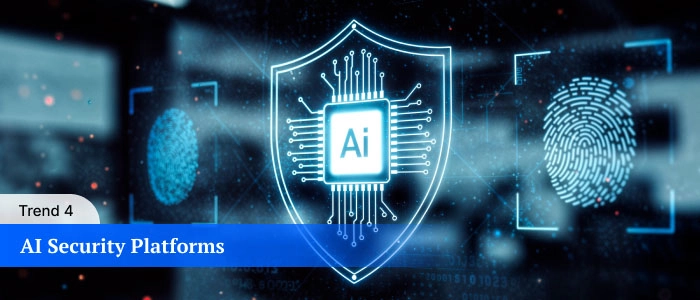
In 2026, data will not only be a company’s most valuable asset, but also one of its biggest risks. Traditional security measures simply are not enough as cyberattacks are getting more advanced and frequent. That’s why AI security platforms have AI built in to identify threats, analyse patterns and react to security breaches instantly. Rather than after a breach, AI security systems are always on the watch.
How AI Security Platforms Protect Modern Enterprises
They want to find anything out of the ordinary, e.g., strange login attempts, unusual file access, or hidden malware. Once a threat is recognised, the system may instantly shut it down or inform security staff. This intelligent automation minimises human mistakes and boosts reaction times. AI-powered security is presently one of the top ten technology trends in digital transformation, securing customer data, financial information, and secret company documents.
Real-World Use Cases
Many businesses are currently utilising AI security technologies to stay safe. Banks rely on them to prevent fraud and ensure safe internet transactions. They are used by healthcare institutions to protect patient data and ensure compliance with privacy rules. Even companies involved in food science and technology utilise AI security to protect research data, supply chain systems, and quality control platforms. These real-world examples demonstrate that AI security platforms are more than simply “nice to have”; they are required for running a safe, trustworthy organisation.
Why It Matters for the Future
As more and more companies digitalise, the danger of cyberattacks is also increasing. AI security tools provide a more efficient, quicker, and trustworthy method of defending oneself. They assist businesses in preventing expensive data breaches, keeping the trust of their customers, and following the law. In the realm of next-generation technology trends, robust AI, enabled cybersecurity is not merely a choice anymore; it is the foundation of a future-proof business in 2026 and onwards.
Trend 5: AI Native Development Platform
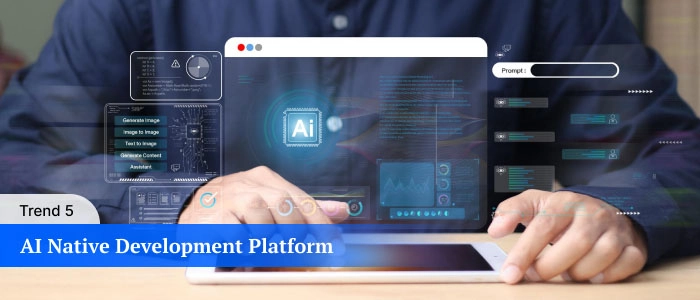
AI is essential to development platforms. These platforms differ from traditional software tools in that they employ AI to perform a wide range of tasks, including writing, testing, debugging, and even system design.
Developers are aided in producing top-notch code rapidly through the use of AI, automated testing, assisted mistake detection, and intelligent code recommendation features. This development has positioned AI and indigenous platforms as 2026’s latest tech trends, especially for businesses yearning for software solutions that are more reliable, faster, and smarter.
Impact on Software Delivery and Innovation
Speed counts as the most important factor nowadays in the digital realm. AI and native platforms assist companies in releasing their products at greater speeds through the minimisation of manual work. AI can generate code snippets automatically, find security vulnerabilities, and give suggestions for performance improvements. Hence, there would be a reduction in the number of postponements, development costs would be lowered, and there would be an increase in the quality of applications.
Real-World Use Cases
Several sectors have been reaping the benefits of AI and native development for some time now. One example is where AI aids in the rapid creation of personalised shopping applications. Manufacture is another good example where automation systems and quality control software are regularly supported by AI-powered platforms.
Developers are also leveraging AI technology to build data-driven platforms for ingredient analysis, supply tracking, and nutrition research in food science and technology. Not only do such platforms help programmers to write code faster, but they also optimise the steps of designing, testing, and launching digital products.
Why It Matters for the Future
As technology advances, the tools that businesses have to use are those that can keep up with such changes. AI and native development platforms are making innovation easier to get, even if a team is small. These platforms lower the technical barriers, increase the level of correctness of the solutions, and enable developers to concentrate on creative work instead of handling repetitive tasks. Digital transformation is speeding up; such platforms are going to be one of the most important factors in the maturing of future technology trends, as well as helping businesses in building intelligent and scalable solutions in 2026 and beyond.
Trend 6: Confidential Computing
AI-native development platforms are software environments that have artificial intelligence as their main feature, not something that was added later. Instead of developers manually writing every line of code, these platforms perform functions with AI to make coding suggestions, testing automation, bug detection, and feature generation from simple instructions.
This significantly reduces the length of the app development process while enhancing its intelligence and efficiency. In 2026, AI and native platforms, as well as the most recent technology developments, will revolutionise how businesses build digital goods from the start.
How They Improve Business Efficiency
Traditional development may take several months, AI and native platforms significantly minimise the time required. AI tools can assess user preferences, predict design problems, and enhance performance in real time. Teams can manufacture items faster and with fewer faults as a result. It leads to faster innovation, reduced costs, and better software for enterprises.
Real-World Use Cases
AI-native platforms are already being used by businesses in a variety of sectors to provide more intelligent solutions. Fintech companies use them for safe payment apps, healthcare institutions use them for patient management systems, and e-commerce companies use them to customise customer experiences. AI-driven platforms that track nutrition data, enhance food safety systems, and improve supply chain management even benefit from current advancements in food science and technology. Converting concepts into actual digital products is made simpler by these platforms.
Why It Matters for the Future
As consumer demands increase, businesses need development tools that are faster, smarter, and more flexible. AI-native platforms allow companies to quickly adapt, test new features, and stay competitive in a world that prioritises digitalisation. Additionally, they increase small enterprises’ and startups’ access to cutting-edge technology. AI-native development is becoming a crucial component of the technological trends influencing corporate success in 2026 and beyond due to the rapid pace of innovation.
How Businesses Should Prepare for These Trends?
To be competitive in 2026, businesses must think strategically rather than simply react swiftly. Here are five basic and practical steps you can take to prepare for new technological advances.
Keep Yourself Informed About New Technologies
Cloud computing and AI, native tools are examples of scalable platforms that can grow with your business requirements.
Train Your Staff
Apart from being trained in how to use the new tools and systems, employees should also gain expertise in AI, cloud computing, cybersecurity, and data analytics.
Use Technology That Can Be Scaled
Cloud computing and AI, native tools are examples of scalable platforms that can grow your business requirements.
Consider what will really work for your business
Technology that can bring a better customer experience, efficiency or innovation should be your main focus. For instance, automation can be of great help to your business.
Choose The Right Tech Partner For Your Business
You can bring on board experts like Sphinx Solutions who can help you install future, ready solutions in your business flawlessly and securely.
Conclusion
Technology trends between now and 2026 are not only impressive but also very practical tools that companies can use for their growth, competing, and keeping up with the changes in the digital world.
Among the technological innovations that have a huge impact on the overall business world are Artificial Intelligence, its different AI-driven versions, the power of automation being increasingly intensified, as well as the solutions tailored to the different industries, fundamentally changing the way businesses operate, interact with customers, and make decisions.
Probably the top performers of the future among the organisations will be those that keep on learning, are flexible, and receptive to new ideas.
We at Sphinx Solutions emphasise a strong conviction that great things can be done if you have the right technology and the right approach. By being aware of these trends and preparing one step ahead, businesses will be able to change the story from problems to solutions. The ones who quickly innovate wisely are not afraid to change the digital era, and those who move fast, the future will belong to them.
FAQ’s:
1. What are the new technology trends in 2026?
In 2026, businesses are adopting trends like AI supercomputing, multiagent AI systems, AI-native development platforms, cybersecurity automation, and immersive technologies. These trends focus on smarter automation, better data security, and faster digital innovation.
2. What is the IT industry in 2026?
The IT industry in 2026 is more AI-driven, cloud-focused, and security-oriented. Companies are using advanced tools to build smarter software, manage big data, and deliver faster digital services across industries.
3. What is the future of the IT industry in the next 5 years?
The IT industry will continue to grow with stronger AI integration, automation, and digital transformation. Businesses will rely more on intelligent systems, data-driven decisions, and scalable cloud technologies.
4. How will AI impact businesses in 2026?
AI will help businesses automate tasks, improve customer experiences, and make better decisions using real-time data. It will also support faster product development and smarter operations.
5. Why is digital transformation important for companies?
Digital transformation helps businesses stay competitive, improve efficiency, and meet changing customer needs. It allows companies to use modern technology to grow faster and work smarter.


 Anand Mahajan


 Shivraj Dhaygude