

When launching a new social networking platform, building a business website, or developing the next major mobile banking app, in each scenario, reliable software development is mission critical.
Over 28 million developers worldwide are rushing to implement creative solutions, and software frameworks have emerged as the foundation of modern coding initiatives. According to industry projections, the worldwide software development market will be worth $741 billion by 2025, with over 85% of firms relying on robust frameworks to accelerate cloud-based and AI-driven solutions.
A software program framework is a set of libraries, reusable components, and guidelines that offer a strong shape for programs. Frameworks along with React, Django, and Node.js don’t simply store time; they standardise development procedures, enhance scalability, and reduce the probability of errors.
In reality, React is used on over 2 million websites, and job postings for framework expertise such as React have surged by 35% over the last year. Because of this global acceptance, most successful apps, including Facebook, Netflix, and banking apps, are based on these robust, ever-changing frameworks.
The following sections of this blog will explain what frameworks are, how they function behind the scenes, and why they are so important for both new and old developers. Frameworks allow teams to efficiently communicate, design, and deploy features, reducing complex coding difficulties into simple, real-world solutions.
What is a Software Framework?
A software framework is a structured platform consisting of equipment, libraries, guidelines and best practices that enable developers to effectively create customised software, web platforms and AI-operated solutions. Instead of starting from scratch, programming benefits from these contours to speed up growth, maintain uniformity and ensure the reliability of software projects.
For example, a smooth software development company involved in saas development can use the React Framework to build a dynamic interface for both businesses and consumer-centric apps, to reuse their reusable components and quickly update the architecture. The standardised APIs, automated testing, and integrated security features of these frameworks not only speed up development but also enable broad digital innovation.
The success of a project can be determined by the framework selection in real-world development circumstances. Meanwhile, cross-platform compatibility, data science skills, and the smooth integration of cloud solutions are made possible by web frameworks like Angular and backend choices like Node.js.
Frameworks are the fundamental process frameworks in software engineering, enabling teams to create, work together, and produce future-proof applications effectively, regardless of the objective, custom software solutions for enterprise-wide agile software development.
How does a Software Framework Work?
Understanding how a software application framework operates is critical for anybody involved in software development, whether they’re a developer or a part of a massive software development company.
A framework is largely a pre-made shape that teaches programmers the way to create applications efficiently, lowering hard tasks and ensuring consistency among tasks.
An enterprise can avoid starting from scratch when growing a new software program by using the framework to address common services like routing, authentication, and database connectivity. Developers can then focus on the program’s unique features, no matter whether it’s miles an AI-powered solution, online platform, or mobile app.
Some keyways frameworks operate include:
- Inversion of Control (IoC): Unlike libraries, where your runtime code sensor calls features, frameworks often name your code at unique factors, giving your software a clean shape.
- Built-in Components: Frameworks provide pre-configured modules for common wishes like session management, user authentication, and database interfaces, all of which can be essential for growing a custom software program.
- Extension Points: It is less difficult to generate authentic software answers without converting the software framework when developers are accredited to add their very own code at distinctive points.
- Convention Over Configuration: Standardised procedures are preferred by many software frameworks, which shorten setup times and promote agile software development methods among teams.
A framework including Django or Ruby on Rails may be used by a custom software development organisation constructing an e-trade platform. It is simpler to communicate with cloud solutions, AI modules, and frontend technology, so that the completed output is scalable and contemporary with industry trends.
What are the Key Characteristics of a Good Framework?
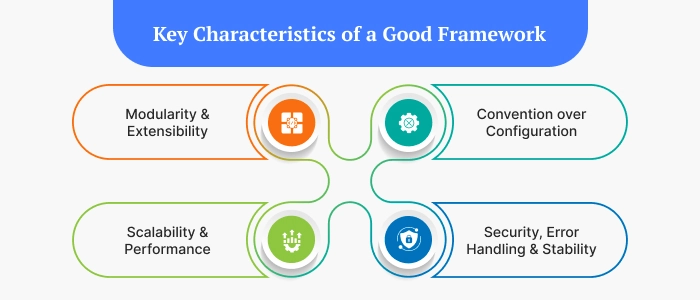
A sturdy software program framework is crucial to producing dependable, scalable, and stable custom software solutions in the fast-paced world of software development nowadays.
The features of the framework have a direct impact on project success, whether it be agile software development for AI-driven platforms or custom software application development by a top software development firm.
Here are the important traits that define a powerful software program development framework in 2025:
- Modularity & Extensibility:
A strong framework is modular; builders can use separate, reusable components to create packages. This adaptability helps ongoing development, which makes it best for developing a custom software program in which changing enterprise requirements necessitate regular enhancements.
Developers can incorporate new technology, along with third-party APIs or AI modules, without completely remodelling the machine due to extensibility.
- Scalability & Performance:
As software projects scale, the framework must efficiently handle increased loads and complex operations. High performance and scalability are essential, especially in cloud-based and custom software application development serving millions of users globally.
Frameworks like React and Django exemplify this by enabling fast rendering and optimised database handling, critical for enterprise-grade applications.
- Convention over Configuration:
By the usage of described patterns and realistic defaults, suitable frameworks simplify the software development process and lessen the effort of builders.
In agile software development methodologies, when brief iterations are the norm, this “conference over configuration” idea increases coding speed, guarantees uniformity across teams, and reduces errors.
- Security, Error Handling & Stability:
Any unique software solution must prioritise security. Frameworks with integrated security elements aid in safeguarding private information and adhering to contemporary laws.
Software development firms can quickly detect and resolve problems thanks to robust error handling and stable structures, guaranteeing dependable and continuous user experiences.
Because of these features, a software framework is more than just a set of tools; it is a strategic instrument for software engineering process frameworks. Frameworks continue to advance in 2025 to satisfy the needs of distributed cloud architectures, AI integration, and custom software development environments, assisting developers and companies in creating creative, effective, and safe applications.
What are the Types of Software Frameworks?
Software frameworks vary widely in size and design, each suited to certain project objectives and development requirements. Selecting the ideal equipment for custom software improvement and agile software improvement projects is made less difficult for developers and software development corporations when they’re aware of the various styles of software development frameworks.
The following framework classes are nonetheless crucial for developing scalable, effective, and creative software program answers in 2025, no matter the fast evolution of era landscapes:
Web / Backend Frameworks:
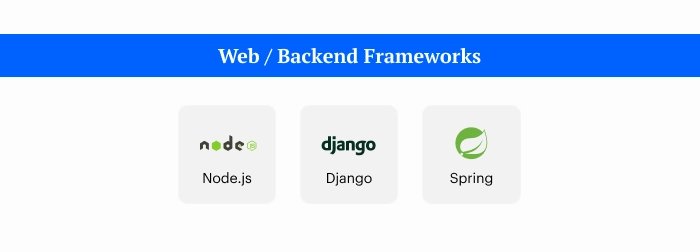
These frame data manage data administration, API architecture and logic on the server side. Well-known options such as Django, Node.js and Spring Boot facilitate the development of specific programs by offering database-to-safety and clear components prepared for connection, security and authentication. Cloud-native solutions and reliable enterprise apps depend on backend frameworks.
Frontend / UI Frameworks:
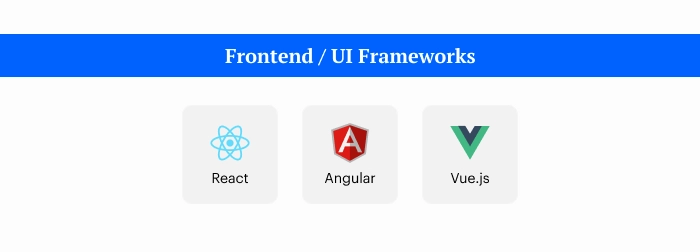
Frameworks like React, Angular, and Vue.js are important to consumer interface improvement because they make it easier to lay out dynamic online applications. Because of its terrific overall performance and modularity, React, for instance, powers over 2 million websites and is often utilised in agile software development and digital product development.
Mobile & Cross-Platform Frameworks:
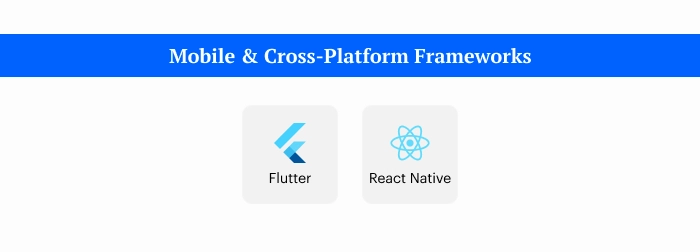
Developers can save time and money by creating a cross-platform mobile application with a distinct codebase using frameworks like Flutter and React Native. For both startups and famous groups, they help develop precise software program solutions that provide consistent user reviews across iOS and Android devices.
Data Science / Machine Learning Frameworks:
PyTorch and TensorFlow are two frameworks that are critical for AI and data-driven applications. These provide tools and libraries tailored for model training, deployment, and optimisation, marking an essential component for what is a software framework for AI today.
Testing Frameworks:
To ensure software is pleasant and dependable, testing frameworks like Cypress, JUnit, and Selenium automate unit, integration, and user interface testing. They are vital in agile software improvement environments where continuous testing speeds up launch cycles.
Enterprise / Application Architecture Frameworks:
Architectural frameworks, just like the Zachman Framework and TOGAF, are frequently utilised by larger groups to direct intricate software development procedures. These software engineering process frameworks make it less complicated to coordinate era answers with governance, scalability, and enterprise goals.
Each sort of software framework supports distinctive phases and aspects of software program development, empowering teams to construct custom software solutions with velocity, accuracy, and innovation. Selecting the right framework mixture is a key choice for any software improvement company looking to live competitively in 2025 and beyond.
What’s the Difference Between Framework Vs. Library Vs. Platform?
When diving into software program development, the framework, library, and platform are used interchangeably. However, each serves a wonderful motive, and understanding the differences is important for custom software development or building AI-powered programs.
| Feature / Aspect | Framework | Library | Platform |
|---|---|---|---|
| Definition | A structured foundation guiding the flow of an application; it enforces what is framework in software engineering principles | A collection of pre-written code that developers can call as needed; it does not dictate application structure | A complete environment for building and running software, often including tools, runtime, and APIs |
| Control Flow | Inversion of Control: the framework calls your code at specific points. | Your code calls the library functions when needed | The platform provides the ecosystem in which your app runs; it can host multiple frameworks or libraries |
| Examples | Django, React (used as framework), Spring, Flutter | Lodash, NumPy, jQuery | .NET, Java EE, iOS / Android SDK |
When to Use (Or Not Use) a Software Framework?
How well a software development problem is resolved can be greatly impacted by the choice of whether or not to employ a framework. Although they provide efficiency, scalability and composition, the framework is not always the best option.
Better development decisions are ensured by understanding the design of a program and assessing its suitability for customised software, software development or AI-operated solutions.
Ideal Use Cases:
- Points regarding the custom software development projects that call for maintainability, consistency, and speed.
- AI and machine learning applications, where ready-to-use modules for model building and deployment are provided through frameworks consisting of TensorFlow or PyTorch.
- Teams running in Agile software development environments have to have standardised structures and reusable components to produce updates rapidly.
- Scalability, modularity, and the ability to integrate with unique services are the goals of enterprise-level platforms.
Trade-Offs and Limitations:
- Learning curve: Popular frameworks regularly include conventions and patterns that groups ought to recognise earlier than development.
- Reduced flexibility: A framework’s structure may restrict certain customisations, potentially slowing down highly specialised custom software solutions.
- Overhead: For small projects, using a heavy framework can introduce unnecessary complexity and affect performance.
Avoiding Overkill:
- For small scripts, prototypes, or simple tools, constructing from scratch or using lightweight libraries may be more efficient.
- A software development company creating a minimal web app might skip a full framework in favour of focused libraries, reducing setup time while still maintaining functionality.
How to Choose the Right Software Framework?
The success of your project depends on your choice of software framework. With so many alternatives, the alternative needs to be primarily based on factors other than popularity, consisting of what is fine for your mission goals, the crew’s capabilities and long-term needs. Here are some important things to think about:
Project Requirements & Domain
Every framework has a reason for being constructed. For instance, a framework that supports secure payments and scalability is great if you’re working on a custom software application development project in e-commerce. In the meantime, knowing what an AI software framework is will help you select one that supports machine learning workflows for AI-powered applications.
Team Expertise & Learning Curve
Even the most powerful framework won’t help if your team struggles to use it. A software development company frequently assesses whether the framework is appropriate for the skill level of its team or if further training is needed. By selecting a framework that complements current knowledge, projects can go more quickly and with fewer mistakes.
Community, Ecosystem & Maintenance
Regular updates, third-party integrations, and quicker trouble-fixing are all furnished by an engaged community. Frameworks with strong ecosystems, like React or Spring, for instance, allow teams to iterate hastily and continuously produce value in agile software development.
Performance, Flexibility & Integration
Faster hassle fixing, third-party integrations, and greater common updates are all advantages of an active community. Frameworks with sturdy ecosystems, like React or Spring, for instance, allow groups to iterate rapidly and constantly deliver fee in agile software development.
In exercise, a startup developing a fitness tracking app might pick out React Native for its move-platform abilities and considerable community support, but a finance organisation should decide upon .NET for dependability, safety, and company-level scalability.
What are the Popular Software Framework Examples?
Frameworks are the backbone of contemporary software development, assisting developers in building faster, more correctly, and with fewer mistakes. Depending on the project kind, whether or not it’s a website, cell app, or even an AI gadget, exclusive frameworks shine.
Web Development Frameworks
Django, Express.js, Ruby on Rails, and Laravel are widely chosen for custom software utility development. For example, startups frequently choose Django due to its integrated protection capabilities and scalability, which makes it best for e-commerce platforms.
Frontend Frameworks
Angular, React, and Vue.js power most huge websites. React, mainly, has emerged as a favourite for agile software program development as it permits speedy updates, seamless user interfaces, and robust network guide.
Mobile & Cross-Platform Frameworks
React Native and Flutter are popular options for mobile applications. A practical illustration of this is the fact that many companies use Flutter to develop iOS and Android apps using a single codebase, which lowers costs and expedites the delivery of custom software solutions.
Data & Machine Learning Frameworks
For companies exploring AI, frameworks like TensorFlow and PyTorch are essential. If you’ve ever wondered “what is a software framework for AI?”, these are prime examples that allow developers to build neural networks and predictive models.
Testing Frameworks
Tools like JUnit, pytest, and Selenium make sure applications are reliable before launch. In practice, a software improvement organisation might use Selenium for automated testing to ensure a smooth user experience in large-scale web apps.
From building apps for big startups to growing organisational systems, frameworks offer satisfactory tools for consistency, velocity, fun, and creativity. The right choice depends on your goals, resources, and long-term vision.
What are the Best Practices for Using the Framework?
The writing code is just one aspect of working with frameworks. Use them in such a way that promotes scalability, maintenance and long-term development. It is guaranteed that you benefit most from the selected structure, whether you are a business scaling with customised software solutions or a startup with customised software application development.
Start Small & Modularise
Don’t dive into building a massive project right away. To learn how the framework works, start with simpler modules. For example, modular coding helps teams test features separately and prevent major failures in agile software development.
Understand the Framework’s Lifecycle
Knowing what a process framework in software engineering helps developers grasp how frameworks manage requests, responses, and overall execution flow. A software development company that understands this can debug faster and design more efficient solutions.
Leverage Extensions & Plugins Wisely
Add-ons that expedite development are frequently supported by frameworks. Over-reliance on third-party plugins, however, may result in ongoing maintenance issues. For greater control, a team developing custom software might, for instance, employ authentication plugins while continuing to create the essential functionality internally.
Keep Up with Updates & Versioning
Frameworks evolve quickly. Updating guarantees improved compatibility, security, and performance. A real-world example is when businesses that were utilising React upgraded to the most recent version to maintain their competitive edge in markets with improved performance and contemporary features.
Inefficient code hampers your workflow.
Accelerate development with our framework.
Conclusion
Framework, which provides equipment, procedures and guidance to developers to save time and improve the quality, becomes a basic component of rapid modern software development. Framework simplifies processes and eliminates superfluous code, whether you create a large program or a smaller website.
They also give consistency, which is important for agile software development teams that require flexibility, speed, and cooperation. Teams can produce dependable, scalable systems that last over time by having a solid understanding of what a software engineering framework or even a process framework is.
They are influencing the direction of digital transformation by facilitating next-generation breakthroughs like software frameworks for artificial intelligence and supporting custom software solutions.
A software development company can maintain its competitive edge, produce more intelligent apps, and confidently satisfy customer expectations by selecting and utilising the appropriate framework. To put it briefly, a carefully considered framework is more than simply a tool; it is a tactical advantage when developing cutting-edge, future-ready systems.
FAQ’s:
1. What does a framework do in coding?
A framework provides a pre-defined structure and set of tools that guide how code should be written and organised. It simplifies software development by handling repetitive tasks, so developers can focus on building unique features.
2. What is a software framework with examples?
A software framework is a reusable platform that supports application development. For example, Django for Python, React for frontend apps, and .NET Framework for enterprise-level solutions are popular choices in custom software development.
3. What is a framework, and how does it work?
A framework works by defining the flow of control in an application. Instead of the developer calling the code, the framework often calls the developer’s code (a concept known as inversion of control), making it easier to follow standard practices.
4. Which programming language is used for frameworks?
Frameworks are built for specific programming languages. Spring works with Java, Angular with JavaScript/TypeScript, .NET framework programming languages include C#, and TensorFlow supports Python for AI applications.
5. What’s the Difference Between a Library and a Framework?
A library is a collection of reusable code that you call when needed, while a framework provides the overall structure and calls your code at specific points. In short: with a library, you’re in control; with a framework, the framework controls the flow.


 Souradeep Kundu
 Anand Mahajan
 Shivraj Dhaygude


