You must start with an idea, but not every idea is a product. A common fallacy among founders is spending several thousand dollars to develop a complete product without knowing whether customers really need it.
Developing a product based on guesses will take your time, your money, and you will spend all that money on a feature not used. This is where the concept of an MVP in the development of software comes in handy.
A minimum viable product is a simplified product that can be released by companies. The product has minimum viable features, which are just enough to help a user solve a main problem, without all the features a product would have if it took many months of money and effort.
Startups can test their hypothesis, receive actual feedback from potential customers, and decide what would be best to do next based on the actual product the customer likes.
Regardless of whether you’re developing a brand-new startup, testing a business idea, or envisioning a digital product, grasping the MVP concept can cut down the risk of development and significantly boost your probability of success.
In this guide, we will discuss what MVP development is, its benefits and development process, pitfalls that one needs to avoid, as well as why hiring a good MVP development company can make your dream a reality.
What is MVP Development?
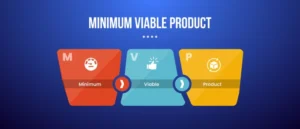
MVP development is the practice of building a full form of MVP, Minimum Viable Product, the most scaled-down version of your product, containing only enough essential features, that satisfies a core problem for initial users and serves to test your business hypothesis.
An MVP will allow you to put your idea out there into the actual marketplace for little risk or investment, learn how people will use it, and iterate based on data, not just hypothesis. Your MVP is the very first conversation your product has with the market. It isn’t about building less; it’s about learning more, sooner.
Why MVP Development Matters for Startups?
It is often said that the graveyard of startups is a testament to unwanted products. As CB Insights points out, 35% of startups die because they build products people don’t want. By building an MVP, we prevent this by prioritising “proving” the product over “perfecting” it.
Here’s why MVP development is critical:
- Risk Reduction: Instead of building the entire product from the ground up, you invest 60-70% less cash upfront to protect your runway while you test out your assumptions.
- Speed to Market: Faster to market (8-16 weeks compared to 6-12 months) and capitalise on the market opportunity before competitors.
- Real User Feedback: Stop guessing what users want. An MVP puts your product in their hands and lets their behaviour guide your roadmap.
- Investor Confidence: VCs don’t fund ideas, they fund traction. An MVP with real users and engagement metrics makes your pitch 10x stronger.
- Pivot Capability: If your initial hypothesis is wrong, you’ve only invested a fraction of your resources and can pivot quickly.
Example:
Spotify’s MVP: it launched with just music streaming for desktop. No mobile app, no podcasts, no social features. They validated that users would pay for on-demand music before building everything else. Today, they have 600 million users. That’s the power of starting small and scaling smart.
What are the Key Features of a Successful MVP?
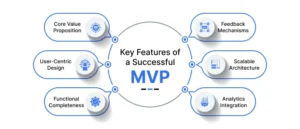
Not all MVPs succeed. The difference between an MVP that validates your idea and one that wastes resources comes down to strategic feature selection.
A successful MVP includes:
- Core Value Proposition: The one thing that makes users say, “I need this.” Everything else is secondary.
- User-Centric Design: An MVP should feel intentional and not unfinished. A bad UI/UX will lead you to inaccurate validation data because people will leave before they get a chance to understand your value. UI/UX services are critical here; a UI/UX design service isn’t an aesthetic service, it is a product service.
- Functional Completeness: Limited features, yes. Broken features, never. Each feature must work flawlessly.
- Feedback Mechanisms: Built-in ways to capture user behaviour, comments, and usage patterns.
- Scalable Architecture: Your MVP should be built to evolve, not rebuilt from scratch when you add features.
- Analytics Integration: You can’t validate what you can’t measure. Track everything from day one.
The mistake most founders make is confusing “minimum” with “mediocre.” Your MVP should do less but do it exceptionally well.
What is the Step-by-Step MVP Development Process?
The MVP full form is not about cutting corners; it is about doing the smart things well. Here’s how a professional MVP development company approach the process:
- Market Research
Before writing a single line of code, understand your market landscape.
- Who are your competitors?
- What gaps exist?
- Who is your ideal early adopter?
This research informs every decision downstream.
- Product Discovery
Define your problem statement clearly. Map user journeys. Focus on the “must have” features vs the “nice to have.” This is where most startups get their focus right or spend months building a product nobody wants. With Sphinx Solutions, our product development services begin with intensive, co-creative discovery workshops to solidify your vision with market realities.
- Wireframing and UI/UX Design
Visualise your product before building it. Wireframes help you test flow and functionality cheaply. High-fidelity designs ensure your MVP looks professional, not like a prototype. Learn more about how strategic design impacts growth in our article on the benefits of UI/UX design to grow your business.
- MVP Development
This is where your concept starts to take real form. Agile sprints are used to build your essential functionality step-by-step, including frequent reviews to ensure everyone is on track. Whether your requirement is mobile-first or a web application is decided by where you expect your users to be: mobile app development services or web app development services.
- Testing and Validation
Quality assurance isn’t optional. Functional testing, usability testing, and performance testing each ensure your MVP works as intended. Understanding manual testing approaches can help you appreciate why thorough QA matters even for MVPs.
- Launch and Feedback Collection
Ship your MVP to early adopters. Monitor usage patterns. Conduct user interviews. Iterate based on real data, not opinions. This feedback loop is where your product finds product-market fit.
What are the Types of MVP With Real-World Examples?
Not every MVP looks the same. The right approach depends on what you want to validate, how quickly you need feedback, and the resources available to your team. Some MVPs focus on testing a single feature, while others are designed to measure customer interest before any product is built. Here are some of the most common types of MVPs used by successful startups.
Single-Feature MVP
A single-feature MVP focuses on delivering one core feature that solves a specific user problem. Instead of building a complete product, startups launch the feature that provides the most value and observe how users respond.
A great example is Foursquare. When it first launched, the app focused primarily on location check-ins and a simple gamification system. Features such as recommendations and social discovery were introduced later after the company understood what users enjoyed most. This approach helps businesses validate their main value proposition before investing in additional functionality.
Concierge MVP
A concierge MVP delivers the promised service manually behind the scenes rather than relying on technology or automation. From the user’s perspective, the experience feels complete, but much of the work is handled by people instead of software.
This approach allows startups to test whether customers are genuinely interested in the service before spending significant resources on development. It is particularly useful for businesses that want to validate customer demand, pricing models, and user behaviour without building a complex platform upfront.
Landing Page MVP
Sometimes the fastest way to validate an idea is not to build a product at all. A landing page MVP consists of a simple website that explains the product concept and encourages visitors to take action, such as joining a waitlist, signing up for updates, or pre-ordering the product.
By tracking visitor engagement, email sign-ups, and conversion rates, businesses can gauge market interest before committing to development. If people are willing to share their information or express interest, it’s a strong indication that the idea may have real potential.
Pre-Order MVP
A pre-order MVP takes validation one step further by asking customers to commit financially before the product is built. If people are willing to pay in advance, it provides strong evidence that there is genuine demand for the solution.
This model is commonly used by startups launching physical products, software platforms, or subscription-based services. Beyond validating interest, pre-orders can also generate early funding that helps support product development and reduce financial risk.
Video Demo MVP
A video demo MVP showcases how a product would work without requiring a fully functional version to be built. The goal is to communicate the product’s value clearly and measure audience interest before investing in development.
One of the most famous examples is Dropbox. Before building its product at scale, the company released a short demonstration video explaining how the service would work. The response was overwhelming, with thousands of people signing up to learn more. This validated market demand and gave the founders confidence to move forward with development. A well-crafted demo video can provide valuable feedback while keeping costs low and development efforts focused.
What are the Benefits of Hiring an MVP Development Company?
You can build an MVP in-house or freelance. But here’s why teaming up with an experienced startup app development company fast-tracks your growth:
- Strategic Guidance: Dozens of MVPs have been launched by agencies- they know what to keep and what to hold off on.
- Speed: Focused teams get a product to market much quicker than scattered freelancers or dividing up your founders.
- Technical Acumen: Every architecture decision and tech stack choice made by your developers now saves you tons of technical debt later.
- One-Stop-Shop: One partner will handle design through deployment with no need to manage communication between parties.
- Post-Launch Development: Your product will always need updates, tweaks, and growth- you need partner continuity here.
- Cost: On the surface, the upfront cost seems high, but it is more affordable than hiring the wrong developers, rebuilding an ugly product built on bad architecture, or taking 6 months to figure out what an agency already knows.
Consider that you’re paying for a minimal viable product development agency, not just to code your software, but to boil down years of lessons into weeks of execution.
What is the MVP Development Cost Breakdown?
The question every founder asks: “How much does MVP development cost?”
The honest answer: it depends. But here’s a realistic breakdown:
| MVP Complexity | Timeline | Cost Range | Example Features |
| Simple MVP | 8-12 weeks | $25,000 – $50,000 | Basic functionality, 1-2 user roles, simple UI, core features only |
| Medium MVP | 12-20 weeks | $50,000 – $100,000 | Multiple features, user authentication, payments, admin panel, third-party integrations |
| Complex MVP | 20-30 weeks | $100,000 – $200,000+ | Advanced features, AI/ML integration, real-time functionality, complex workflows, multiple platforms |
Cost factors include:
- Number and complexity of features
- Platform (iOS, Android, Web, or cross-platform)
- Design complexity
- Third-party integrations
- Technology stack
- Development location and team expertise
- Post-launch support requirements
If you’re building something in a specialised domain like fintech, refer to insights from our trading app development guide to understand domain-specific complexity.
What are the Common MVP Development Mistakes to Avoid?
Regardless of good intentions, founders will make obvious errors and kill their MVPs:
Building too many features-the “just one more feature” mindset kills your MVP. Stay laser focused.
- Not listening to users: You created the MVP to test. If your users tell you something, listen.
- Choosing the wrong technology: Picking new vs old technology creates a massive amount of technical debt. Choose a stack wisely, not based on fashion.
- Not testing with the market: The MVP with no users is an expensive experiment. Put it in front of actual users immediately.
- Skipping on the design: A clunky MVP WILL not gain you users; get a professional to do it for you.
- Not having analytics: You can’t measure the success or failures of your product if you don’t know what your users are doing.
- Scaling too soon: You do not have hundreds of thousands of users, so do not optimise for that. Learn and adapt first.
Great MVPs have founders who know what they are testing and are ready to iterate with the data that it provides.
How Sphinx Solutions Helps Businesses Build Successful MVPs?
We’ve helped dozens of startups move ideas to funded and scaling products at Sphinx Solutions. Here’s our process for developing an MVP app:
- Product Strategy Consulting – Before any design or coding, we collaborate with you to validate your assumptions, prioritise features, and define metrics. We work with you to build what users want instead of what you believe they need.
- Technical Architecture – we design a stable and secure application architecture which will support fast iteration and remove technical debt from your MVP. Our software development consulting process can ensure you build what the market demands while removing roadblocks.
- UI/UX – An MVP should be small, but that doesn’t mean it should compromise on UI/UX, and our expert UI/UX team crafts an easy-to-use, conversion-optimised experience which your users will enjoy from day one.
- Agile Development – Our two-week sprint cycles provide continuous demonstrations; they allow for your close involvement but without the overbearing requirements. You see progress constantly, and we adapt our efforts accordingly.
- AI-driven Innovation – if your product or app can be improved by personalisation, prediction or automation, we have the required experts to add AI-driven features and utilize business-oriented use cases of chatbots.
- Quality assurance – Before the initial product release, our team would thoroughly test your MVP and guarantee a flawless customer journey, from the moment users first access your application.
- Post-launch support – The first phase of the app’s lifecycle isn’t the final one; we have the processes to ensure continuous support, flexibility to evolve the product based on customer feedback, and scaling when it’s required.
- Cross-platform development – Whether you’re looking for native mobile applications or cross-platform apps, we have the development experts to cater for your customers across the various operating systems.
We’re essentially a technical co-founder who has been where you are before and can assist with every step of your journey.
Conclusion
A successful product depends on building an effective MVP. The full form of MVP is Minimum Viable Product, and it represents a strategy focused on validating ideas with minimal investment before scaling. The most significant difference between successful and unsuccessful startups isn’t the quality of their ideas, it’s the speed, the learning curve, and intelligent iteration.
A leading MVP development company with a strong background, Sphinx Solutions have supported several entrepreneurs in turning their ideas into fully realised products that gain the attention of their users, attract investment, and scale successfully. We use the advantage of both technological proficiency and startup-driven strategic insights to ensure that not only is an MVP developed, but it is developed correctly.
An individual founder on a new journey into entrepreneurship with an innovative idea or a company that has been working on its products for a while and venturing out to see what new products have to offer; MVP minimises the risk.
So, are you ready to validate your idea and build the best MVP for it?
Reach out to us. Get in touch with Sphinx Solutions today for a free consultation and find out how we can develop the perfect product that your users can fall in love with, and your investors can invest in.
Your future begins with an effective MVP and the perfect partner for its development.
Frequently Asked Questions
How long does it take to build an MVP?
Most MVPs take between 8 and 20 weeks to develop, depending on the complexity of features, design requirements, and chosen platforms. Simpler products can launch faster, while more advanced MVPs may take longer.
What’s the difference between an MVP and a prototype?
A prototype is a visual or interactive model used to test ideas and design concepts. An MVP is a working product with core features that real users can use, helping businesses validate demand and gather feedback.
What’s the difference between an MVP and a full product?
An MVP focuses on solving a core problem with essential features, while a full product includes advanced functionalities, refinements, and scalability enhancements. The MVP helps validate the idea before larger investments are made.
How does an MVP help with startup validation?
An MVP allows startups to test their idea with real users before investing heavily in development. User feedback and usage data help validate market demand, refine features, and reduce business risk.
Can an MVP help me secure funding?
Yes. A functional MVP demonstrates that your idea has market potential and user interest. Investors are often more confident backing startups that can show real traction, feedback, or early revenue.
How do I know when to scale beyond my MVP?
You should consider scaling when users consistently engage with your product, retention rates improve, and there is clear demand for additional features. Strong product-market fit is usually the key indicator.
Should I build my MVP in-house or outsource?
If you need faster development and access to experienced specialists, outsourcing is often the better option. In-house development can work well if you already have a skilled technical team and sufficient resources.
What happens after MVP launch?
After launch, the focus shifts to collecting user feedback, tracking performance metrics, and improving the product based on real-world insights. Continuous iteration helps transform an MVP into a successful market-ready solution


 Shaili Gupta

 Ajay Wadne