Machines help you make smarter decisions based on your data, in addition to storing it. As AI and cloud computing combine, combining two of the most potent technologies available today, that is precisely what is taking place. They are changing how individuals engage with digital services, how organisations operate, and how apps work.
Instead of purchasing pricey hardware, it allows users to access computer resources like storage, servers, and databases via the internet. It is the unseen foundation of your favourite programs, such as Zoom, Google Drive, and Netflix. These systems may now learn, anticipate, and automate tasks on their own when AI is added.
AI is already being incorporated by cloud computing firms like Amazon Web Services, Google Cloud, and Microsoft Azure to improve their systems’ speed, scalability, and intelligence. AI in cloud computing services is making systems more flexible and effective than before, from automatic data security to predictive analytics.
Think of it this way: if cloud computing gives businesses power, AI gives that power purpose. AI turns the conventional cloud into a “smart cloud” by handling enormous data amounts, anticipating system faults, or enhancing user experiences. This combination of AI and cloud computing as a service is the cornerstone of contemporary digital innovation.
Managing on-premise infrastructure drains time and resources.
Simplify operations with cloud computing
What is AI in Cloud Computing and Why is it Important?
In cloud computing, artificial intelligence is similar to giving your computer and digital storage a brain. Cloud computing has made it possible for users to run apps, save and retrieve data, and manage workloads online.
However, it goes one step further and boosts the speed and intelligence of systems when combined with artificial intelligence.
What is AI in Cloud Computing?
It describes how cloud-based applications include data analytics, machine learning, and deep learning. As a result, cloud systems are as fast as humans at analysing data, identifying patterns, and making decisions.
The global market for AI in cloud computing is predicted by Statista to expand at a high rate and approach USD 850 billion by 2030. This enormous expansion is a result of businesses understanding that cloud computing is no longer sufficient; AI offers automation, prediction, and customisation.
These days, top cloud computing companies like Google Cloud, Microsoft Azure, and Amazon Web Services provide platforms with strong AI integration. These suppliers use AI for workload management, cost optimisation, server auto-scaling, and real-time information delivery.
The application cases are numerous, ranging from a cloud computing service provider assisting e-commerce companies with customer behaviour analytics to a healthcare organisation utilising cloud-based AI to forecast patient hazards.
AI in cloud computing increases the agility, data-drivenness, and efficiency of enterprises. It turns traditional cloud systems into intelligent ecosystems that can analyse, adapt, and take action, saving time, money, and fostering more creativity.
How Do Cloud Computing Companies Use AI to Boost Performance?
It turns traditional cloud systems into intelligent ecosystems that can analyse, adapt, and take action, saving time, money, and fostering more creativity.
AI has the solution.
AI keeps these platforms speedy, efficient, and intelligent by automating complex procedures and foreseeing issues before they emerge.
Cloud computing and AI collaborate to maximise system performance. AI systems, for instance, examine enormous volumes of data produced in real time by cloud users. Depending on the workload, they automatically modify bandwidth, storage, and processing power. This guarantees that no resources are wasted, resulting in faster and more economical cloud operations.
Similar to Google Cloud, it uses AI for energy management and predictive analytics in its data centres to cut power use by about 40%. Similar to this, Amazon Web Services forecasts demand spikes during times of high traffic, manages auto-scaling, and detects network anomalies using AI-based technology. These ingenious changes ensure smooth user experiences.
Another major area where AI boosts performance is cybersecurity. Every day, cloud systems are frequently vulnerable to millions of possible attackers. Real-time detection of suspicious activity, automation of threat responses, and protection of sensitive data are all made possible by AI-powered monitoring systems.
AI improves consumer satisfaction as well. Cloud platforms use intelligent chatbots, automated troubleshooting, and predictive service models to provide faster and more personalised help. Approximately 70% of customer enquiries can be answered by AI-powered cloud services without the need for human participation.
AI turns the cloud into an autonomous ecosystem that is always evolving, expanding, and learning. From cost and energy savings to enhanced security and user experience, AI cloud computing services are transforming how modern businesses function and expand in the digital era.
What Types of Cloud Computing Services Benefit From AI?
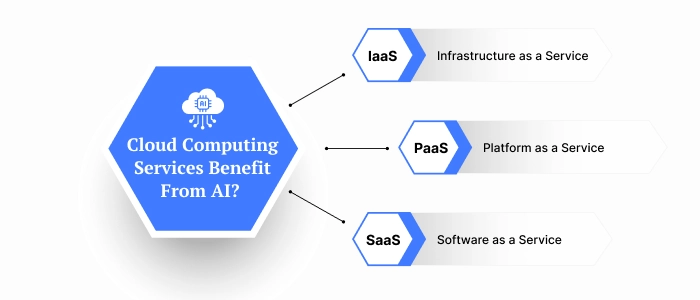
We’ll start by examining the three primary types of cloud computing services: IaaS, PaaS, and SaaS, in order to comprehend how AI is changing cloud technology. AI enhances the effectiveness, speed, and intelligence of each of these models in a different way.
Infrastructure as a Service (IaaS)
Cloud computing firms provide virtualised computer resources, such as servers, storage, and networking, under IaaS. In this case, AI aids in resource management optimisation by forecasting demand and automatically adjusting infrastructure.
AI is used by Amazon Web Services to predict server loads and manage traffic during periods of high demand. According to one study, AI-powered infrastructure management can save operational expenses by up to 35%, which is revolutionary for companies using cloud computing as a service.
Platform as a Service (PaaS)
PaaS offers developers a user-friendly platform for creating, evaluating, and implementing applications. Coding, debugging, and performance monitoring are all expedited by AI.
Microsoft Azure’s AI integration allows developers to identify issues, modify code, and forecast program performance prior to program launch. Businesses can save time and money on product development by delivering new goods more successfully.
Software as a Service (SaaS)
The majority of users encounter AI in action here. From Netflix’s customised recommendations to Gmail’s clever email sorting, SaaS businesses utilise AI to improve user experiences. Cloud-based AI systems can assess user behaviour, predict preferences, and provide real-time personalisation.
Beyond this, AI enables hybrid and multi-cloud settings, assisting companies in more effectively managing data across several platforms. AI-driven automation and predictive analytics can help cloud computing service providers process data more quickly, use less energy, and experience less downtime.
How Does AI Improve Scalability and Resource Efficiency in Cloud Services?
The ability of AI to improve systems’ resource management is one of its main benefits in cloud computing. In simple terms, AI ensures that cloud platforms run faster, waste less, and scale automatically just like a digital assistant that anticipates what’s needed before you even ask.
Cloud computing companies handle massive amounts of data every second. Managing all of this used to involve manual setting and monitoring. However, to ensure that servers and storage resources scale up or down in response to real-time demand, AI algorithms now automatically predict changes in workload. For example, according to Google’s sustainability report, Google Cloud uses AI-based tools to dynamically change server loads, which helps reduce energy consumption by up to 40%.
This intelligent automation also helps maintain cost efficiency. Instead of renting large, fixed cloud storage all the time, businesses can now pay only for what they actually use, a key principle of cloud computing as a service. AI makes sure of this by efficiently reallocating resources and continuously analysing data usage. For companies looking to reduce spending further, exploring the best cloud cost optimization tools for 2026 can offer even more ways to control and optimise cloud expenses.
It reduces downtime, prevents system overloads, and speeds up cloud computing services overall.
AI greatly improves scalability, one of the main advantages of the cloud. Let’s say a company has an online store that unexpectedly receives a lot of traffic during a sale. The architecture of AI-powered cloud systems can automatically expand to handle traffic spikes and then contract when activity returns to normal. Both seamless user experiences and cost optimisation are guaranteed by this level of flexibility.
Predictive resource management is also improved with AI. AI evaluates historical performance data and projects future requirements rather than responding to issues as they arise. This proactive approach effectively avoids system breakdowns and performance lags, in contrast to conventional cloud approaches.
In short, AI is what makes cloud computing services scalable, efficient, and durable. By automating resource allocation and boosting energy efficiency, it enables cloud computing companies to create digital products more quickly, intelligently, and sustainably.
What are the Top Cloud Computing Service Providers leveraging AI Innovations?
Almost every important cloud computing business enterprise uses AI to improve performance, automate processes, and cut operating costs. These AI-powered advancements are transforming cloud computing skills, making it faster, smarter, and more scalable than ever earlier than. Let’s observe some of the important things players are riding this transition.
1. Amazon Web Services
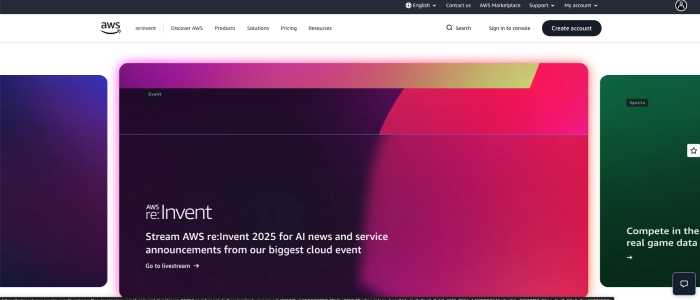
AWS is one of the biggest cloud computing companies globally, and it has long past all-in with AI. Its AI tool, like Amazon SageMaker, helps builders build, teach, and deploy device learning models immediately in the cloud. AWS additionally makes use of AI for predictive analytics and resource optimisation, making it a main instance of ways AI in cloud computing can strengthen smarter business decisions.
2. Microsoft Azure

Microsoft’s Azure cloud has fully integrated AI into its infrastructure with features such as Azure Machine Learning and Cognitive Services. These allow businesses to automate processes like predictive maintenance, speech translation, and photo identification. Additionally, Microsoft demonstrated how cloud computing firms strike a balance between innovation and sustainability by offering AI-powered scaling options to increase performance and reduce energy use.
3. Google Cloud Platform
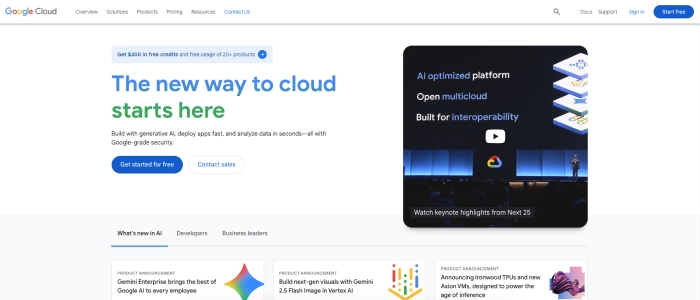
Google Cloud’s success is primarily based on its AI-first approach. The platform brings together TensorFlow, Vertex AI and AI Hub to make getting to know reachable to developers. Google’s AI answers use predictive algorithms to help agencies boost record processing, identify abnormalities, and enhance cybersecurity. Their statistics centres are also AI-optimised for power conservation, demonstrating that smart cloud management can be both cost-effective and ecologically responsible.
4. IBM Cloud
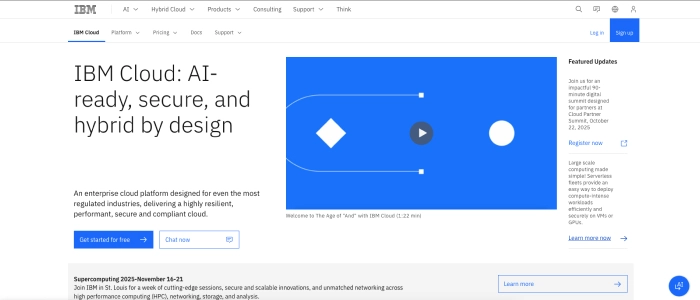
IBM has long been a global pioneer in artificial intelligence and cloud computing, particularly through its Watson AI services. The company’s cloud infrastructure offers advanced analytics and AI-powered automation to industries including healthcare, banking, and logistics. IBM’s hybrid cloud strategy allows businesses to safely combine on-premises and cloud data, giving them a competitive advantage over competing cloud service providers.
5. Oracle Cloud Infrastructure
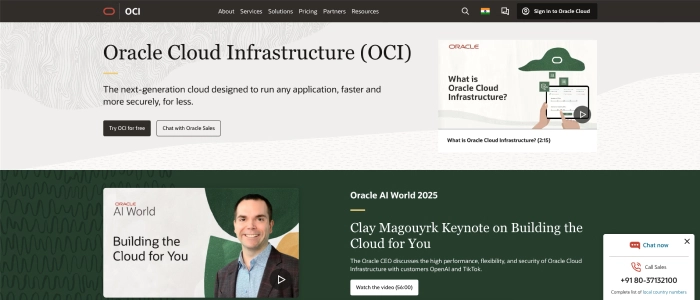
Oracle is using AI to simplify database management, automate security, and improve overall performance. It’s an AI-powered Autonomous Database that patches, backs up, and tunes itself, reducing manual work and downtime. For corporations that rely heavily on records storage and administration, Oracle’s AI-integrated answers provide performance.
How Does AI Enable Smarter Automation in Cloud Computing as a Service?
The two most powerful forces of the digital age are AI and cloud computing as a service. Together, they produce a system that isn’t always the simplest effective, but also sufficient to research, count on, and behave on its own. Through this collaboration, cloud computing companies are capable of providing services that are quicker and less expensive without the need for non-stop human interaction.
1. Smarter Task Management and Workflow Automation
AI enables cloud computing service providers to automate repetitive and routine processes like server maintenance, software updates, and data backup. AI takes control of these processes rather than engineers doing it by hand.
2. Predictive Resource Allocation
In traditional cloud setups, scaling resources often depended on manual monitoring. This method becomes predictive using AI. Real-time forecasting of user demand, system load, and application performance is possible with AI algorithms.
3. Self-Healing Cloud Systems
The development of self-healing infrastructure is one of the most interesting developments in cloud computing services. AI can quickly identify and address security flaws or system malfunctions, frequently before users even realise something is amiss.
4. Smarter Data Management and Analytics
Cloud services store vast amounts of data yet managing and analysing that data by hand would be unfeasible. To provide insights, cloud platforms may automatically sort, categorise, and analyse data using machine learning algorithms.
5. Enhanced Security Through AI Automation
When cloud computing and AI come together, cybersecurity is a crucial concern. AI constantly monitors cloud settings for odd activity, finding and removing hazards faster than previous approaches.
Can AI in Cloud Computing Enhance Data Security and Threat Detection?
Data is crucial in today’s digital-first culture and protecting it demands constant focus. With millions of cyberattacks occurring every day, even the most advanced cloud computing organisations are looking to AI for assistance. But how does AI improve cloud security?
Let us break it out in simple terms.
1. AI Makes Cloud Security Proactive, Not Reactive
In traditional cloud computing services, security systems detect and fix threats after they occur. But with AI in cloud computing, the approach is entirely different. AI tools continuously monitor network behaviour and detect unusual activities in real time.
For example, AI detects suspicious activity and limits access if a London-based employee arrives from India in a matter of minutes, often using tools such as address lookup to verify unusual location patterns. AI-capable cloud computing service providers like AWS, Google Cloud, and Microsoft Azure set themselves apart by emphasising threat prevention over attack response.
2. Smart Threat Detection
Machine learning is a sort of artificial intelligence that detects possible dangers by learning from data patterns. These algorithms can examine billions of data points and discover even minor abnormalities that humans may overlook.
For example, Google Cloud’s Security Command Centre employs AI to analyse data transfer, detect malware, and notify teams before the issue spreads. This is why AI-powered cloud computing as a service is becoming important for current cybersecurity operations.
3. AI Automates Incident Response
The timing of a cyberattack is crucial. Without requiring human participation, AI solutions may automatically isolate susceptible systems, freeze accounts, and alert IT specialists. This automated safeguard reduces data loss and service interruptions, guaranteeing that cloud platforms remain reliable for customers around the world.
4. Predicting and Preventing Future Attacks
By analysing past attack data, AI systems predict what kind of threats might occur in the future. This predictive ability allows cloud computing service providers to patch vulnerabilities before they’re even exploited.
For example, Microsoft Defender for Cloud uses predictive AI models to detect advanced ransomware behaviour and block it before it locks down files, saving companies millions.
5. Better Data Encryption and Access Control
AI also enhances data encryption by transforming data into secure codes and restricting access. It ensures that only authorised individuals can access sensitive data and quickly detects illegal activity. Many big cloud computing companies are already using AI algorithms to create adaptive authentication systems that change security levels based on user activity and location.
For example, if your access pattern suddenly changes, AI might ask for extra verification like a code or biometric scan to confirm it’s really you.
6. Cloud Security at Scale
When you think about what cloud computing does, hosting data for millions of users at once, it’s easy to see why manual monitoring simply isn’t enough. AI can handle enormous information and conduct real-time analysis across numerous global servers tasks that humans cannot complete on their own. The combination of cloud size and AI speed helps organisations keep ahead of evolving cyber threats.
What Challenges Do Cloud Computing Companies Face When Integrating AI?
While cloud computing companies are becoming more intelligent service providers thanks to AI, utilising it is not as easy as turning on a switch. Numerous businesses are still trying to figure out how to overcome the process’s enormous operational, financial, and technical challenges.
Let’s examine the biggest obstacles businesses face when integrating cloud computing and AI.
1. Data Privacy and Security Concerns
The main question when AI joins the cloud is who owns the data and how stable it is. AI systems require huge quantities of information to educate models and make wise choices. However, securely coping with that data across far-flung cloud computing offerings presents a tremendous issue. Organisations must follow excessive privacy requirements to ensure sensitive personal information isn’t always misused. This prompts cloud computing service providers to rethink how they shop, encrypt, and cope with massive databases whilst last invisible to customers.
2. High Implementation and Operational Costs
Integrating AI in cloud computing requires advanced infrastructure, from GPUs and storage systems to continuous software updates. These come with significant costs that not all companies can afford. Even though cloud computing as a service reduces some hardware expenses, training AI models still consumes massive computational power.
3. Data Quality and Integration Issues
AI systems are most effective as smart because of the statistics. Unfortunately, statistics stored across more than one cloud computing offering frequently come from distinctive formats and sources, some clean, some not. Poor data, satisfactory or unstructured facts, make it difficult for AI models to deliver correct outcomes. Syncing records from hybrid or multi-cloud environments adds some other layer of complexity. Many cloud computing businesses face delays and inefficiencies when trying to standardise, label, and procedure tremendous datasets for AI use.
4. Lack of Skilled Talent
AI and cloud computing are both highly specialised fields, and specialists in both are in short supply. While AI scientists might not fully comprehend cloud infrastructure management, cloud engineers might not have much expertise with AI. This talent gap raises costs, hinders integration, and increases reliance on outside contractors.
5. System Complexity and Maintenance
When AI-powered cloud computing services are deployed, preserving them isn’t any small feat. AI fashions need normal retraining, updates, and performance tracking to stay applicable. This adds complexity to already large-scale cloud systems. Cloud vendors have to balance automation and manipulation, ensuring AI doesn’t make unintentional gadget adjustments or devour useless sources.
6. Ethical and Bias Concerns
AI programs may accidentally learn biases from past data. In cloud environments with millions of users, automation may lead to unjust consequences such as unequal resource access or inaccurate data estimates. To avoid bias and data abuse, cloud computing companies must create robust ethical AI frameworks. Right now, the top priorities for AI-cloud connectivity are transparency, explainability, and fairness.
How Will AI-Driven Cloud Computing Change Industries and Business Models?
AI and cloud computing are basically redefining the ideas that govern how industries function and evolve, in place of just how companies employ technology.
AI-powered cloud computing is improving decision-making, automation, and innovation in a variety of industries, including manufacturing, banking, healthcare, and retail.
1. Smarter Decisions with Data
AI allows cloud computing businesses to analyse considerable quantities of data in real time. These insights help corporations foresee trends, increase performance, and make better decisions.
2. Better Customer Experiences
Businesses rent cloud computing as a service to increase customised reports, which include AI chatbots and Netflix pointers. Salesforce reviews that 84% of customers favour agencies which are aware of their specific wishes.
3. Boosting Healthcare and Manufacturing
Cloud computing services driven by AI enable medical professionals to identify illnesses more rapidly and businesses to anticipate equipment issues before they arise. Time, money, and lives are all saved in this way.
4. New, Scalable Business Models
Businesses can unexpectedly scale resources up or down in response to demand way to AI in cloud computing. This adaptability lowers costs and encourages innovation, in particular in startups.
5. A Sustainable, Smarter Future
AI also assists cloud computing service companies in making their data centres more energy-efficient and environmentally friendly. The transition to greener solutions is being led by companies like Google Cloud and Microsoft Azure.
What Future Trends Will We See in AI + Cloud Computing Technologies?
AI and cloud computing appear to have a more promising future than before!
When considered collectively, they are altering how businesses store data, make decisions, and offer customer support.
Let’s examine some of the most fascinating advancements that will take place in the following years.
1. Growth of Cloud Automation Driven by AI
Cloud computing services are becoming more intelligent and effective thanks to AI. Businesses won’t have to manually manage cloud resources for very long. AI will optimise workloads, cut expenses, and automatically assign storage.
2. Edge Computing + AI = Real-Time Power
Edge computing has become a huge trend due to the requirement for quick data processing in sectors like manufacturing and healthcare. By integrating AI with aspect structures, records can be processed closer to the source, resulting in faster selection and lower wait times. This is especially crucial for IoT devices, self-driving cars, and real-time analytics.
3. Stronger Data Security and Privacy
Cloud computing businesses are creating more intelligent cybersecurity systems in response to the growth of AI. Sensitive data can be automatically secured, risks can be identified, and breaches can be stopped by AI algorithms.
4. Sustainable Cloud Solutions
Green technology is now required. AI is being used by cloud computing service providers to monitor energy use and improve the environmental sustainability of data centres. AI is already being used by Google Cloud and AWS to reduce power consumption and carbon emissions throughout their facilities.
5. AI-as-a-Service (AIaaS) on the Cloud
Similar to cloud computing as a service, businesses are increasingly offering AI-as-a-Service, which enables companies to readily access machine learning and data analytics technologies without requiring their own infrastructure. This trend is speeding up and reducing the cost of AI deployment for both big businesses and startups.
6. Personalised Business Intelligence
As AI is integrated into cloud platforms, predictive analytics will continue to enhance decision-making. Businesses may anticipate client needs, maximise marketing, and enhance overall operations by utilising real-time information.
Outdated systems limit business agility
Boost productivity through cloud transformation
Conclusion
Cloud computing and artificial intelligence are fundamentally altering how businesses operate, grow, and evolve. What was soon considered futuristic has become commonplace. Through greater shrewd facts evaluation and real-time automation, AI is supporting cloud computing businesses create quicker, safer, and greater efficient digital ecosystems.
As establishments look to undertake cloud computing as a carrier, they have access to wise tools that could predict customer wishes, enhance safety, and decrease operational costs. AI in cloud computing is expected to become increasingly more integrated in the future, enabling self-managing systems, energy-efficient data centres, and customised digital solutions for all industries.
Therefore, the answer to the question of what cloud computing is and how it is evolving is obvious: artificial intelligence is the key. These technologies work together to create a more intelligent, connected, and sustainable future in which data is not only saved but also comprehended, safeguarded, and utilised.
FAQ’s:
1. What is cloud computing?
Cloud computing is the delivery of computing services like storage, servers, and software over the internet. It allows businesses to access data and tools from anywhere, without needing heavy on-site infrastructure.
2. What is AI in cloud computing?
AI in cloud computing combines artificial intelligence with cloud technologies to automate processes, analyse data, and enhance performance. It helps companies make smarter decisions and improve efficiency.
3. What are the types of cloud computing services?
The main types include IaaS (Infrastructure as a Service), PaaS (Platform as a Service), and SaaS (Software as a Service). Each offers different levels of control, flexibility, and management for businesses.
4. How are cloud computing companies using AI today?
Leading cloud computing companies use AI for predictive analytics, threat detection, and resource optimisation. It allows faster data processing, better automation, and improved customer experience.
5. Why should businesses choose cloud computing as a service?
Cloud computing as a service reduces costs, enhances scalability, and provides on-demand access to advanced tools. It’s ideal for businesses aiming to grow efficiently with minimal hardware investment.


 Shaili Gupta

 Ajay Wadne