If the last several years taught us anything, it is this: Tech and AI no longer develop gradually. Overnight, they level up. Machines composing software, diagnosing diseases, or running the business are just a few examples of what was considered “futuristic” and is now a “normal” situation. And with the year 2026 coming up, the latest technological and AI advancements are not only setting trends but also changing the world in a lot of ways, like how we live, work, shop, study, and communicate.
The new wave of innovation is all about speed, personalisation, and real-world impact from smarter artificial intelligence development tools that let developers create apps more quickly, to intelligent systems that can work together like teams. Companies are spending heavily in AI development services; startups are creating whole items run by automation; and all major AI development business is rushing to create speedier, safer, human-aware solutions.
The fascinating part is that this is not only a narrative for IT geeks or engineers. Besides typical internet users, these technical and artificial intelligence advancements will affect artists, students, and entrepreneurs.
Uncertain about 2026 AI development trends?
Book An Appointment for latest AI development services
Whether such tools include AI features to enhance your films, propose your next favourite song, or empower businesses to better grasp their customers, the future is pretty much getting into intelligence and becoming more fascinating day by day.
In 2026, technology will not only help life but also shape it. The drivers of this change are more complex, clever and interesting than they have ever been. Let’s investigate what follows and its relevance.
What Experts Predict for AI and Tech in 2026?
Experts claim 2026 is when things really start to pick up steam, even if the last several years felt like technology was speeding along.. Analysts from IBM and Gartner agree that we’re entering a phase where AI stops being a feature and becomes the foundation of how businesses, apps, and even everyday devices work.
Let’s break it down in a simple, fun, and actually understandable way, no confusing jargon, just real talk about what’s coming next.
1. AI Will Move From “Cool Tool” to Core Infrastructure
Right now, many companies treat AI like an add-on, something they experiment with. Experts forecast that artificial intelligence will be woven into the fundamental design of products and services by 2026. Regard it as electricity. Electricity drives everything; you don’t incorporate it as a feature. That’s exactly how tech and AI will function together.
For businesses, this means:
- AI will run operations behind the scenes.
- Decision-making will be data-driven by default.
- Software will adapt automatically to users.
This shift is why demand for AI development services and skilled engineers is rising rapidly. Organisations want systems that don’t just store data, they understand it.
2. Multi-Agent AI Will Replace Single Chatbots
One of the most exciting predictions is the rise of AI agent teams. Experts forecast that artificial intelligence will be woven into the fundamental design of products and services by 2026. Regard it as electricity. Electricity drives everything; you don’t incorporate it as a feature. For example:
- One agent analyses customer data.
- Another predicts trends.
- Another communicates with users.
- Together, they function like a digital workforce.
Experts say this architecture will outperform traditional automation because each agent is optimised for a specific task. It’s like switching from one multitasking intern to an entire expert team.
3. AI Will Become Industry-Specialised
General AI models are powerful, but they sometimes lack deep expertise. That’s why the next wave of AI and tech developments focuses on domain-trained systems. These models are trained only on niche datasets such as:
- Medical records
- Financial regulations
- Legal frameworks
- Engineering specifications
More accurate answers, fewer hallucinations, and better decision-making. For businesses searching for an AI development company, this means customised models will be far more valuable than generic ones.
4. Physical AI Will Enter the Real World
Another prediction experts highlight is the rise of physical AI intelligence embedded in machines operating outside screens.
This includes:
- Warehouse robots
- Autonomous vehicles
- Agricultural drones
- Smart manufacturing systems
These systems will engage with the real environment and make judgments in real time, rather than only evaluating data.
5. AI Development Will Become Faster Than Ever
One of the most exciting trends for developers is the explosion of AI development tools that help build software faster.
These tools can:
- Generate code
- Detect bugs
- Suggest architecture improvements
- Automate testing
This means even small teams can build products that once required huge engineering departments. For Gen Z creators and startup founders, this is huge. It lowers the barrier to entry and makes innovation accessible to anyone with an idea.
6. Edge AI Will Make Devices Smarter (Without Internet)
Right now, many AI systems rely on cloud servers. But experts predict that by 2026, a large portion of AI processing will happen directly on devices called edge AI.
Why this matters:
- Faster response time
- Better privacy
- Works offline
- Less data usage
So your phone, smartwatch, or car won’t need constant internet access to be smart. It’ll already have intelligence built in.
7. AI Will Quietly Run Businesses Behind the Scenes
Least discussed but among the most significant forecasts is unseen artificial intelligence. Artificial intelligence will operate quietly in the background in place of showy chatbots.
- Predicting customer behaviour
- Optimising supply chains
- Detecting fraud
- Forecasting demand
Users might not even be aware that artificial intelligence is at work; they will only see that things run faster and better. This trend is why the most recent advances in artificial intelligence and technology are more and more concentrated on infrastructure rather than front-end elements.
8. Trustworthy AI Will Become a Top Priority
As AI becomes more powerful, trust becomes critical. Experts predict companies will invest heavily in:
- Explainable AI
- Bias detection
- Model auditing
- Secure data handling
Organisations will be rated on their safety, justice, and openness in addition to their artificial intelligence capabilities, and as AI-generated content becomes more widespread, teams are also turning to AI content detectors to verify the authenticity of written outputs before they are published or submitted
9. AI + Human Collaboration Will Define Work
Notwithstanding concerns, experts repeatedly forecast that artificial intelligence will transform our work rather than replace people. Rather than performing repetitive chores, individuals will concentrate on. Rather than performing monotonous activities, people will concentrate on:
- Creativity
- Strategy
- Relationship-building
- Problem-solving
AI will handle the heavy lifting, while humans guide direction and judgment. In other words, the future workplace isn’t humans vs AI. It’s humans + AI.
What Are the Biggest AI Trends in 2026?
Discussion around artificial intelligence is changing swiftly. AI looked to be a fascinating, optional additional function a few years back. According to analysts, it will become the cornerstone of technology by 2026. Let’s explore the biggest trends shaping this transformation, explained simply, clearly, and in a way that actually makes sense.
1. AI-Native Development Platforms 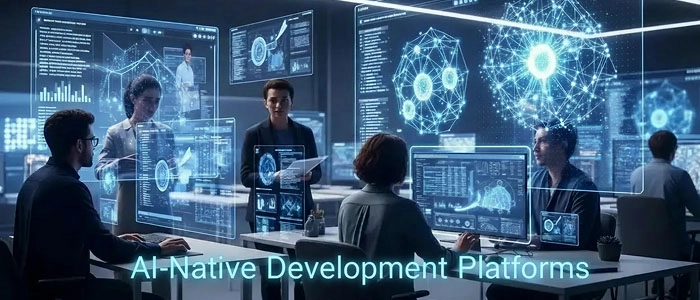
The emergence of AI-native development platforms marks one of the most significant changes in technology and artificial intelligence’s current development. Developers may use these AI-based solutions to more quickly build, debug, and improve software than before. Instead of manually writing every line, teams may employ smart recommendations, automatic debugging, and real-time performance insights.
Gartner specialists predict that such systems will alter the creation of programs, hence allowing faster, more intelligent, and more accessible AI development. For both startups and companies, this means lower costs, faster launch cycles, and products that are always enhanced by machine learning.
2. Multiagent AI Systems
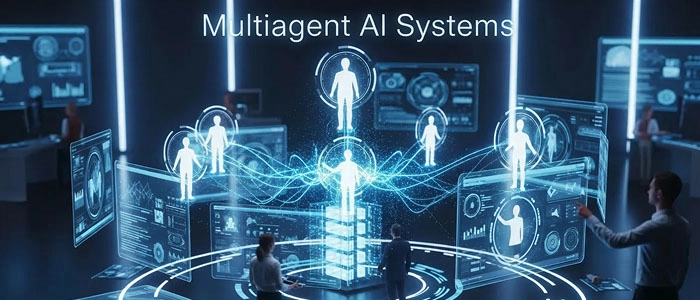
Multi-agent systems are another key topic in technology and artificial intelligence that will emerge in 2026. Instead of depending on a single artificial intelligence assistant, organisations will use groups of skilled AI bots that collaborate. Data analysis, communication, and prediction may be handled by different agents.
One agent could make predictions, another oversee communication, and yet another review data. Together, they function like a digital workforce. According to insights highlighted by IBM, this model can dramatically improve efficiency and accuracy because each agent focuses on a specific task. Businesses investing in AI development services will benefit from automation that feels less like software and more like a coordinated team working behind the scenes.
3. Domain-Specific AI Models
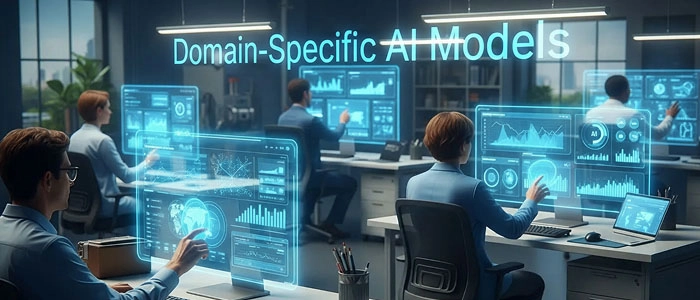
Although broad AI models are strong, actual accuracy is found in domain-specific artificial intelligence. Specialised datasets like legal papers, medical records, or financial statements enable these systems to produce expert-level results. More companies will favour custom solutions from an AI development firm in 2026 since tailored models cut errors and enhance decision-making.
For sectors where accuracy is most crucial, this trend is especially so. Specialised intelligence will surpass one-size- fits-all systems as artificial intelligence and technological advancements go on, hence giving niche AI solutions the true competitive edge.
4. Physical AI and Robotics
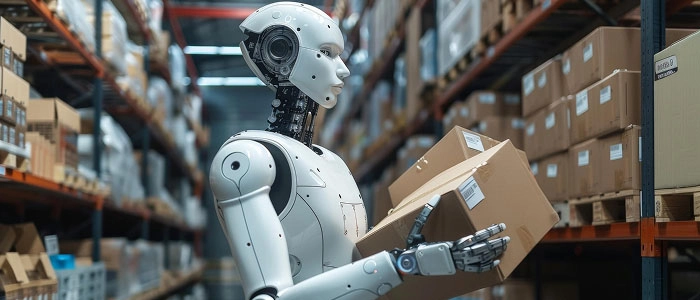
Physical artificial intelligence is pulling intelligence from the screen into the actual world. In order to enable robots to interact with their physical environment, this approach combines robotics, sensors, and machine learning. These technologies, which range from autonomous delivery trucks to warehouse robots, do more than just assess data they take immediate action.
This is becoming possible with improvements in hardware and artificial intelligence tools that let computers adjust to shifting environments without human help. By 2026, physical AI is projected to revolutionize agriculture, manufacturing, and logistics, therefore demonstrating that the future of artificial intelligence is physical, adaptable, and everywhere not just digital.
What Infrastructure Trends Are Powering the Future?
Behind every powerful AI app, smart assistant, or real-time prediction system, there’s something most people never see: infrastructure. Experts claim the true revolution in artificial intelligence and technology is unfolding beneath the surface, even as eye-catching applications capture headlines.
Let’s explore the key infrastructure trends powering the future in a way that’s simple, exciting, and actually easy to understand.
AI Supercomputing Platforms
Training and operation of artificial intelligence systems call for enormous processing ability. High-performance CPUs, GPUs, AI accelerators, and sophisticated memory systems power AI supercomputing systems’ fast and effective handling of massive datasets. These systems are meant only for machine learning tasks, not conventional computing.
Access to this level of computing capability is increasingly a competitive edge for any firm creating artificial intelligence. It lets teams construct more intelligent models, more precisely test them, and at large scale. Better hardware results in more intelligent AI tools.
For Gen Z creators and companies, this means quicker video rendering, real-time translation, sophisticated gaming physics, and exceptionally customised digital experiences all run by hidden supercomputers operating behind the scenes.
Hybrid Computing Architectures
Not all computing happens in one place anymore. Hybrid computing combines multiple environments, cloud, on-premises systems, and edge devices so workloads can run wherever they perform best.
For example:
- Sensitive data may stay on private servers
- Heavy AI processing runs in the cloud
- Instant responses happen on your device
This mix-and-match method boosts performance, security, and cost effectiveness. Many organisations that provide AI development services increasingly use hybrid architectures to reconcile speed with privacy considerations.
In real life, hybrid computing is why your phone can run AI features instantly without sending everything to the cloud. It’s also what lets global platforms scale to millions of users without crashing when something goes viral.
Edge AI Expansion
Among the most interesting artificial intelligence and technology breakthroughs in the present is edge AI. Rather than transmitting data to distant servers for processing, edge computing lets artificial intelligence run directly on gadgets, including smartphones, wearables, vehicles, and smart home systems.
Local processing means:
- Faster response times
- Better privacy
- Reduced internet dependency
Edge AI powers offline voice assistants and cameras that detect motion instantaneously. Rapidly creating AI development tools that allow apps to run well even with limited connectivity, developers are enabling edge deployment.
Where even millisecond delays can be fatal, in sectors including healthcare, manufacturing, and self-driving automobiles, this inclination is particularly pertinent.
Unprepared for 2026 AI development trends?
Contact us for strategic AI development support.
Why Infrastructure?
Typically, people discussing artificial intelligence development emphasise algorithms or applications. But infrastructure shapes the potency, dependability, and scalability of those ideas. Even the most intelligent artificial intelligence models can’t work well without solid computer underpinnings.
The companies spearheading the tech revolution in 2026 will be those with the most robust infrastructure to support their ideas, not only the ones with the best ideas. These fundamental technologies are silently moulding the direction of artificial intelligence and technology, ranging from supercomputing systems to hybrid systems and edge intelligence.
Most consumers won’t ever see this framework, yet they would certainly feel its effect in faster apps, wiser recommendations, safer systems, and more immersive digital experiences.
What are the Industry-Wise Impact of 2026 Tech Trends?
Not in research labs but rather over several industries is where the best proof is found that recent developments in artificial intelligence and technology are changing the world. Every sector, from entertainment to healthcare, is being transformed by quicker infrastructure, smarter systems, and smart automation. The exciting part of it is that this transformation goes beyond mega corporations. Small businesses, artists, students, and entrepreneurs are all riding the same wave of innovation.
Let’s explore how tech and AI trends in 2026 are transforming industries in real, practical ways.
Healthcare

Healthcare provides among the finest examples of deliberate artificial intelligence development. These days, doctors can diagnose illnesses more quickly thanks to sophisticated machine learning algorithms that can analyse medical images, identify abnormalities, and more. Predictive analytics is also being used by hospitals to manage resources, anticipate patient needs, and reduce wait times.
Another significant change is wearable devices driven by artificial intelligence. Real-time monitoring of heart rate, sleep cycles, oxygen levels, and stress patterns will be provided by these devices. Healthcare is progressively turning toward prevention instead of just reacting to illness; This constitutes a major leap forward.
Finance
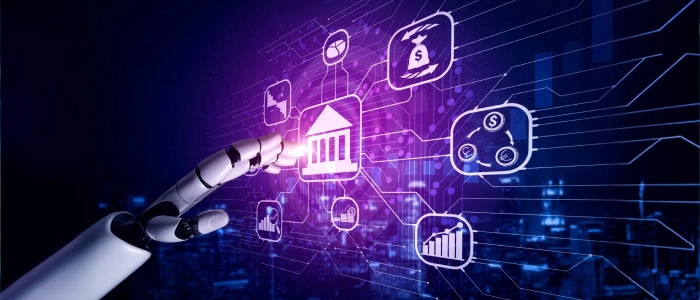
The financial sector is at the forefront of AI adoption, throwing themselves at AI, based fraud detection, algorithmic trading, and customer risk analysis. AI systems are capable of scanning millions of transactions in the blink of an eye and detecting suspicious patterns which might be overlooked even by highly skilled human analysts.
Banks and fintech companies are turning to conversational AI assistants not only to answer customers’ questions, but also to process loan applications and deliver financial advice. From the perspective of any AI development company operating in the fintech arena, the trio of accuracy, speed, and security has been elevated to the first order of concern, as financial decisions are nowadays critically dependent on real-time data processing.
Education
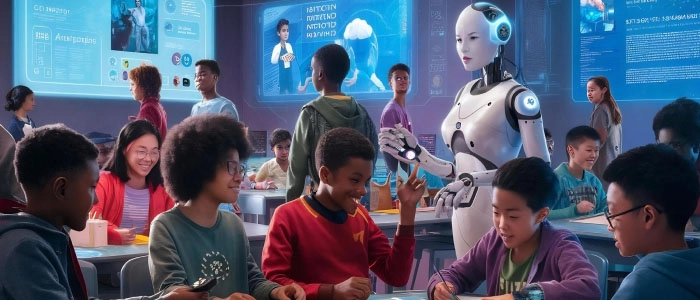
The one, size, fits, all education approach is increasingly becoming a thing of the past. AI-powered adaptive learning platforms analyse students’ learning methods, areas of struggle and optimal study pace. As a result, lectures can be tailored automatically to the learning needs of each student.
By 2026, it is anticipated that educational platforms would use AI development services to build customised learning plans, automated feedback systems, and intelligent teacher assistants. Education becomes more lively, engaging, and accessible, particularly for the younger, tech-savvy generations.
Retail and E-Commerce

Artificial intelligence-driven recommendation engines are improving online shopping. These systems propose that good clients are more likely to purchase by examining browsing patterns, purchase history, and interests.
Retailers are also employing predictive analytics for inventory control. AI projects trends and assists companies stock the appropriate items at the appropriate moment rather than speculating demand. This saves money, lowers waste, and increases consumer happiness.
Manufacturing
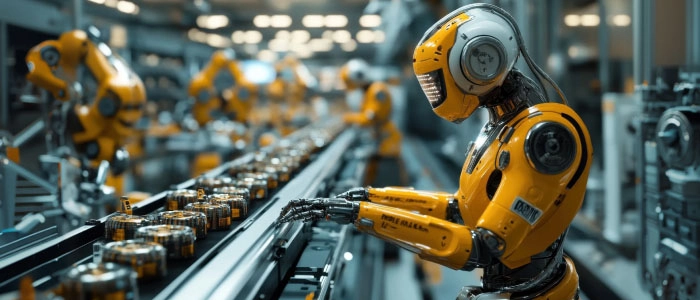
Manufacturing is changing; robots will also be thinking rather than only doing chores. Smart factories use AI-powered sensors that watch over machinery condition, predict failures, and schedule maintenance operations ahead of any breakdown. Using this approach, known as predictive maintenance, thereby boosts output volume by greatly decreasing wasted time.
At the same time, the use of industrial robotics is also following a trend of development. Presently, through the medium of data can learn, be reprogrammed for different tasks and work with human partners safely. These steps represent the most useful AI and technology innovations since they directly lead to an increase in efficiency and a decrease in the level of operational risks.
Entertainment & Content Creation
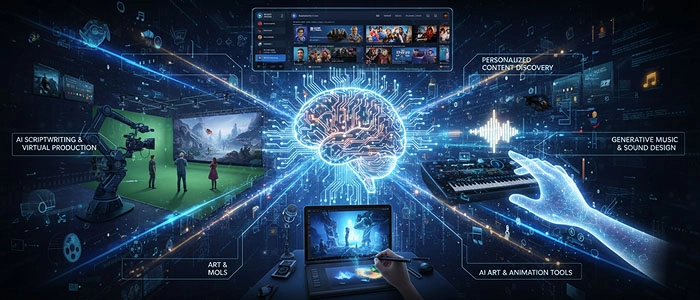
One of the most evident changes happening in the creative sector is presently taking place. Artificial intelligence systems can now assist with visual effects, music composition, scriptwriting, and video editing. This presents content creators with greater creative independence and quicker production cycles.
To guarantee that viewers always find something they love, streaming companies also use artificial intelligence to personalize recommendations. Sophisticated algorithms trained on massive datasets enable this degree of customization, therefore highlighting the influence of artificial intelligence research on daily interactions.
Transportation
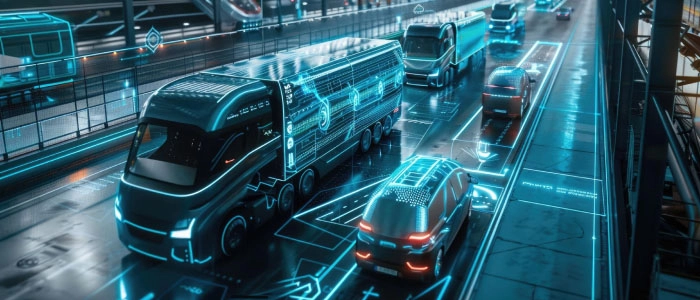
Among the elements facilitating smarter transit systems are AI-powered navigation, traffic prediction, and road optimisation. Companies in logistics use artificial intelligence to plan delivery paths using less fuel. Autonomous vehicles, improved computer vision, and sensor fusion will help technology to move ahead.
Public transportation networks use artificial intelligence as well to examine passenger patterns and dynamically alter schedules, therefore boosting commuter productivity.
What Do These Trends Mean for Businesses and Professionals?
The latest advancements in technology and artificial intelligence are quickly becoming essential for business expansion and competitiveness. Companies today use technology and artificial intelligence to enhance daily operations, better know consumers, and enable swifter decisions, as well as for invention.
For any firm developing artificial intelligence, the emphasis is moving toward creating user-friendly, secure, scalable solutions. Early users of intelligent artificial intelligence development tools are already saving time, reducing expenses, and establishing a significant competitive advantage.
For professionals, this change entails learning to cooperate with rather than fear artificial intelligence. Many industries use artificial intelligence programs nowadays to speed creative work, analyse data, or handle repetitive chores. Greater opportunities and career flexibility will be available for those who are open to learning new skills and familiar with these artificial intelligence and technology developments. Simply stated, those who can combine human thinking with smart technology own the future.
Missing 2026 AI trends in development?
Contact us for latest AI development solutions
Conclusion
One thing is quite evident as we enter 2026: the most recent artificial intelligence and technological advancements are changing the operation of the world, creating an expansion of it. They are not merely trends. Technology and artificial intelligence are gradually infiltrating our lives, from smarter systems to faster infrastructure, such that they are helping companies innovate and people work more effectively. Early adopters and inquisitive people are always the ones to have an advantage.
In the final analysis, it is not having technology at your fingertips that will determine success, but rather understanding how to use it. Those who blend human creativity with smart technology will be the future, be they industries putting money in AI development or individuals acquiring new AI skills.
FAQ’s:
1. What are the biggest AI and tech trends expected in 2026?
The biggest trends include AI supercomputing platforms, multi-agent AI systems, edge AI, hybrid computing, and stronger cybersecurity powered by artificial intelligence. These innovations are making technology faster, smarter, and more reliable across industries.
2. Why are businesses investing heavily in AI development?
Businesses are adopting AI development to automate tasks, analyze data faster, improve customer experience, and make smarter decisions. Companies that integrate AI early often gain a competitive advantage in efficiency, innovation, and scalability.
3. How will AI affect jobs in the future?
AI is more likely to transform jobs than replace them. While it automates repetitive tasks, it also creates new roles that require creativity, strategy, and problem-solving. Professionals who learn to use AI tools effectively will have better career opportunities.
4. What industries will benefit the most from AI and tech developments?
Almost every industry will benefit, but sectors like healthcare, finance, education, manufacturing, and retail are seeing the fastest impact. These industries use AI for predictions, automation, personalization, and real-time decision-making.
5. Do small businesses need AI tools, or is it only for big companies?
AI is no longer limited to large corporations. Today, affordable AI tools and AI development services allow small businesses and startups to automate marketing, customer support, analytics, and operations making advanced technology accessible to everyone.


 Souradeep Kundu

 Shivraj Dhaygude