
AI has altered many aspects of our lives, including our communication, employment, and way of life. It has been in the news for a while. Many parts of our daily life now use AI, such as voice assistants and watching sites like Netflix and Amazon.
But what we have witnessed thus far is only the start.
As technology is moving forward, a new and even more powerful type of AI has begun to take shape. Some are known as Agentic AI.
What makes Agentic AI different from the AI tools we already use? After all, don’t current AI system already perform tasks, make decisions, and assist us in various ways? The answer is yes, but with a significant limitation: most traditional AI systems are reactive.
This indicates that they react to direct human inputs or cues. They don’t take command, decide for themselves, or plan intricate, multi-step projects without constant human supervision.
To say this, agent best ai search analytics platform can freely think, plan, and act, often with minimal human intervention. This goal can be divided into managed stages and achieved by interacting with software systems, API, and external devices.
Manual processes slow your growth.
Accelerate progress with custom AI development.
When you ask that, the AI personal assistant, not only plans your meetings, but actively manages your calendar, resolves conflicts, sends reminders, adjusts your plan based on their availability, and even suggests the optimal time for tasks to raise your finger.
The first forms of autonomous Agentic AI technique are present in robotics, games, and complex simulation environments. However, the recent progress in LLMs, machine learning algorithms, and goal-oriented programming has enabled Agentic AI to develop beyond theoretical discussions in practical applications in the real world.
Start-ups, developers, and tech giants are now similar to AI agents capable of automating multi-stage workflows in marketing, customer service, custom software development, financial planning, and more.
As it seems exciting, the rise of Agentic AI also brings essential questions about security, responsibility, and moral decisions. How do we ensure that these agents work in accordance with human values?
How do we manage risk when the AI system creates an independent alternative? These are meaningful conversations that should be accompanied by technological innovation.
In this blog, we’ll go over what agentic AI is, how it operates, its salient characteristics, practical applications, and what lies ahead for this innovative technology. Prepare to learn about the upcoming phase of the AI revolution.
What is Agentic AI?

AI is usually thought of in the context of devices and software responding to commands or requests. Whether you want your phone to trigger the alarm, a AI chatbot to answer a question, or artificial intelligence to generate text or images, these systems often answer the orders they receive. They wait for your instructions.
What if AI doesn’t need to wait, though? What if it can decide, plan, and work on its own? This is where the agent comes into the AI game.
Building an AI system that can function as an autonomous agent is the goal of the quickly growing field of Agentic AI. This raises a common question in the tech world today: AI Agents vs. Agentic AI — what’s the difference? To put it another way, these AI systems do not just wait for humans to command them.
They actively evaluate circumstances, establish their own goals, prepare the necessary course of action to achieve these goals, and fulfil jobs with minimal or no human monitoring. It’s like having a digital assistant who understands your needs and sometimes knows what you need to do before you realise it.
To put it simply:
- Traditional AI: Waits for orders and acts when told.
- Agentic AI: Decides what needs to do, plans it, and does it all by itself.
This new AI can deal with complex, many-step tasks. They can work with other human users, adjust their features based on real-time input, and manage the entire workflow from beginning to end.
From monitoring the project deadline and even software to developing marketing campaigns, Agentic AI opens new opportunities for any AI development company, artists, and individuals in search of more intelligent, active digital solutions.
How Does Agentic AI Work?
Agentic AI might seem complex at first, but it’s built by combining different technologies and capabilities that allow it to function independently. Here’s a breakdown of how it works:
- Large Language Models (LLMs):
The core of the Agentic AI system has advanced language models such as AI chatbot through AI chatbot development, Gemini, and similar tools. These models help AI to understand, treat, and respond to natural language input. In addition to simple interactions, LLMS AI drafts schemes and clearly communicates, causing the agent’s decision-making to function like a brain.
- Goal-Setting Frameworks:
Not like old AI, which needs clear orders to act, Agentic AI depends on setups that let it choose and rank its own goals. When a goal is set, this AI can split it into doable steps and figure out what must be done next, all without a person watching over it.
- Task Execution Abilities:
Agentic AI can take measures by interacting with various digital tools and platforms. Whether he sends e-mail, makes API calls, scrapes data from websites, plans posts, or generates reports, they can independently handle multiple steps in the workflow.
- Feedback Loops for Continuous Learning:
The power of smart AI to learn from its past acts is a core part of how it’s made. It looks at outcomes through feedback loops, makes tweaks, and shifts its plans as time goes on. So, the AI gets smarter and better at each job it finishes.
Example to Understand It Better:
Think of telling a competent marketing agent, run by Agentic AI:
“Make a week’s plan of social media posts for my skin care brand for people aged 25 to 35.”
Here is what the Agentic AI would do:
- Look for new trends in skincare and what the audience likes.
- Pick the kind of posts to make pictures, videos, reels, or sets of images.
- Write text, pick tags, and make pictures or other visuals.
- Set up the posts on your chosen social sites with tools that help manage them.
- Keep track of how many people like or react to the posts during the week.
- Make a report on how well the posts did and think of new post ideas based on what the report says.
All this gets done on its own, with no need for you to handle each step. That’s the real power of Agentic AI.
Key Features of Agentic AI
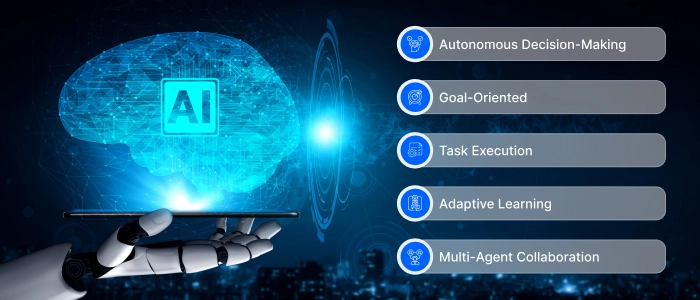
The distinct set of characteristics that Agentic AI development company offers sets it apart from conventional artificial intelligence systems. These features enable it to operate as an active participant in decision-making, task management, and goal execution rather than only a reactive tool.
Let’s examine the salient characteristics of Agentic AI in more detail:
- Autonomous Decision-Making
One of the most essential characteristics of Agent AI is the ability to make decisions automatically. Unlike traditional AI devices, which require constant signal or command, agents like virtual receptionists can consider AI ratios, weigh different options and choose the most appropriate course of action without continuous human input.
This means that it can identify what to do, decide when to work, and follow independently, which makes it especially valuable for the control of complex workflows and multi-step functions.
- Goal-Oriented
Agentic AI is intended to be motivated by specific objectives. It can take a large goal, divide it into more doable, smaller tasks, and then work on each of those tasks individually until the main goal is accomplished, rather than waiting for detailed instructions.
It can handle anything from creating a social media campaign to setting up a number of corporate procedures because of its goal-oriented attitude, which makes sure that every action it performs is in line with the ultimate goal.
- Task Execution:
A key thing about Agentic AI is how it can act in the real world. It does more than think up ideas or give tips; can work with online tools, apps, and sites.
It can send an email, set up a meeting, pull info from a web page, or start an auto task with an API. Agentic AI is made to do things that push jobs ahead, cutting down on the need for people to step in.
- Adaptive Learning:
Agentic AI learns instead of just acting. Feedback loops and constant observation of its results allow it to assess its performance and make future improvements.
AI may adjust its strategy, update its techniques, and improve over time if a particular approach doesn’t produce the intended outcome. The more time that Agentic AI, for example self-improving voice AI, is used, the more effective it will become because of its capacity to learn from mistakes and adjust.
- Multi-Agent Collaboration:
Last but not least, agentic AI isn’t made to work alone. It can function as a component of a bigger system in conjunction with humans or other AI agents.
These AI agents can work together, share jobs, and talk to get things done. In the same way, they can talk to people by giving news, asking if it’s okay to do something, and sending updates. Agentic AI is excellent for large tasks that need teamwork since it works well with others.
In short, these traits join to make a smart, forward-thinking, and self-running AI that can do things old AI tools could not.
Why is Agentic AI Important?
The next big step in AI will be more than just making bots that can give tips or answer questions. The future of AI lies in creating systems that can guess needs, take action, and manage complex tasks with no need for constant watching. Agentic AI is key for this role.
Here’s why it’s essential in today’s quick and digital-first world:
- It Reduces Repetitive Tasks for Humans
The numerous tedious, time-consuming duties that people must perform daily are a major problem in many workplaces. This includes sending daily emails, making reports, setting up meetings, and changing records.
Agentic AI can handle these boring jobs, letting human workers do more critical, creative, and planning tasks. By taking care of these tasks quietly and well, these AI agents boost how much gets done and cut down on mental mess for workers in every field.
- It Enables Automation of Complex, Multi-Step Workflows
Automation is not new, but a lot of existing tools can only do one-step tasks that follow set rules. Agentic AI is different; it manages jobs that need many steps and choices at several points. For instance, rather than just sending a reminder email, an AI agent may set up a whole marketing plan.
It can find out who to target, create posts, set times for them, track how well they do, and change plans based on what happens. This ability to manage interdependent tasks alters the game for companies looking to perform successfully.
- It Supports Real-Time Decision-Making and Problem-Solving
Fast choices matter a lot in quick jobs like money, health, and helping folks. AI that works alone can see events as they unfold, mull over other ways, and choose the top path using the info it holds.
Be it handling stock trades, fixing a customer issue, or changing a shipping plan, these AI agents can shift with the needs right then, letting groups stay quick and ready for rivals.
- It Allows Scalable, Personalized Services Without Constant Oversight
One big issue with made-for-you services, like in sales, help, or learning, is that they need a lot of close work. Smart AI lets us give out fit, quick services to many without swamping the people teams.
These AI agents can shape talks, deals, or tips for lots of users at once, but still keep it one-on-one, because they can pick up and shift from what each person likes and does. Agentic AI solutions are already showing up in customer-facing operations, carrying whole conversations across voice, chat, and messaging while preserving context from earlier exchanges.
The next significant wave of AI applications will be driven by agentic AI, which will be used in financial advisors, self-sufficient customer service agents, and personalised education systems.
Examples of Agentic AI in Action
Agentic AI may seem like it’s from the future, but it’s here now. Over the last year, many projects and tools have come up. They show how AI agents can handle jobs, make choices, and work with people or other AI systems by themselves. Let’s check out a few of the big examples in the Agentic AI area:
AutoGPT & BabyAGI

In the AI field, two significant first works were AutoGPT and BabyAGI. These free tools showed that AI can do more than reply to requests. They could set their own goals, make plans, and work on tasks in a row to get to an endpoint.
Take AutoGPT as an example. You could tell it to “make a blog on skin care moves and put it out on social media.” It would look up info, write posts, craft social media bits, and try to send them out doing it all alone, while always seeing how it’s doing and making changes as needed. These works showed as test tools, proving how good AI agents can be.
Devin
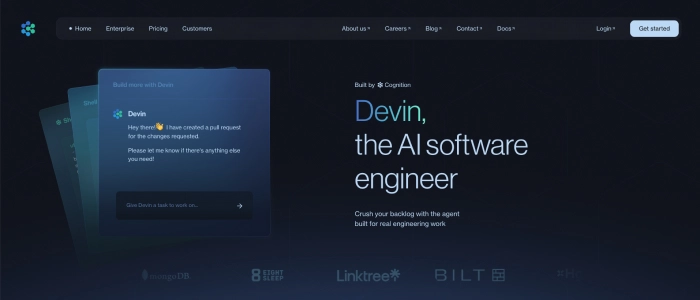
Another impressive example is Devin, an AI agent designed to function like a software engineer. Devin can build, test, debug, and deploy software projects without needing direct human supervision.
Instead of simply generating code snippets when prompted, it takes on complete AI development projects identifying requirements, writing code, fixing errors, and even deploying applications. Devin marks an exciting shift in how agentic AI can automate highly technical and traditionally human-driven tasks.
Personal AI Scheduling Assistants
Time management is one of the most tedious parts of modern work life, and Agentic AI is stepping in here, too. Tools like Reclaim AI act as intelligent personal scheduling assistants that don’t just book meetings when asked.
They renovate agreements autonomously, adjust the deadline, block the focus time and balance individual and business goals based on changing preferences. These AI agents understand the context, make active changes and ensure that your calendar constantly combines with your goals without back and forth.
Surge of Agentic Platforms Across Industries
Apart from known big names, many new small firms and tech setups are working fast to make innovative AI tools for jobs like marketing help and talking to customers, as well as for studying the market and managing homes.
Think of AI agents in customer care who answer your needs and also deal with money back, change when things arrive, and offer more services by looking at what you did before, all without any person having to get involved. Chatbase is one platform already moving in this direction a chatbot for customer service that trains on your own business data and handles queries, returns, and follow-ups without a human stepping in each time.
These examples are ushered in by a new era of intelligent, proactive digital agents, which demonstrates that agentic AI is more than just a theoretical idea. It is already changing the way we work, communicate, and handle daily activities.
The Future of Agentic AI
We have only scratched the surface what Agentic AI can achieve. Since these systems are more competent and reliable, they will assume high-level liability in industries. However, their success depends on building them carefully and ethically.
Here’s what lies ahead:
High-Stake Applications
While most AI we interact with today handles relatively safe, everyday tasks like recommending movies or answering customer queries the future of Agentic AI lies in high-stakes environments where speed, precision, and reliability can literally save lives or prevent disasters. Here’s how it’s unfolding:
Healthcare Acceleration:
Healthcare is one of the most promising and sensitive areas where Agentic AI is already making a difference. AI agents like Grace, Max, and Tom have started assisting healthcare professionals by taking over critical, time-consuming tasks. These agents are being used to:
- Streamline clinical trial enrolment by identifying suitable participants from vast, complex medical records.
- Sum up the health pasts of patients so doctors can quickly get key info before they choose.
- Handle care after they leave the care facility. Make sure they stick with their meds, meet-ups, and get-better plans by using smart pings and watching their health with care.
What gives this great power is that these AI agents do not just stick to a set script. They can set task goals, react to fresh data, and even change care maps if a person’s health state changes.
AI in smart watches, fitness bands, and home health gear is set to make a big leap in health tech. This means AI will check a person’s main health signs in real time, catch issues soon, and fast tell doctors.
This tech will be beneficial in areas with few health resources or where it’s hard to find doctors. Instead of waiting for people to get sicker, AI will help stop issues before they start and allow for checking health from far away. This could cut down on the need to go to the hospital and make health results much better.
Mission-Critical Operation:
One place where agentic AI helps out is in handling disasters and emergencies. In tough times like when there are earthquakes, big floods, or factory mishaps, we need to make fast and right calls in the middle of all the mess.
In tough times, AI agents can:
- Look over new info from lots of places fast, like space pics, social media, 911 calls, and sensor nets.
- Set out help wisely by spotting which spots need fast care, food, or to move people out.
- Lead the ones who act and make choices on what to do next with the latest info.
This isn’t just for doing better, it’s for saving people. An AI agent might see risks or issues a person might not see when things get too hot, like knowing which bridges are still good or which hospitals can take more hurt people.
But, as these AI agents get more say in big decision spots, we need to see clearly how they work. We need to trust why an AI picked one way, more so when lives are at stake. That’s why future help AI will show clearly how they pick, making sure their choices are easy to get and answer for us.
Curious About How Agentic Ai Can Boost Your Efficiency?
Use Our Ai Cost Calculator to See the Benefits for Yourself!
Enterprise & Public Sector Oversight
As smart AI gets better and works on its own, it’s not only people or tech groups trying it out even governments, public offices, and big industries are starting to use AI agents for big, important tasks. But this also means we need more openness, safety, and checks.
Let’s look into this:
Digital Change in Government
Governments all over are seeing that Agentic AI can make public help quicker, smarter, and better. From handling personal data to helping in natural tragedies, AI agents can really help governments do better. But since public choices can touch millions, watching over them is key.
To keep use safe, public AI handling is changing in some main ways:
Always Watching: Governments are setting up systems that check on AI agents all the time. This makes sure if something goes wrong or an AI makes a bad call, it can be found and fixed fast.
Working Together: Many government jobs like health care, police work, and disaster help need many groups. Agentic AI systems are now made to work well together across groups, sharing info and teaming up without slowing things down with extra red tape.
Record Keeping: Every move or choice an AI agent makes is recorded. This makes things clear and trackable. If a choice is questioned later, leaders can see what went on and why.
Safe Control of AI Use: As AI agents reach into personal data like tax files, legal papers, or health info governments are putting money into safe systems that manage where, when, and how AI agents are used. Strong rules, code locking, and checks make sure AI stays in line.
To put it briefly, governments are not just utilising AI agents but are also developing entire systems to ensure that these tools are ethical, in line with the requirements of the public, and kept under control.
Business-Grade Integration
In the private sector, Agentic AI is moving quickly from a supportive, assistant-like role to full automation of business operations. What started as AI systems that offered recommendations or handled basic tasks is now evolving into intelligent agents that independently manage entire workflows.
Industries where this is happening fastest include:
Finance: AI helps spot fakes, looks at data, helps customers, and also gives tips on where to put money.
Retail: AI sorts out stock, keeps track of stuff to sell, sets prices, and talks to customers in ways that they like, fixing things now.
Law: AI reads deals, checks cases, looks at rules, and sorts files. This cuts down on checking a lot of data by hand.
Operations & HR: AI plans tasks, sees how well work is done, keeps an eye on orders, and helps start new workers making work quick, without mistakes, and easy to grow.
As these industries lean into full-scale Agentic AI adoption, the focus is shifting from AI being a “co-pilot” that assists humans to a primary driver that can autonomously handle complex, multi-step processes.
The result is greater productivity, lower operational costs, and faster decision-making but also a heightened need for safeguards, human oversight, and clearly defined accountability frameworks.
In both government and enterprise settings, one thing is clear: the future of Agentic AI isn’t just about what it can do, but how responsibly and safely it can be integrated into society’s most vital systems.
Ethics, Accountability & Governance
As AI systems get smarter and more on their own, they are now in spots where what they pick can really change lives, even in significant ways. This means we must be very sure these AI tools do not harm, are fair, and don’t pick sides or make bad calls.
This is why having rules about ethics, who is in charge, and how to control things is key. They work like the rules and safeguards that hold AI back.
Risk Management & Safety Design
Big names in AI, like Yoshua Bengio, one of the top minds, are worried about AI systems that work on their own without checks. Bengio and others say that when AI starts to choose on its own without people watching all the time, especially in key areas like money, health, or safety, the chance of mistakes, things we did not plan for, or even bad use goes up a lot.
To address this, AI developers and organizations are focusing on:
- Regulated Development: Making new world and local rules that tell where and how smart AI can be used. Just like drugs or cars, top AI systems must meet tough safety rules before use.
- Safety Investment: Now, firms and governments are making clear money plans for AI safety study, model checks, and tough tests. This is to see how AI acts in wild or odd cases.
- Rigorous Monitoring: Continuous, real-time monitoring systems are being designed to track AI agents’ actions, outcomes, and decision patterns, allowing human supervisors to step in or halt operations if something seems off.
The goal is simple: maximise the benefits of Agentic AI while reducing hazards to individuals, corporations, and society.
Governance Frameworks
As AI gets more free, we can’t just lean on simple rules. This is why big names and leaders are making clear rules, setting plans and steps that shape how AI tools are created, used, and watched.
Some of the key models being introduced include:
- Automated Governance Systems: These check other AI, making sure they follow rules, stay out of clashes, and keep within set lines.
- Human-in-the-Loop Controls: No matter how smart an AI is, some choices — like those about right and wrong, safety, or rights — need a human say. This keeps the last word with people.
- Model Auditing: Before and after they start, AI models are checked often to spot any unfair points, mistakes, or risky moves. These checks keep AI trusted and just as time goes on.
- Organizational Leadership: Firms and groups are naming AI Ethics Committees and top AI ethics bosses to watch over AI use. These leaders work on ethical rules, look at AI use, and deal with problems that come up.
In short, these rules make sure AI stays a help to us, not a power without checks.
As AI keeps on growing, these moral limits and answer-back plans will be key to make sure tech grows right keeping people safe, making things fair, and earning trust from everyone.
What Does This Means?
- Business: Companies will use smart AI to fully run things from ad pushes to making the supply chain work best.
- Government: Governments will set up these smart systems, but need to make sure rules are fresh to keep up with public values and clear responsibility.
- Society: People will gain from quicker, better services but only if trust, fairness, and strong control systems are in place.
Conclusion
Agentic AI marks a big move from old AI tools to new ones, on their systems that can truly help in our work, shops, and day-to-day lives. If you love tech, own a shop, or want to know about AI trends, watch this area. Agentic systems could soon handle your plans, write your emails, or even take care of parts of your shop.
Exciting? Absolutely.
The future’s here, and it’s agentic.
FAQs:
- How is Agentic AI different from traditional AI?
Traditional AI waits for commands and responds to instructions. Agentic AI, on the other hand, can plan, make decisions, and complete tasks on its own, often without constant human input.
- What are the benefits of using Agentic AI?
Agentic AI saves time by handling repetitive, multi-step tasks independently. It boosts productivity, improves decision-making, and allows businesses to offer faster, smarter services.
- What industries are being impacted by Agentic AI?
Industries like healthcare, finance, retail, legal services, and disaster management are actively using Agentic AI to automate complex workflows and make real-time decisions.
- What technologies enable Agentic AI?
Agentic AI uses a mix of large language models (LLMs), goal-setting frameworks, task execution tools like APIs, feedback loops, and real-time data analysis to work independently.
- What is the future potential of Agentic AI?
In the future, Agentic AI will manage high-stakes tasks like patient monitoring, disaster response, and financial forecasting, while also ensuring safety, fairness, and ethical use through better governance systems.


 Shaili Gupta

 Ajay Wadne
