
The virtual transformation adventure is continuously evolving, and agencies are under stress to adopt technology that streamlines operations, beautifies consumer enjoy, and improves efficiency. In this space, ServiceNow has ended up one of the maximum depended on structures for constructing virtual workflows assisting companies automate processes, reduce guide effort, and enhance collaboration across departments.
As we pass into 2025, keeping up with the latest ServiceNow development traits is no longer optional; it’s critical for builders and businesses alike. Companies investing in compare ServiceNow need to understand where the platform is heading to fully maximise ROI, strengthen their IT operations, and stay ahead of competitors.
Some of the most significant focus areas include:
- The rising use of AI and Generative AI for smarter workflow automation.
- Low-code/no-code development allows quicker application shipping.
- Stronger platform protection and compliance measures.
- Deeper integrations with enterprise systems and cloud platforms.
In this blog, we’ll explore these trends in detail and highlight what developers need to know to make the most of ServiceNow development in 2025.
Inefficient workflows slowing business growth
Streamline processes with ServiceNow
What is ServiceNow Development?

When humans ask, “What is ServiceNow?”, the simple answer is that it’s a cloud-primarily based workflow automation platform that enables corporations to streamline IT, enterprise, and customer procedures. But past that, it has advanced right into a whole employer platform that supports:
- IT Service Management (ITSM)
- IT Operations Management (ITOM)
- HR offerings
- Customer Service
- Protection
ServiceNow development is the practice of designing, customising, and improving packages and workflows on this platform. A ServiceNow developer works with one-of-a-kind modules, scripts, and integrations to create tailor-made ServiceNow solutions that healthy commercial enterprises desire. In simple phrases, ServiceNow software program development focuses on:
- Custom application building – Developing apps with App Engine and ServiceNow Studio.
- Workflow automation involves utilising Flow Designer and scripting to replace guide operations.
- Integration offerings encompass linking ServiceNow to third-party structures (e.G., CRM, ERP).
- Platform customisation consists of personalising dashboards, office work, and reports.
So, what does ServiceNow do in practice?
It transforms scattered processes into centralised digital workflows, enhancing performance, reducing charges, and giving teams more visibility. By mastering ServiceNow development, agencies can unlock smarter IT operations, quicker service transport, and scalable answers that adapt to destiny needs.
How AI and Machine Learning are Used for Enhanced Workflows?
In 2025, AI and Machine Learning are now longer optional add-ons in ServiceNow development; they’re middle of how workflows are constructed, controlled, and optimised.
A ServiceNow developer today is expected to no longer simply comprehend what ServiceNow is and what ServiceNow does, but also how clever technologies are reshaping the complete ServiceNow software development lifecycle. AI-driven capabilities now take a seat at the heart of ServiceNow solutions, permitting quicker transport, smarter decision-making, and extraordinarily personalised consumer stories.
Generative AI Integration and Impact
Generative AI is transforming ServiceNow beyond basic automation. Instead of just handling repetitive tasks, it now:
- Writes code directly within ServiceNow development tools, cutting down manual effort.
- Summarises incidents and tickets instantly, giving IT agents more context without manual digging.
- Creates knowledge base articles on the fly, resulting in speedier documentation and onboarding.
- Improves AI Search by providing more accurate, context-aware results.
For a ServiceNow developer, this indicates shorter improvement cycles, improved agent productiveness, and quit users receiving quicker, greater applicable aid. For teams evaluating support platforms, it can also be helpful to compare ServiceNow with customer service-focused tools like Zendesk to understand the strengths of each
AI-Powered Predictive Analytics and Automation
Machine learning in ServiceNow development is moving from reactive fixes to proactive intelligence. With predictive analytics, ServiceNow software development can:
- Detect potential IT incidents before they impact users.
- Forecast worker turnover traits, supporting HR teams’ plan.
- Optimise area carrier dispatches, ensuring the proper sources reach the proper region at the proper time.
- Personalise carrier shipping by waiting for the user’s desires earlier.
For companies working with a web app development company or a ServiceNow development company, these predictive insights translate into reduced downtime, improved customer experience, and more reliable operations — especially in fintech software development.
What is Low-Code and No-Code Development?

In the context of ServiceNow development, low-code and no-code (LCNC) structures are reshaping how corporations create packages. Traditionally, ServiceNow software program development required professional programmers to put in writing complicated scripts for workflows, integrations, and UI developments.
But now, with low-code and no-code tools like App Engine, ServiceNow answers may be constructed and deployed a lot faster, opening the door for each developers and commercial enterprise users.
Accelerating Application Development with App Engine
ServiceNow’s App Engine empowers organisations to build applications with drag-and-drop tools, pre-built components, and reusable templates. This means:
- Business users can create apps without advanced coding skills.
- ServiceNow developers can focus on complicated integrations and machine-learning customisations instead of repetitive duties.
- Applications attain production quicker, reducing time-to-market and enhancing agility.
For builders, this doesn’t update traditional coding; however, instead complements it. By handling habitual tasks with a no-code tool, developers gain extra bandwidth to work on scalable, employer-grade answers.
Expanding Low-Code Capabilities and Community Innovation
The ServiceNow developer surroundings is swiftly expanding, and with it comes a wealth of shared understanding and ready-to-use property. Key enablers include:
- ServiceNow Store – A marketplace for pre-built apps and components.
- Developer Portal – Technical assets, documentation, and APIs for ServiceNow development.
- Community Forums – Where builders collaborate, share answers, and alternate great practices.
These surroundings permit corporations to innovate faster through reusing tested answers and tailoring them to commercial enterprise needs. Many organisations are adopting a “citizen developer” model, wherein enterprise teams use low-code equipment to build apps, even as professional ServiceNow builders refine and scale them for manufacturing.
What Does Modernising Integrations and API Strategies Mean for Developers?
For every ServiceNow developer, integrations are now not just about connecting one tool to another; they’re approximately constructing scalable, flexible, and future-prepared ecosystems.
As organisations adopt greater cloud offerings, automation systems, and AI-driven equipment, the role of integrations and APIs in ServiceNow development has become principal to delivering seamless ServiceNow answers.
Understanding how integrations are modernising enables developers to unlock more efficiency, reduce technical debt, and create packages that could develop with evolving employer desires.
The Evolution of Integration Hub and Spoke Development
ServiceNow’s Integration Hub has quickly become the backbone of enterprise connectivity. It provides a structured way to link ServiceNow with external systems, reducing the need for complex custom code. Developers today are seeing major developments:
- Expanding Pre-Built Spokes: ServiceNow continues to add more ready-to-use spokes that handle common use cases like HR onboarding, ITSM ticketing, ERP updates, and finance workflows.
- Custom Spokes Made Simple: A ServiceNow developer can now build custom spokes much faster, making it easier to integrate niche or legacy applications.
- Enterprise-Wide Data Flow: With Integration Hub, developers ensure smooth data exchange across multiple departments, helping businesses achieve automation at scale.
- Reduced Development Overhead: Instead of writing heavy custom scripts, developers can leverage existing spokes to save time and reduce maintenance costs.
This evolution is shifting ServiceNow development from patchy, one-off integrations to strategic enterprise-grade workflows.
API-First Development and Microservices Architecture
Another essential trend in ServiceNow software program development is the shift closer to an API-first approach. Instead of treating APIs as an afterthought, developers now plan workflows, packages, and integrations with APIs as the muse.
- API-First Approach: This approach designs each ServiceNow solution to be consumed through APIs, making them reusable throughout exclusive structures.
- Cleaner Data Exchanges: Cleaner Data Exchanges: APIs make sure that systems talk in a based totally manner, enhancing statistics nice and reducing integration errors.
- Microservices for Scalability: ServiceNow developers also are experimenting with microservices-primarily based designs, breaking down massive packages into smaller, impartial offerings that could scale greater without difficulty.
- Future-Ready Applications: API-first applications adapt better to evolving agency systems, cloud migrations, or new third-party equipment.
For developers, this shift way writing purifier, modular code, focusing extra on gadget interoperability, and wondering ahead approximately how ServiceNow solutions will evolve in the next 5–10 years.
How Is Platform Security and Governance Being Enhanced in 2025?
As larger companies depend on ServiceNow development for mission-critical workflows, security and governance have emerged as non-negotiable. A contemporary ServiceNow developer not only writes code but also ensures each ServiceNow solution is resilient against threats and compliant with enterprise requirements.
In 2025, platform security isn’t just about firewalls or encryption; it’s about building trust directly into ServiceNow software development.
Proactive Security Measures and Threat Detection
ServiceNow is shifting towards proactive defence mechanisms, giving developers better tools to anticipate and stop threats before they cause disruption. Some key enhancements include:
- Fine-grained access controls – By precisely defining user roles and permissions, developers may guarantee least-privilege access.
- Stronger encryption standards – Protects sensitive business data flowing across integrations.
- Threat intelligence integration – Real-time monitoring and detection of unusual activity within the platform, including support for pattern-matching techniques like yara rules that identify specific threat signatures.
- Secure coding best practices – A ServiceNow developer must adopt security-first principles at every stage of ServiceNow software development.
By embedding these measures early, ServiceNow solutions become harder to exploit while reducing downtime from cyber risks.
Strengthening Governance and Compliance Frameworks
Governance guarantees that ServiceNow development continues to adhere to internal policies and legal requirements in addition to security. In 2025, enterprises are putting in location stricter governance frameworks to guarantee accountability. Developers need to pay special attention to:
- Automated compliance checks – ServiceNow now helps verify that solutions meet frameworks like GDPR, HIPAA, and ISO standards.
- Change management best practices – Every code change, update, or integration passes through controlled review processes.
- Audit-ready governance models – Clear documentation and rules for ServiceNow solutions ensure transparency.
- Cross-team development guidelines – Standardised coding and deployment rules that reduce errors and maintain platform stability.
In a quick, platform protection and governance are not accessories; they’re constructed into what ServiceNow does excellently: growing trusted, agency-prepared workflows. For builders, this means greater obligation, however also a better tool to supply secure, scalable, and compliant ServiceNow answers.
How to Focus on UX and Employee Enablement?
In 2025, UX and worker enablement are now not optional in ServiceNow improvement; they’re essential. Businesses are realising that no matter how powerful a platform is, adoption fails if employees find it confusing or unhelpful. That’s why ServiceNow software development today places equal focus on performance, usability, and employee satisfaction.
A ServiceNow developer isn’t simply expected to put in writing easy code but also to design workflows that are intuitive, handy, and empowering for end-customers.
Designing Intuitive and Accessible Interfaces
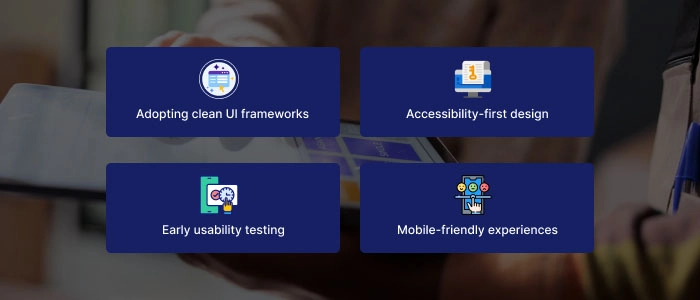
Modern ServiceNow solutions are triumphant once they make complicated processes feel easy. Developers ought to ensure that every app, portal, or dashboard is user-friendly from day one.
- Adopting clean UI frameworks – ServiceNow’s workspace and portal tools allow developers to design layouts that minimise clutter.
- Accessibility-first design – ServiceNow builders should prototype and take a look at designs with actual users before final rollout.
- Early usability testing – ServiceNow developers should prototype and test designs with real users before final rollout.
- Mobile-friendly experiences – Since ServiceNow is often accessed on the go, apps should perform seamlessly across devices.
The result is better adoption rates, fewer help tickets, and a normal, smoother worker enjoy.
Gamification and Personalised Employee Journeys
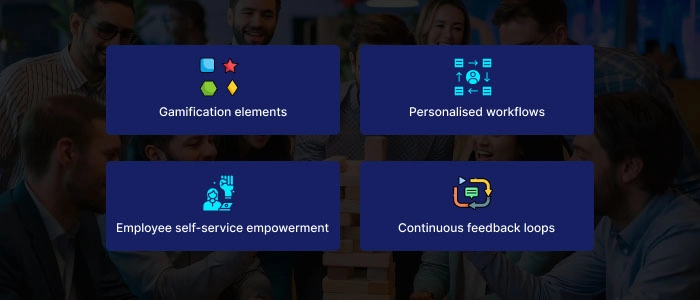
Another emerging trend in ServiceNow software development is blending work with motivation. ServiceNow builders can now build apps that encompass gamification and personalisation functions, supporting corporations to engage employees more effectively.
- Gamification elements – Features like points, badges, progress trackers, and leaderboards make repetitive tasks sense worthwhile.
- Personalised workflows – Tailored reviews for onboarding, HR requests, or IT aid make certain personnel only see what’s relevant to them.
- Employee self-service empowerment – Tools like AI-pushed chatbots and customised dashboards lessen reliance on guide groups.
- Continuous feedback loops – Integrated surveys and comments modules permit corporations to degree employee delight in real time.
When developers combine good UX design with employee enablement strategies, ServiceNow solutions become more than just business tools; they become daily productivity partners that employees actually enjoy using.
Conclusion
The rising significance of AI, low-code equipment, API-first procedures, more advantageous safety, and higher person reviews are all highlighted within the ServiceNow development trends for 2025. To absolutely use ServiceNow software development and offer a hit ServiceNow answers, a ServiceNow developer ought to stay current on these traits.
Developers now want to pay attention to creating secure, scalable, and intuitive apps that meet modern-day commercial enterprise necessities instead of simply expertise what ServiceNow is and what it does. Adopting these trends will allow developers to shape the direction of business enterprise methods and help organisations get the most out of their ServiceNow funding.
FAQs:
1. What are the top ServiceNow trends in 2025?
Key trends include AI and machine learning, low-code/no-code development, API-first strategies, stronger platform security, and improved UX for employees.
2. How is AI used in ServiceNow?
AI in ServiceNow powers predictive analytics, generative AI for faster development, intelligent chatbots, and automation that improves workflows and decision-making.
3. Is ServiceNow only for IT departments?
No, ServiceNow goes beyond IT. It’s used for HR, finance, customer service, operations, and other areas where workflow automation adds value.
4. What industries are adopting ServiceNow in 2025?
Healthcare, banking, retail, manufacturing, and government sectors are rapidly adopting ServiceNow to modernize workflows and enhance service delivery.
5. What is low-code development in ServiceNow?
Low-code in ServiceNow allows developers and even non-technical users to build apps quickly with drag-and-drop tools, reducing reliance on heavy coding.


