Just think of controlling things in your world using your phone. It can be lights, fans, thermostats, and even groceries! It is the power of IoT where everything is transforming the way that is designed into mobile applications. With 5.48 billion unique mobile phone users worldwide as of 2022, mobile app revenue globally went above $318 billion in 2020 and is estimated to reach around $613 billion in 2026. There isn’t anything else to say about why these levels of investment in mobile app development come as no surprise.
In this Blog, we discuss the importance and future trends of IoT applications that help industries gain a competitive edge in the market.
Understanding IoT?
A software application created to help users manage Internet of Things devices and the data they generate is known as an IoT app. Today’s top IoT app development company make it possible to manage smart devices effectively. For instance, smart irrigation systems that regulate water use in farming or intelligent thermostats that automatically change temperature settings based on user preferences. The Internet of Things creates an environment in which even the most commonplace objects can gather and exchange data.
Outdated IoT apps holding back your business?
Upgrade to modern, efficient IoT applications tailored to your needs.
Importance of IoT App Development Services
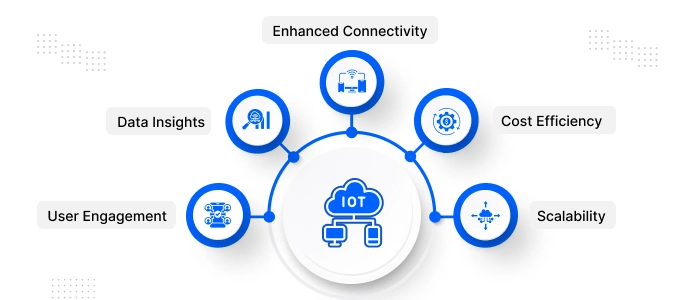
IoT app development services are critical for creating applications that monitor, control, and optimize IoT devices. Here are some key benefits are mentioned below:
- Enhanced Connectivity: These services enable smooth communication between devices, allowing them to work together on intricate tasks.
- Data Insights: By examining data gathered from IoT devices, companies can uncover valuable insights into their operations, customer behaviors, and market trends, which aids in making informed decisions.
- Cost Efficiency: IoT solutions streamline operations, minimize waste, and enhance resource management, leading to considerable cost savings.
- User Engagement: Tailored IoT applications improve customer interactions and satisfaction by offering personalized experiences derived from data analysis.
- Scalability: As businesses expand, IoT applications can be adjusted to support additional devices and users without requiring significant extra investments.
IoT Integration Across Industries
IoT app development services have found applications in various industries, each benefiting from unique integrations.
Healthcare

Numerous industries have adopted IoT app development services, with each gaining from special integrations.
Medical care
- By improving patient care and optimizing processes, the Internet of Things (IoT) is transforming the healthcare industry. Smart sensors track equipment usage and wearable devices continuously monitor vital signs, improving patient outcomes and reducing costs.
- Remote Patient Monitoring: Heart rates, blood pressure, and other vital health indicators can be monitored by gadgets like smartwatches. Real-time access to this data allows for more rapid interventions and individualized treatment for healthcare professionals.
- Inventory management: IoT solutions help hospitals manage their equipment and medical supplies. Hospitals can maintain patient care by monitoring inventory levels and placing new orders before supplies run out.
- Telemedicine: IoT makes remote consultations possible, allowing patients to receive care from the comfort of their homes. This is particularly advantageous for those living in rural areas or individuals facing mobility challenges.
Read More Related Blogs
Manufacturing
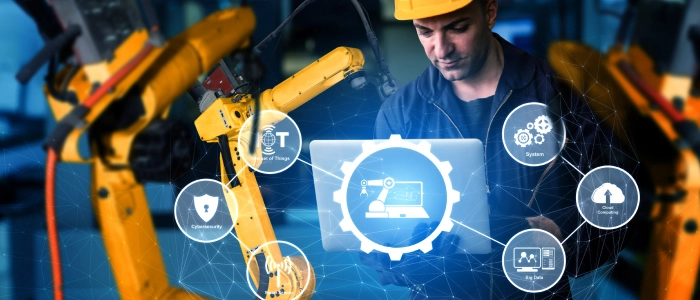
The Internet of Things (IoT) helps manufacturers reduce downtime and increase productivity by enabling real-time machinery monitoring and predictive maintenance. Applications that evaluate machine performance require IoT app development services.
- Predictive maintenance: Sensors monitor the operation of equipment and alert operators to possible problems before they arise. This preventative approach lowers costly maintenance expenses and downtime.
- Supply Chain Optimization: Manufacturers have a clear picture of their supply chains thanks to IoT applications that track shipments and inventory levels in real-time. This degree of openness facilitates prompt decision-making to prevent delays.
- Quality Control: To make sure that goods meet quality standards, IoT devices monitor production lines. Operators receive alerts for quick action if any anomalies are discovered.
Agriculture
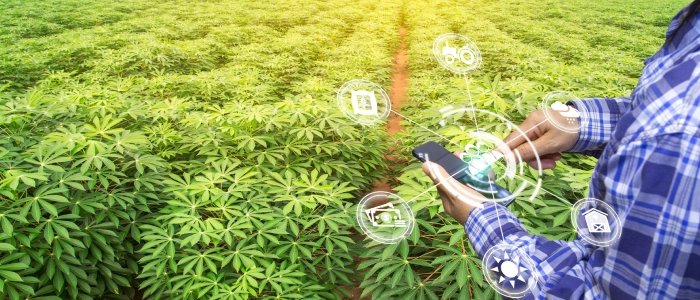
IoT devices are used in smart farming to monitor crop health, weather patterns, and soil conditions. Higher yields and better resource management result from this. For farmers to efficiently track and analyze data, IoT applications are essential.
- Precision Agriculture: Farmers can adjust fertilization and irrigation by using IoT sensors to measure soil temperature, moisture content, and nutrient levels. Reduced resource consumption and higher crop yields are the outcomes of this targeted approach.
- Livestock Monitoring: Wearable technology is used to track the location and health indicators of livestock. Real-time observation of animal behavior and health by farmers improves herd management as a whole.
- Weather Forecasting: By analyzing weather data, Internet of Things applications help farmers make well-informed decisions about when to plant and harvest. Reducing losses and increasing yields require this knowledge.
Struggling to estimate the IoT app development cost?
Use our Iot Cost Calculator to get instant, accurate estimates!
Smart Cities
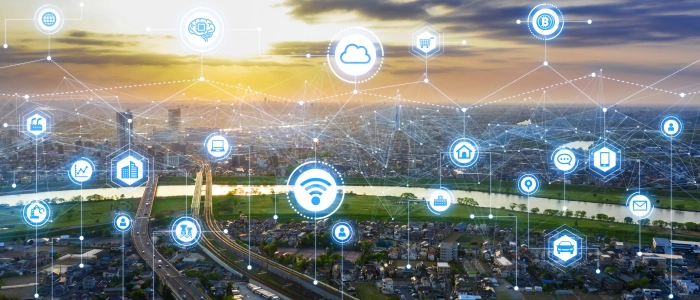
IoT solutions in urban environments improve traffic control, waste disposal, and energy use. Smart city technologies allow for real-time oversight of public services, leading to better resource distribution.
- Traffic Management: City planners can improve transit routes and modify traffic signals by using IoT sensors to monitor traffic flow and congestion. Both emissions and travel time are reduced as a result.
- Smart Waste Management: IoT-enabled trash cans simplify collection routes for waste management services by alerting users when they need to be emptied.
Factors to Consider When Choosing IoT App Development Services
- Customization Requirements: Take into account the degree of customization your application requires. Look for a service that offers a lot of customization options if your needs are unique.
- Industry Expertise: Seek out a supplier who has worked in your particular sector; their in-depth understanding can significantly improve the efficacy of the solution.
- Measures to Protect Data: Give data security a top priority, particularly when working with sensitive data in industries like healthcare or finance. Check to make sure the service provider follows industry-recognized security procedures.
- Budget: Assess the service charges and the expenses involved. There needs to be a balance of cost and quality.
- Support System: The most critical thing required in case of troubleshooting and being sure that your IoT solution works uninterruptedly is reliable support. Look for the maintenance and support offered.
Advantages of IoT on Various Industries
Here are the advantages of IoT which are mentioned below are as follows:
Healthcare Sector
- Market Growth: As per the report published by projects the healthcare industry will grow at a compound annual growth rate (CAGR) of approximately 25.9% from 2020 to 2027, reaching approximately $410 billion by that time.
- Influence of Remote Monitoring: According to a study, remote monitoring could reduce hospital readmission rates by 30-40%, underscoring the Internet of Things’ potential to improve patient outcomes.
- Wearable Devices: It was predicted that 30% of adults would use wearable health technology by 2026, significantly increasing the amount of data that healthcare providers could collect.
Read More Related Blogs
Manufacturing Sector
- By implementing IoT, it is said that manufacturing output can increase by as much as 20%, while machine downtime can be reduced by up to 30% thanks to predictive maintenance.
- Market Size: The global IoT manufacturing market size is poised to reach $278 billion by 2026 from a market size of $118.3 billion in 2021 at a CAGR of 10.2% during the forecast period.
Smart Cities
With a strong emphasis on IoT, it is anticipated that investment in smart city technologies will increase dramatically, from $137 billion annually in 2019 to over $2.5 trillion by the end of 2026.
- Traffic Management: According to published reports, IoT-based traffic management systems can reduce traffic by 30% and vehicle travel times on different roads by 20% to 30%.
- Energy: IoT smart lighting solutions have the potential to reduce energy usage by up to 80%, which would help to lessen urban areas’ energy demands.
Impact of IoT Integration
The integration of IoT leads to significant changes which are mentioned below in the respective points:
- Efficiency: You can finish work faster by automating time-consuming tasks. Advanced manufacturing techniques, for example, can drastically reduce production times, allowing businesses to efficiently meet demand.
- Cost Savings: Lower operating costs are the result of better resource utilization. IoT applications have the potential to help businesses save money by detecting waste and improving operational efficiency. Similarly, consumers are also turning to digital solutions like money saving apps that automate financial habits and help grow personal savings through small, everyday transactions.
- Higher Revenues: Better strategies and improved decision-making are supported by timely and accurate data access. Business analytics can reveal patterns and trends that help make more informed decisions about how to allocate resources and make future investments.
- Better Protection: Dangerous situations can be identified with the help of tracking systems. Accident rates can be practically reduced by implementing IoT devices in sectors like manufacturing and construction that allow people to report potentially hazardous situations.
- Conservation: IoT encourages the culture of conservation because it is an environmentally friendly technology.
Read More Related Blogs
Future Trends in IoT App Development
Some trends shortly include the following:
Edge Computing
Among the many paradigms disrupting IoT application development, edge computing stands out as a method of analyzing data near the device. This trend helps to minimize delay, boost real-time decision-making, and strengthen data protection. Considering edge computing, IoT app developers are applying frequently due to the response efficiency of this new kind of application.
5G Connectivity
5G connecting is another breakthrough when it comes to IoT app development. Advanced applications are possible within the IoT domain because with 5G the speed is much higher and the latency much lower allowing for complex applications which can handle huge amounts of data in real-time. This creates new opportunities for using IoT in such sectors as, for example, the use of self-driving cars or tele-surgery.
AI Integration:
AI and IoT put together would give rise to some intelligent applications that would analyze the data quickly and would have the ability to decide on their own. This efficiency would be boosted along with encouraging automation by this integration.
Increasing Sensitization towards Security:
Securities would now be considered essential day by day in conjunction with the increase in the number of IoT devices. Even more secure measures will be highlighted in further developments in this domain to reduce the possibilities of cyber attacks with any form of vulnerability.
Go Green:
IoT solutions will be transformed towards sustainability where companies turn green with smart grids saving/minimizing losses and waste towards energy-efficient devices.
Wrapping Up
IoT appears to have a bright future ahead of it, with many creative applications anticipated as it continues to permeate many facets of daily life. Here, smart technology is essential because it offers IoT app development services that let companies realize their greatest potential.
Are your IoT systems too complex to manage?
Simplify complexity with our intuitive IoT app development.
FAQs
1. How do IoT apps work?
Devices can share and gather data thanks to IoT applications that allow them to connect to the internet. They use sensors to monitor several variables, including temperature and movement, and send the information to the app so users can view it. As a result, people can use the app to remotely control and manage their devices.
2. What is the future of IoT?
With many more devices anticipated to be online in the upcoming years, the Internet of Things appears to have a bright future. Improvements in data analysis and artificial intelligence will lead to smarter gadgets. As this technology develops, maintaining security will become even more crucial.
3. What are the different stages of IoT application development?
- Planning and Design: Determining the app’s goal, identifying its target audience, and describing its features are the main objectives of the planning and design phase.
- Development: During this phase, programmers combine hardware elements like sensors and cloud services with software to create the application.
- Testing and Deployment: Before the app is made accessible to users, it is put through a rigorous testing process to find bugs and security flaws. It is then continuously updated to guarantee peak performance.

 Shaili Gupta