Key Takeaways
- Choosing the right e-commerce solution helps businesses streamline operations, improve customer experience, and support long-term online growth.
- Custom e-commerce solutions offer flexibility, scalability, and seamless integration with business processes, making them ideal for growing brands.
- Modern e-commerce platforms simplify inventory management, payment processing, and sales tracking while reducing operational costs.
- Businesses can increase revenue and reach global audiences by implementing secure, user-friendly, and data-driven e-commerce development solutions.
- Selecting the best types of e-commerce solutions depends on business goals, target customers, scalability needs, and required platform features.
Are you excited to start your e-commerce journey? You are at the right place, the market is filled with custom e-commerce solutions and tools designed to streamline line your operations and enhance your consumer base and profitability. You don’t have to dig deep, we got it covered for you. Investing in the right e-commerce solutions not only saves time but also strengthens brand identity and loyalty among consumers.

For instance, a strategic partnership announced on August 14, 2024, between Shopify and Pivotree is set to transform how businesses approach e-commerce, offering innovative tools to boost profitability and expand their customer base.
What are E-commerce Solutions?
E-commerce, also known as electronic commerce, is a set of software that helps businesses sell products or services through online platforms. These solutions are an essential part of learning how to start a business online, as they typically include a website or online storefront, a payment processing system, store operation tools, and inventory management tools.
Want to know your E-commerce project development cost?
Get a detailed budget estimation in just few clicks.
Ecommerce solutions help brands offer marketing and customer relationship management capabilities, enabling businesses to promote their service or products, such as wedding rings, through the internet and manage customer interactions effectively.
Benefits of E-commerce Solutions Service

E-commerce provides significant benefits for business owners looking to avoid physical stores. Edited: It allows you to set up an affordable online shop and sell products directly to your demographic audience, much like how print on demand companies enable entrepreneurs to launch stores without heavy upfront investment, while not having to miss out on the benefitsof digital membership cards. While not having to miss out on the benefits of digital membership cards.
Additionally, e-commerce boosts your reach by driving more traffic to your virtual storefront, helping you connect with a broader audience. Here are certain points which are mentioned below such as:
- Better customer Insights: This helps brands access valuable data of customers who have visited the websites and also provide the better insights to understand the consumer behavior and preferences.
- Monitoring Revenue and Sales: Making it easier for the brands and the business to monitor their sales and revenue generated. It gives them features to compare it from their previous month sales, which helps them to change the strategic approach and gain profit. By integrating tools like the best demand forecasting software, businesses can accurately predict customer demand, reduce the risk of overstocking or stockouts, and optimize their supply chain to maximize profitability.
Read More Related Blogs
- Convenient Shopping: It provides a seamless shopping experience for customers, regardless of time and place, including reviews about the product, which offer information and responses from past customers.
- Product Visibility: makes it simple for brands and business to showcase their products to a larger audience , increasing their visibility and attracting new customers. Leveraging Google Analytics consulting services can help companies better understand user interactions, measure marketing effectiveness, and identify opportunities to increase product reach
- Streamline Operations: automated tasks involved in managing online stores save time for business owners to focus on innovation and growth rather than day-to-day management. These automation features can also include smart upsell and cross-sell options that help increase sales. For businesses seeking seamless operations, opting for Business Central implementation ensures efficiency and scalability. Automated tasks involved in managing online stores, saves time for the business owners to focus on innovation and growth rather than managing online stores. For businesses seeking seamless operations, opting for Business Central implementation ensures efficiency and scalability.
- Cost-effective: They can help organizations and brands reduce their costs by eliminating the need of a warehouse or physical store, and also with overhead costs for maintaining a physical store.
Read More Related Blogs
Explore The Different Types of E-commerce Solution
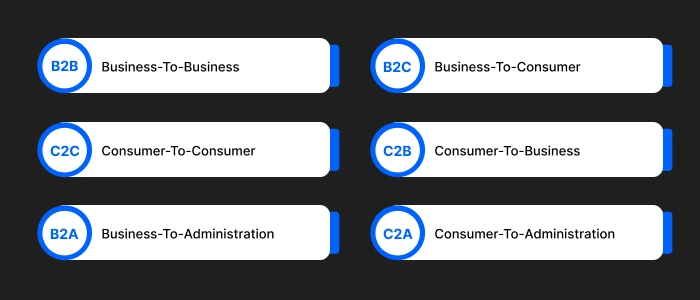
E-commerce solutions vary based on business needs, but choosing expert-built websites ensures better consumer reach and long-term profitability These solutions are tailored to different business models, whether product-based or consumer-focused, ensuring that each business can optimize its online presence and drive success. Implementing eCommerce search solutions can further enhance the customer experience by helping shoppers quickly find relevant products, improving engagement and conversion rates.
Here different types of e-commerce platforms:
- Business-to-Business (B2B)
- Business-to-Consumer (B2C)
- Consumer-to-Consumer (C2C)
- Consumer-to-Business (C2B)
- Business-to-Administration (B2A)
- Consumer-to-Administration (C2A)
- Business-to-Business (B2B): This involves the exchange of products, services or information between businesses, B2B transactions are conducted between two companies, such as a wholesaler and an online retailer. Most business-to-business transactions take place online as e-commerce. Transactions are carried out through various website categories.
- Business-to-Consumer (B2C): This is a retail model where products or services move directly from a business to the end user who has purchased the goods or services. It is often contrasted with the business-to-business model, which involves exchanging goods and services. Many B2C businesses use platforms like Shopify, and with the help of Shopify themes, they can quickly create user-friendly and visually appealing online stores.
- Consumer-to-Consumer (C2C): It is a type of online marketplace that allows consumers to buy and sell goods and services to each other without the involvement of a third party. Transactions can take place on online marketplaces, auction websites, or classified advertisements.
- Consumer-to-Business (C2B): a business strategy where customers supply goods or services to companies. Consumers create value that businesses use to improve their products and services, gain a competitive advantage, or engage in other business processes. This is the opposite of the traditional business-to-consumer model, where a company sells goods and services to consumers.
- Business-to-Administration (B2A): It is also known as business-to-government is an e-commerce model where a business sells goods or services to an administration. It can involve companies selling products or services to government agencies, or companies establishing online relationships with public administrations.
- Consumer-to-Administration (C2A): This e-commerce model helps the consumer post their queries and request information regarding the public sector directly from their local governments/authorities. It offers a simple means of establishing contact between the public and the government.
Searching for The Best eCommerce Developers?
We offer comprehensive range of eCommerce development services that will bring new opportunities for your business.
Best Practices for Implementing E-commerce Solutions

Businesses can choose an e-commerce solution to increase sales by being informed about its types, advantages, and best practices. Before launch, this ecommerce image optimization guide helps product pages load faster and convert better. By putting the right solution in place, your company can boost revenue, enhance customer satisfaction, and simplify operations.
Choosing the Right E-Commerce Solution: A Key to Business Growth
In today’s competitive landscape, businesses must choose the right e-commerce solution to:
- Boost sales
- Enhance customer satisfaction
- Simplify operations
Understanding the types, benefits, and best practices of e-commerce platforms can help you make an informed decision — especially if you’re using a Print-on-Demand (POD) model.
Print-on-Demand Companies in E-Commerce
Print-on-Demand companies let you sell customized products like T-shirts, mugs, phone cases, and more — without holding any inventory.
They handle:
- Printing
- Packing
- Shipping
…as orders come in — all under your brand name.
Popular POD platforms include:
- Printful
- Printify
- TeeSpring
- Gelato
- Redbubble (marketplace model)
POD is ideal for entrepreneurs, designers, and creators looking for low-risk entry into e-commerce.
Optimize for Speed & Conversion
Before launch, use an eCommerce Image Optimization Guide to ensure:
- Fast-loading product images
- Mobile responsiveness
- Higher conversion rates
This small step significantly improves page performance and customer experience — especially on POD
Here are some points mentioned below:
- Planning: Start by drafting a thorough plan that addresses the resources, timeline, and budget for your e-commerce solution. Establish your objectives precisely and choose how you’ll gauge success.
- Right selection: Select the best e-commerce platform based on your budget and business requirements. Make sure it works well with your current systems and provides the features you require
- Launch and Monitor: Once live, monitor the solution’s performance closely. Make all the required changes.
- Involve Stakeholder: Throughout the implementation process, involve your team, clients, and partners. To make sure the solution benefits everyone, keep them updated on changes.
- Validate and Test: Make sure the e-commerce solution satisfies your requirement and provides an excellent user experience by thoroughly testing it before launching. Check its functionality and security.
Read More Related Blogs
Top 6 Benefits of E-Commerce Solutions
Some very effective benefits of E-commerce solutions are mentioned below to make ot easier for businesses to sell their products and services online hassle-free with a good flow:
- Reach Customers Internationally from E-commerce Online: Businesses do not have to contact people in their regions; they can target anyone worldwide.
- Access Anytime, anywhere: Anybody could reach them anywhere, day or night, from wherever they are.
- Increased Revenues and Profits: People can be lured into wider consumerism because life is easier when needed products are within reach.
- Cost Savings: Reducing rental and utility costs for companies is possible with the determination not to have a storefront. With platforms like Shopify that offer a $1 trial for 3 months, businesses can easily test running an online store with minimal expenses.
- In-Depth Knowing of People: E-support helps understand consumer mindsets better. That should be highly beneficial for organizations to benefit from better decisions.
- Effective Presentation of Products: An enhancement to display the products to many people in comparable conditions illustrates the different virtual awareness and attraction for the product.
E-commerce solutions simplify daily tasks with automation, giving business owners more time to focus on growth and innovation.
How Do E-Commerce Solutions Work?
E-commerce solutions function differently depending on what they offer, which can be product-based or service-based.
When you are Starting a Product-based Online Store
In case you need to opt for a product-based eCommerce solution, take time and investigate a couple of key things first. For example, a niche store like Scent Split, which sells Winter Perfumes and other specialty fragrances, needs to consider inventory management, seasonal demand, and customer experience to ensure smooth operations and consistent sales”:
- Features: What is it you are getting attached to? Find out how the given features can help you address a specific challenge you struggle with.
- Pricing: Compare prices to those of similar products. The value should fit the price.
- Scalability: Check how much capacity the product specifically designed for your business offers you in the most state-of-the-art way.
- Support: Nobody has ever loved manuals and tutorials for dummies, aren’t they? Probably and need, consider the kind of customer help you might get and have scriptures and tutorials.
Check Out Related Posts
When Choosing Service-Based E-commerce Solutions (SaaS)
For services marketed as Software-as-a-Service (SaaS), focus on the following:
- Multiple Leveled Plans Designed for Specific Needs: Many SaaS companies offer affordable alternatives for self-regarding business sizes or requirements, then select the best fit for company needs.
- Capacity: Check out additional automated higher-level size plans. Is the same being indicated to meet future business needs?
- Interoperability: If the scalability within is restricted; still, what business-enhancing software, apps, or add-ons can their solution be compatible with?
- Additional Services: These extra supportive services for your start-up will likely come from the organization. Working with such providers can streamline workflow when everything is under the same roof.
- Customer Assistance: Extended-term SaaS subscriptions offer discounts, but you deserve your money’s worth with the most reliable customer care.
Working With E-Commerce Service Providers
To oversee and optimize your e-commerce procedures, you can require expert service providers who can also help you implement a warehouse inventory management system for better inventory tracking and fulfillment accuracy.
- Skills: Establish a lack of qualification for the individual, whether licensed or proficient. Indeed, most companies have a skilled team, though you should always verify their credibility.
- Portfolio: This is how one reviews the past works of someone, which, in turn, tells you about the comparing services one expects from the person.
- Quotes: The user should always ask for three or more quotes and compare them with the set budget to reach a better and more educated decision in each industry.
- Reviews: One good thing businessman should not overlook is that the clients’ work reviews and testimonials say nothing. However, the testimony regarding his history-all must be well-matched with the portfolio of the individual.
- Service Tenure: This is why a long-term agreement usually works for a business in e-commerce-that is, whether the supplier would be there for a longer period or not.
Why Should You Go With Sphinx Solution for a Custom eCommerce Solutions?

We help businesses expand by crafting custom e-commerce solutions tailored to their unique needs. As an experienced ecommerce seo agency, we understand that every brand is different, so we design development strategies that align with each company’s distinct vision.
Beyond development, implementing comprehensive search optimization for online stores is crucial for driving qualified traffic and increasing conversion rates, ensuring your custom e-commerce platform reaches the right customers at the right time through strategic visibility in search results. Our expert e-commerce developers create high-converting websites using the latest technologies, empowering your business to achieve its full potential.
Services: Custom Ecommerce Development, e-commerce integration, E-commerce Audit, e-commerce testing, UX and UI Design, and Webstore Setup
E-commerce Solution:
| Sell More Online | Complete Management | Expand Your Business |
|---|---|---|
| Customizable online store | Efficient inventory management | Multiple sales channels |
| Online sales solution | CMS Integrated | Performance optimization |
| Safe and secure payments | Advanced APIs | Expert assistance |
eCommerce Development Services Across Platforms
- E-commerce Consultation: We perform complete eCommerce audits to help you with the eCommerce website price estimation & software development services that are aligned with your business goals.
- User Experience: User experience plays a vital role in ecommerce applications. While building an ecommerce website, our professional eCommerce website developers focus on simple and user-friendly UI/UX to make an aesthetic brand.
- Unified e-commerce: We help you build a robust eCommerce store that allows you to focus more on your core business. This includes robust security check, seamless checkout, and advanced omnichannel strategy.
- E-commerce Analytics: Get insights of your user motivation, behavior, and intent across multiple channels with rich analytics.
Looking for Customer eCommerce Solutions?
We empower brands to stay ahead of the competition with our custom eCommerce development services.
Conclusion
E-commerce solutions are key to a successful online business. Choosing the right custom e-commerce solution depends on various factors like your target audience, the products or services you offer, and your overall business objectives. Sphinx Solutions helps your business thrive by enhancing your brand identity and fostering customer loyalty.
Our e-commerce solutions provide a seamless user experience, support continuous growth, and drive increased revenue. Let us help you stand out and achieve lasting success.
FAQ’s
1. What is an e-commerce solution?
An e-commerce solution is a platform or software that enables businesses to conduct transactions online, manage products, and enhance the shopping experience for customers. Picking the right solution helps ensure your business runs smoothly and meets your goals effectively.
2. What are the different types of e-commerce solutions?
Types of e-commerce solutions vary by model, including B2B (Business-to-Business), B2C (Business-to-Consumer), C2C (Consumer-to-Consumer), and C2B (Consumer-to-Business), each tailored to different types of transactions and customer interactions.
3. What is an e-business solution?
An e-business solution refers to a suite of online tools and technologies that support various aspects of running a business, including sales, marketing, customer service, and operations.


 Ajay Wadne