Key Takeaways
- Choose the right IoT service provider with proven expertise, strong security, scalability, and seamless integration to ensure long-term project success.
- Leading IoT service providers help businesses build connected solutions that improve automation, enable real-time insights, and support smarter business decisions.
- IoT development services create value across healthcare, manufacturing, retail, and logistics by improving operational efficiency and reducing manual processes.
- Evaluate IoT service providers based on connectivity options, data management, compliance, flexibility, and overall cost-effectiveness before making a business decision.
- Businesses investing in custom IoT solutions gain scalable, future-ready systems that support digital transformation, innovation, and sustainable business growth.
Moreover, a decade ago, in 2011, there were more gadgets linked to the internet than there were people on the earth. The gadgets, including wireless sensors, home device sensors, medical devices, etc., now benefit from IoT applications. Since then, IoT has been on the cusp of becoming well-known.
Progressively, IoT Projects are coming up with greater innovations. The role of an IoT service provider comes in the limelight to transform various projects. Whether it be an integration of IoT with AI or Machine Learning, the IoT service providers have many innovations to work on.
Before discussing some well-known and leading IoT service providing companies, let’s discuss the IoT service provider and its significance in an IoT ecosystem.
Having trouble connecting devices seamlessly and managing data securely?
Get expert IoT solutions for efficient, secure connectivity across devices.
What is the Internet of Things (IoT)?
The Internet of Things links smart devices to the Internet allowing them to talk to each other and swap data. These gadgets come with sensors, software, and other tech that lets them gather and share info. You’ll find IoT devices in all sorts of places, from smart fridges in your kitchen to fitness trackers on your wrist, and even in big factory machines.
Businesses from various industries are looking for IoT devices. The biggest reason behind this is that IoT devices can streamline operations, make smarter decisions, and boost overall business value. IoT devices are unique because they don’t require any direct human involvement.
How Does IoT Work?
Connected devices in IoT systems have sensors that collect data and transmit it to a central unit called an IoT gateway. This gateway handles the information and sends it on to a backend system to analyze further.
There are four main components of IoT devices to work smoothly without any hurdles:
Sensors or Devices:
IoT devices are equipped with sensors, processors, and communication tools that gather information from the surroundings and share it with other systems in the network.
Connectivity:
Data needs a way to travel through the internet or an IoT gateway. Sometimes, the data is sent to a nearby device for analysis, and then it’s decided if it should be sent further or not. This way, the network traffic is reduced, and the response time speeds up.
Data Analysis
After reaching the destination, the data is sorted and examined. There, it can spot trends, make recommendations and flag problems. Businesses decide how much data to send to the cloud as the data is processed locally (on the device or edge). This way, both time and bandwidth are saved.
Although devices don’t need human interaction, users still have the right to configure settings, give instructions and check collected data when required.
User Interface (UI)
There is a user-friendly platform, either a mobile application or a website, that is involved in managing all the connected devices. Using the interface, the user can easily monitor, control, and manage their IoT devices.
With all four main components, IoT devices are also integrated with upcoming new technologies like AI and ML. This makes data handling smarter, allowing devices to learn from past experiences and improve their performance over time.
Why is IoT important?
The IoT is the best development in the IT industry, changing people’s lifestyles. Many of us already use IoT-powered devices like smartwatches, connected cars, thermostats, etc.
IoT’s use for personal use is not limited; factories and businesses have integrated IoT into their processes. It helps them view real-time stats of their systems, machines, and operational tools. Factory equipment, supply chains, and delivery routes are monitored using IoT systems.
The biggest plus is how it takes care of boring, time-eating jobs without people getting involved. This leads to smoother operations less money spent on workers less waste, and happier customers overall. As more industries confirmed the possibilities of connected devices, IoT technology keeps evolving.
Who are IoT Service Providers?
Businesses and organisations that provide solutions for the IoT ecosystem are known as IoT service providers. They provide the infrastructure, technology, and expertise as per the required goals to develop, deploy, and maintain IoT solutions. The services include hardware devices, software solutions, cloud services, and othe significant components that complete the IoT solutions.
The IoT service providers provide comprehensive services that connect devices, manage data, and integrate systems that allow automation, real-time analytics, and efficient operations. The best IoT service provider for specific business requirements will depend on factors such as the scaling of IoT deployment and the types of devices used.
Why are IoT Service Provider Companies Important?
The development of sophisticated IoT applications is essential for the evolving technology. Many companies need this expertise and encounter challenges in creating IoT solutions with appropriate results. When hiring an individual expert developer, th process becomes time-consuming and costly.
To tackle these problems, companies started partnering with IoT service provider companies with the knowledge and experience of vast IoT developments. The deep understanding of the technology enables them to initiate efficient development processes without failure.
The process of development and deployment gets accelerated with future-proof applications, and the cost is minimised. By entrusting IoT development companies, businesses can achieve their outcomes without failure.
With countless IoT service providers offering varied solutions, finding the one that aligns with the project’s requirements. To simplify your decision, we’ve compiled a list of 10 IoT service providers known for their innovations and have proven track records of successful projects.
Explore the top picks to find an ideal partner for powering your next big IoT project.
Read More Related Blogs
10 Leading IoT Service Providers
The names of the leading tech-giants are expanding along with the IoT ecosystem’s improvements. The top ten IoT service providers that have established themselves in the market thanks to their enormous success in the IoT ecosystem are listed below:
Sphinx Solutions

Sphinx Solutions is an emerging IoT development company compared to other market rivals in the IoT ecosystem. For over a decade, the company has delivered enormous results as an IoT service provider.
With its skilled team of professionals, Sphinx Solutions, the top IoT service provider, has been offering services to companies of all sizes. The business provides cutting-edge IoT solutions that let businesses make use of the Internet of Things’ full potential.
Key Services Offered by Sphinx Solutions
- IoT App Development
- Custom Software Development
- AI Services
- Mobile App Development
- Enterprise Development
- UI/UX Design
Case Study
Zenyum is a successful IoT project provided by Sphinx Solutions. It is an IoT-based application platform that allows patients to monitor their dental progress and interact with the dentist.
Zenyum partnered with Sphinx Solutions to build a user-friendly, secure, and futuristic IoT-based mobile application that bridges the gap between patients and dentists. As a result, an IoT-based application was constructed for dental services that would assist people in ordering personalised invisible braces to fix irregular spaces in their teeth.
The application was developed with all-inclusive features like booking an appointment, a teeth alignment plan, a 3D simulation of the teeth scan, etc., which eases the treatment plan for the patient. The result guides the patient to find a nearby Zenyum dentist clinic, supporting their teeth alignment journey.
Read More Related Blogs
IBM

IBM has been a reputed name in the technology and solutions industry since 1911. It isn’t a surprise to see IBM in the list of top IoT service providers. With the help of cloud services and Watson data analysis capabilities designed by IBM, many projects have been upscaled in the IoT ecosystem.
IBM Watson IoT was designed to interpret questions asked in natural language and provide answers for the same. Using the IBM Watson IoT Platform, a project was launched known as Saaf Water (also the Call for Code Challenge winner, 2021). The platform monitors water quality parameters using machine learning, which allows water treatment.
Curious About How Iot Services Can Boost Your Efficiency?
Use Our Iot Cost Calculator to See the Benefits for Yourself!
Cognizant
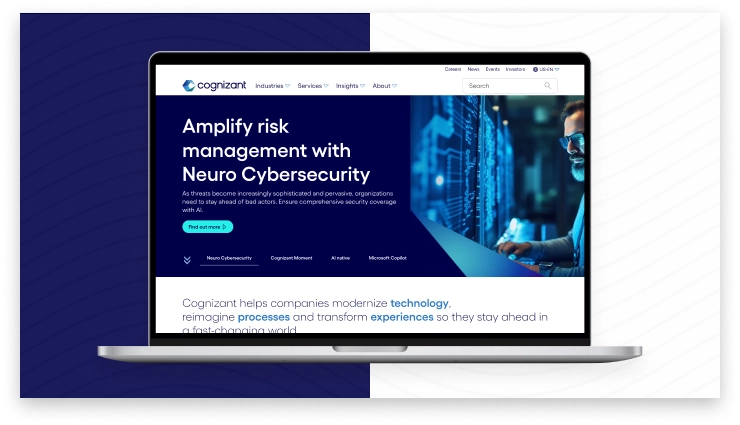
A worldwide prominent technology solutions provider, Cognizant is also on the list of leading IoT service providers. The IoT solutions they provided speed up digital transformations by enabling device connectivity to gain valuable insights.
Cognizant had very notable IoT projects in industries including banking, management, transportation, manufacturing, life sciences, and logistics. One such successful project is “Flexible Facility Management,” which helped organisations reduce costs and optimise space and energy utilisation. The platform helped the client track real-time employee space usage, work habits, and energy consumption.
Wipro

Wipro is one of the world’s top IoT app development companies in India. It allows businesses to connect devices, get insightful data, and have the power to improve choice-making and operational efficiency.
Wipro’s IoT application-based solutions include “Fleet and Asset Management System”. It allows real-time tracking of assets transferred by the vehicle through sensor interfaces integrated with cloud-based data storage and analytics.
Read More Related Blogs
Microsoft

Microsoft is also a testament to the history of innovation and the line of existing technologies that can jump into IoT spaces. Spaces like Azure IoT Hub help the device connect the device to the cloud platforms.
Projects like Smart Meter Monitoring, a Microsoft project, connect utility meters to the cloud platform to help detect outages and gain insights into consumption. Also, the Project 15 platform is open-source software that securely manages devices and connects to the cloud.
SAP

The tech giant SAP is the king of IoT Platforms, similar to IBM and Microsoft. Businesses can connect their devices to SAP cloud-based services using existing cloud technologies. The ones already using SAP’s HANA database can store, analyse and report large amounts of data.
SAP partnered with John Deere to monitor the real-time field conditions, crop health and equipment performance. Optimising the process of harvesting and planting the field allows farmers to increase crop yield and minimise water and fertilisation usage.
Samsara

Samsara is a well-known IoT service provider name in the IoT industry in the industrial sector. They offer a cloud-connected IoT management platform that helps industrial businesses/ organisations monitor vehicle tracking, asset tracking, safety, fleet optimisations and access equipment functionality.
“Asset Tags” is an IoT project by Smasara that allows a Bluetooth-connected tracker to track small valuable equipment using BLE (Bluetooth low Energy) connectivity. This reduced the operation costs and reduced the downtime of the business.
Read More Related Blogs
PTC

PTC is the IoT service provider company that specifically designed the IoT-based project ThingWorx. It is used for industrial organisations like enterprise-scale IoT solutions. The developers can create custom applications using ThingWorkx and access pre-build tools to connect their devices to analyse the data.
Caterpillar is a leading PTC IoT project that helps De Beers ensure safe mining conditions above the Arctic Circle. The company uses the monitoring and predictive service solutions from PTC to ensure the safety of the works 24*7.
Vention

Vention is a software development company that provides IoT-based solutions and is an expert in the IoT industry. They build ther IoT applications from scratch and create MVPs for testing purposes. They assist IoT product integration into the existing systems.
Leading IoT-based projects of Vention include “Bevi” – an intelligent way to hydrate. The smart water cooler helped them significantly reduce the 4000+ carbon footprint and saved 200M plastic bottles from being used and discarded.
Softeq

Softeq is a leading organisation in the field of IoT applications. They have transformed the workflow of big companies like Disney, Lenovo and GE by creating power-packed IoT solutions. Their capabilities include consumer gadgets, smart home tools, healthcare wearable devices, etc.
“Pet Tracker” is one such app and one of the leading projects by Softeq. They created a smart dog collar that allowed pet owners many features like dog positioning, geofencing functionality, behavioural corrections, etc., for safely monitoring their pets.
These were some of the leading names in the IoT industry. It’s always better to check several factors before deciding which IoT service provider to choose.
Read More Related Blogs
Role of the Internet of Things (IoT)
IoT works like a competent helper for businesses. It collects useful data, finds problems, and shows where the company’s work and rules can be improved.
Systems can, for example, automatically change their settings according to the situation, freeing up teams to concentrate less on tedious tasks and more on creative ideas and critical work.
IoT comes in different types, each made for a special purpose. Here’s a quick look:
Industrial IoT (IIoT):
Industrial IoT, or IIoT, is using new technology in factories and industries. The benefits of allowing machines to communicate and share information with less human involvement impact industries such as manufacturing, shipping, and supply management. Factories are essentially in what is being referred to as the “fourth industrial revolution,” or Industry 4.0.
Commercial IoT:
Consumer and enterprise IoT are the two primary subcategories of commercial IoT.
Consumer IoT includes smart home appliances, fitness trackers, and other gadgets that most people use regularly; these devices usually involve some human engagement.
Companies may include business-ready solutions in their infrastructure as a component of enterprise IoT. For example, healthcare institutions may utilise connected devices to monitor patient health or control medication inventory, while retail establishments may use Bluetooth beacons to customise in-store experiences for customers.
Infrastructure IoT:
Infrastructure IoT improves the performance of buildings, campuses, and cities. Smart buildings use IoT devices to save energy and costs and use space wisely. This can be helpful for big places like universities and office campuses.
City planners are using IoT to create smart cities. Sensors on traffic lights, streetlamps and air quality monitors collect live data. The collected information helps manage traffic, keep people safe, and check the environment.
Defense IoT:
Defence IoT helps improve military and security operations. It uses surveillance drones, smart vehicles, and wearable devices for soldiers. These tools help soldiers see what’s happening around them, stay connected, and make better decisions during missions.
Top 6 Upcoming IoT Trends
The market for the Internet of Things (IoT) is expanding quickly. Here are six IoT themes you should watch as technology continues to advance:
IoT in Healthcare
Hospitals and clinics have embraced IoT’s benefits, using smart devices to check on patients. Some IoT devices maintain hospital machines and track patients’ medicines. These devices can also monitor a person’s health and warn them or their doctor if something’s wrong before it gets serious.
In the outbreak, many folks began utilizing telehealth options and some people even prefer them to hospital visits! Because of that, hospitals and clinics are now using eyes on smart devices to assist in continuous patient evaluations, checking on the operational status of hospital machines and maintaining updates on medicines. They can also provide continuous health monitoring of a person and alert the doctor about potential health problems before serious symptoms appear.
Edge Computing for faster Data Processing
Many IoT devices send their data to the cloud, but it’s time-consuming. Edge computing can fix this problem by collecting data from nearby devices as it is collected. So, according to the alternate option, you can make a better decision. If the device gets too hot, you can shut it down immediately without collateral damage.
IoT for Environmental and Sustainability Efforts
Many companies use IoT to monitor the environment, save energy and manage resources appropriately. They use smart sensors to track air quality, which can spot fires and floods, while other devices help reduce energy consumption.
Smarter Supply Chains
The pandemic showed us how weak global supply chains can be. Now, businesses are using IoT to keep track of inventory, manage deliveries, and monitor shipments more easily. IoT can also help control things like the temperature of sensitive products during shipping and predict how much fuel vehicles will use.
Wearable Tech Beyond Smartwatches
New gadgets, such as smart glasses, rings, and internet-connected clothing, have been invented in IoT. These devices may help ensure worker safety, aid individuals with disabilities, and even support physicians in surgical procedures.
Stronger Focus on IoT Cybersecurity
Since IoT devices gather important personal and business data, keeping them secure is essential. New technologies like blockchain and stronger encryption are being used to protect the devices and the data they collect. Companies also make special security systems for IoT devices to stop cyberattacks and keep everything safe.
What to Look For in an IoT Service Provider?
It’s essential to consider several factors while searching for an IoT Service provider. The best companies will provide an initial solid foundation to enjoy the long-term success of the IoT project. A quick look at these factors will only make the decision-making process more manageable:
Scalability & Flexibility:
As the IoT project evolves, it should offer scalable solutions to the business needs. The IoT service provider supports flexible deployments and can accommodate a scalable range of sensors, devices, and data requirements.
Security & Compliance:
Security is an essential factor in any IoT project. Given the sensitive amount of data transmitted across the devices, the IoT service providers should provide secure data storage, strong data encryption, and regular security updates. Including external vulnerability scanning as part of the security protocol can help identify potential threats before they are exploited. Also, compliance with various data privacy laws and industry regulations is provided.
Read More Related Blogs
Connectivity Options:
Connectivity is the backbone of an IoT project for its deployment. Different types of IoT projects support different connectivity options based on the coverage. Wi-Fi, Bluetooth, Threads, etc., are valuable for short-range connectivity, whereas LoRaWAN, etc., are considered for long-range connectivity.
Integration Capabilities:
The IoT service providers should work with existing systems with robust APIs to connect data from devices into applications. It should establish connections properly with workflows of business systems like ERP, CRM, etc.
Data Management & Analytics:
The IoT service providers are responsible for effective data collection, processing, and analytics that maximise the value of IoT systems. The process can be done with solid data management tools, real-time analytics, and reporting features to get valuable insights.
Cost-Effectiveness:
The pricing model for complex IoT projects will be higher than that for less complex ones. The hidden fees include many hardware, software, and maintenance costs. Calculate the terms of all the inclusions, compare them, and discuss the budget with your service provider. Choose the IoT service providers that fit your budget.
Read More Related Blogs
Why Choose Sphinx Solutions as an IoT Service Provider
- Industry Experts: Worked in several industries, including healthcare, retail, finance, and education, encountering problems with ease when implementing IoT.
- All-Inclusive Services: Providing comprehensive IoT solutions from hardware device implementation, software application, and cloud-based integration to many more services under IoT development.
- Focus on User Experience: UI/UX design with enhanced user experience for better customer satisfaction and seamless user interaction are essential factors in IoT development.
- Custom Solutions: Special customised solutions according to the business’s requirements to ensure the IoT applications comply with its specifications.
- Technical Proficiency: As a good IoT service provider, Sphinx Solutions partners with IoT applications that can be created with the expertise of an IoT developer, hardware architect, quality analyst, etc.
Finding reliable IoT services that drive innovation can be challenging.
Leverage expert IoT solutions to streamline operations and boost growth.
Conclusion
The Internet of Things is constantly changing the definition of what is feasible in a networked ecosystem as networking expands. Any IoT project’s success depends on choosing the correct IoT service provider. The leading IoT service providers listed in the article are industry leaders with a track record of success and creative solutions. With the right IoT service provider, your IoT project can lead to advancements with scalable options and open to profitable success.
FAQ’s:
What is an IoT service provider?
An IoT service provider is a business that helps companies build linked ecosystems for increased productivity by providing solutions and services for implementing Internet of Things technology, such as hardware, data management platforms, and bespoke software development.
What is the purpose of IoT?
The Internet of Things aims to connect commonplace devices to the Internet to exchange data and communicate. Increased automation, increased productivity, and insightful information for better decision-making across various applications in daily life and commercial operations are all made possible by this connectedness.

 Shaili Gupta